
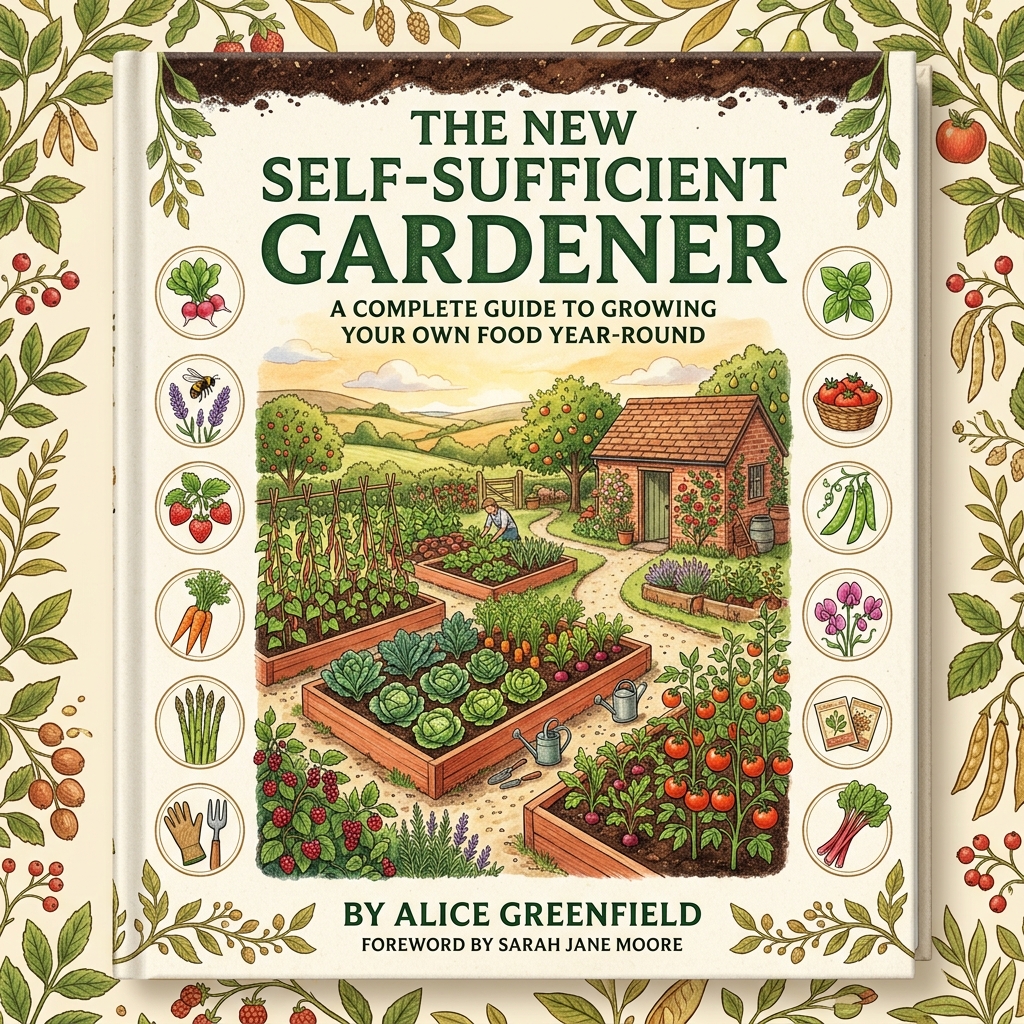
Grow Your Own Food, Reclaim Your Life: The Complete Guide to Self-Sufficient Gardening
What if your backyard could feed your family—week after week, season after season? The New Self-Sufficient Gardener by John Seymour is the book that generations of home growers have turned to when they decided to stop relying on supermarkets and start growing real food. Packed with step-by-step illustrated guidance on everything from soil health to fruit cultivation to preserving your harvest, this isn't just a gardening book—it's a complete lifestyle upgrade. Whether you're starting with a small raised bed or dreaming of a full kitchen garden, this classic guide gives you the knowledge, the plan, and the confidence to make it happen.
BENEFITS AND IMPORTANCE
The New Self-Sufficient Gardener is far more than a how-to manual—it is a philosophy of living wrapped in practical, illustrated instruction. Originally published in 1978 by John Seymour and updated for modern readers, this book presents a complete system for producing your own food, from planning a garden layout through every season, to cultivating dozens of vegetables, fruits, and herbs, to preserving and storing the harvest through canning, drying, pickling, and even winemaking.
Why it matters today: In an era of rising food costs, growing concerns about pesticide use, and increasing desire for sustainable living, this book is more relevant than ever. It teaches readers to work with nature—nurturing the soil as the foundation of everything—rather than against it. The deep-bed method, compost philosophy, and season-by-season guidance empower readers to grow abundant food in relatively small spaces.
Who benefits: First-time gardeners get a clear, confidence-building introduction. Experienced growers find detailed cultivation notes for over 100 plant varieties. Anyone interested in food sovereignty, organic gardening, or reducing their dependence on industrial food systems will find this guide indispensable.
The transformation it offers: Readers move from passive consumers of food to active, empowered producers—connecting with nature, eating better, saving money, and building a more resilient, sustainable household.