

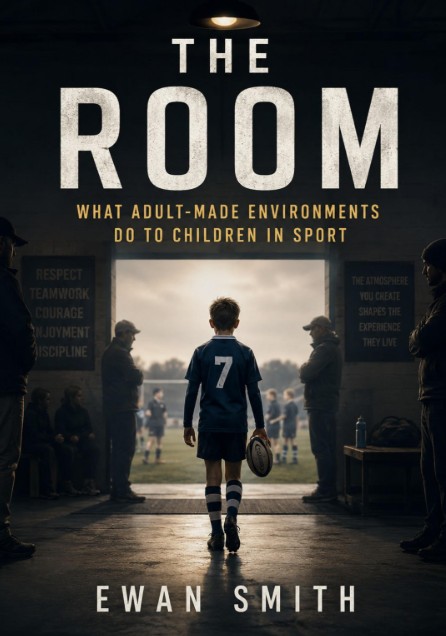
THE ROOM: What Adult-Made Environments Do to Children in Sport
Most parents only start looking at the room after their child changes.
They used to run to the car. Now they go quiet before training. They used to talk the whole way home. Now they stare out the window. The kit still goes in the bag. The boots still come out of the cupboard. But the body around the going has changed, and nothing obvious happened in between.
If you've seen that shift and couldn't quite put words to it, this book is for you.
The Room is about the thing most parent-sport advice walks past. Not fuel, sleep, training, or technique. The environment all of that happens inside. The coach's tone on a Saturday. The selection patterns across a season. The way the touchline talks. Whether a question is safe to ask. Whether a child gets treated the same regardless of who their parents are.
A good environment guarantees nothing. But a poor one can quietly undo work that looked solid on paper. And a child usually feels it long before anyone can explain it.
This is not a book that tells you to fight your club, or trains you to read a conspiracy into every team sheet. Most of the time, a hard week is just a hard week. The work is telling the difference between an ordinary rough patch and a room that is genuinely doing something to your child. Then deciding, with clear eyes, what to do.
It won't hand you a script. It will give you the language a bit sooner than most parents find it on their own.
The chapters build in order: what you can hold at home, how to read the room, and what's left when the sport is over.
The Room is written from the touchline, for the parent. Not a manual for clubs to license. One person who spent a long time paying attention, trying to be useful to the people standing where he stands.
It's the companion to the PlayStrong Parent Playbook, which looks underneath performance at how children actually develop. The two stand on their own and sit beside each other.
PlayStrong for Sport. PlayStrong for Life.
What's inside
Nine chapters that build an argument, an Afterword, and seven practical tools:
- The Pressure Gap
- The Signal
- The Good Room
- When the Room Is the Problem
- The Kitchen Table
- The Sideline
- Stay, Speak, or Leave
- What You Hold at Home
- More Than the Game
- Afterword: The Standard
Plus seven tools at the back: a good room / poor room check, a before-you-act checklist, a guide to speaking, two pressure checks, a match-day reset, and a fair-play guide. All designed to be used on a bad week without reading anything else first.
Who it's for
- The parent who has already noticed something: a child who went quiet, a room that has started to feel off.
- Parents across any sport. The examples lean toward football and rugby, but the same room does the same thing at netball, hockey, swimming, or dance.
- Whether your child is six or sixteen, and whether or not you've read the Playbook.
About the author
Ewan Smith has spent over thirty years around youth sport: coaching, developing players, and watching how clubs work from the inside. But he wrote this book as a parent who stood on touchlines watching his own children, and felt the things it describes before he had words for them. The Room is the result: not an expert handing down answers, but one parent trying to give others the language a bit sooner than he found it himself.