
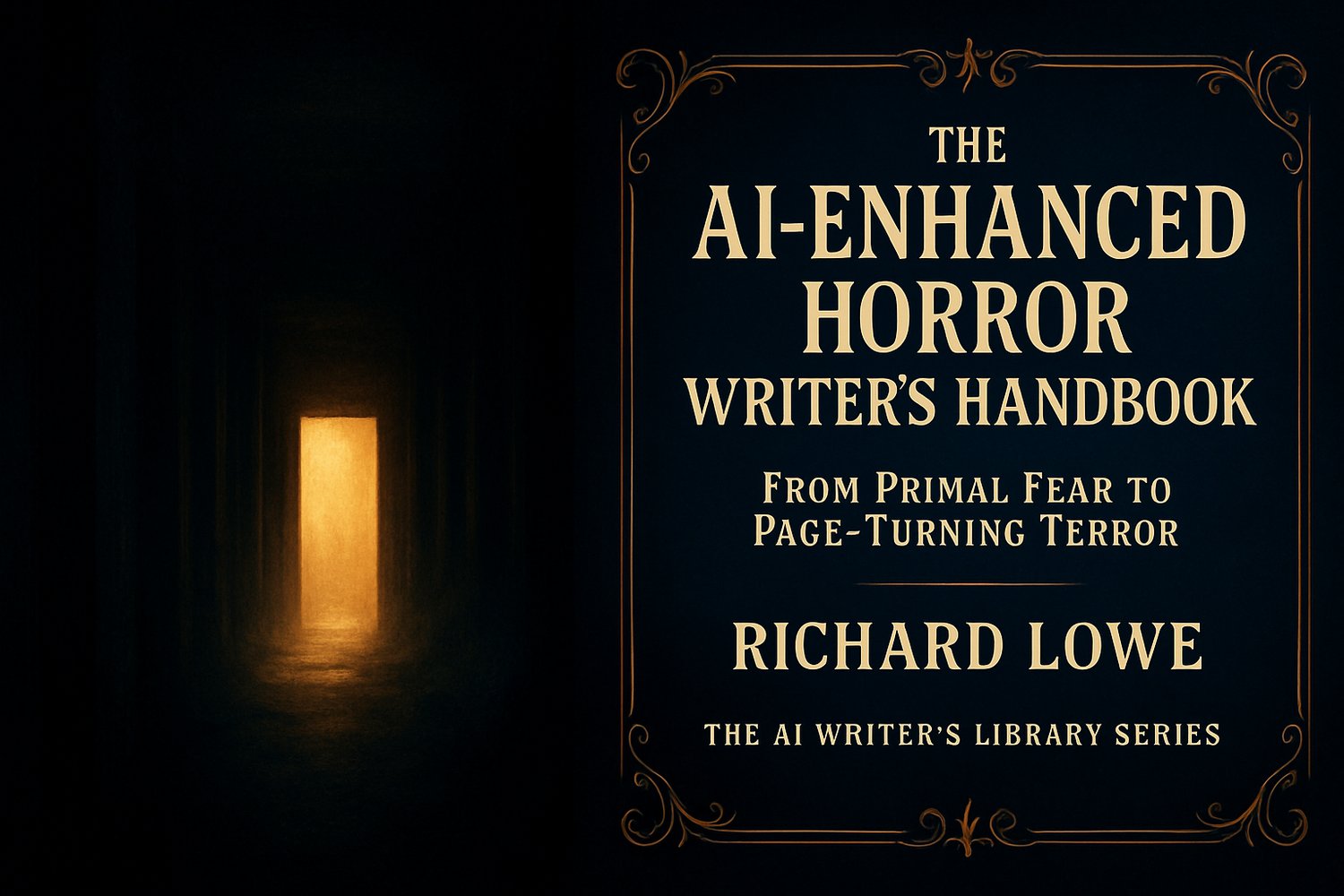
AI-Enhanced Horror Writer's Handbook
Horror That Haunts Readers For Days
They lose sleep. They check the locks twice. They recommend your book to friends who love being scared. They buy everything else you write.
That's the difference between horror that falls flat and horror that haunts. Between a monster readers skim past and a threat they feel in their bodies. Between scares they see coming from three chapters away and dread that builds until they can't stop reading.
Great horror works on every page. It triggers ancient brain systems, bypasses conscious thought, and creates physical responses readers can't control. They feel their heart rate climb. They hold their breath without knowing why. They keep reading because they have to know what happens next.
Bad horror creates nothing. Readers feel safe when they should feel threatened. They predict every scare. They put the book down and forget about it by morning. They leave reviews saying "not scary" and never buy the sequel.
Fear is a gift you give readers. Give them controlled terror they can survive, and they'll come back for more. Fail to scare them, and they'll find a writer who can.
Seven Horror Subgenres
Each subgenre makes different promises to readers. Understanding which contract you're signing shapes every craft decision.
Psychological horror delivers sustained ambiguity and unreliable narration. The core technique builds two parallel storylines, both internally consistent, so readers never know what's real. Supernatural horror features real entities with consistent rules. The technique creates mythology that terrifies without over-explaining. Cosmic horror creates existential dread through dangerous knowledge. The technique suggests the incomprehensible without becoming vague. Gothic horror emphasizes atmosphere, decay, and buried secrets. Place becomes character through unhurried revelation. Survival horror delivers body count and resource scarcity. Group dynamics under pressure create earned survival. Body horror features physical transformation and visceral detail. The horror grounds itself in flesh readers feel in their own bodies. Quiet horror builds subtle unease and lingering dread. Accumulated wrongness creates fear without explicit threat.
The handbook covers each subgenre with distinct conventions, reader expectations, and techniques for delivering what horror audiences actually want.
Seven Creature Types
Every classic monster has been done to death. The handbook covers strategies for restoring menace to exhausted creatures.
Vampires have been claimed by paranormal romance. The handbook shows how to restore the predator, the violation, the corruption that made vampires terrifying before they became romantic leads. Werewolves have been reduced to love triangle participants. You'll learn how to weaponize the loss of control, the horror of becoming something that destroys what you love. Zombies function as furniture in most fiction. The handbook covers what zombies actually represent and how to make the apocalypse feel personal instead of procedural. Demons often serve as just powerful antagonists. You'll learn how to make demonic horror about corruption, temptation, and the violation of the sacred. Ghosts produce flickering lights in every haunted house. The handbook shows how to make hauntings about unfinished business that matters, not just spooky atmosphere. Witches have been rehabilitated into misunderstood heroines. You'll learn how to restore the transgression, the forbidden knowledge, the price of power. Cryptids often function as just monsters to be hunted. The handbook covers how to make the unknown itself terrifying, not just the creature in the woods.
What's Inside
The handbook covers the psychology of fear, explaining why people seek controlled terror, how the amygdala hijacks conscious thought, and what we actually fear beneath surface-level monsters. Atmosphere and dread teaches how to build unease through sensory detail, environmental wrongness, and the careful accumulation of threat before anything appears. The horror protagonist covers balancing capability with vulnerability, isolation strategies, and why character flaws should feed the horror. The threat covers reveal timing, rule consistency, monster motivation, and how to maintain mystery while building mythology.
Seven horror subgenres provides distinct conventions for psychological, supernatural, cosmic, gothic, survival, body, and quiet horror. Seven creature types covers vampires, werewolves, zombies, demons, ghosts, witches, and cryptids with strategies for making exhausted monsters fresh. 180+ AI prompts address every horror challenge with tested prompts for atmosphere, creature design, pacing, research, and revision.
Plus 20 more chapters covering violence calibration, pacing terror, horror dialogue, folk horror, reader expectations, horror across media, series building, trope subversion, genre blending, sensitive content ethics, and building a sustainable horror writing career.
Four Deep-Dive Case Studies
Grim analyzes how the author's own Reaper anthology used structure as argument, calibrated revelation across 30 stories, and found beauty within darkness without false comfort. Shirley Jackson reveals the architecture of dread, sentence-level horror, and why The Haunting of Hill House remains the haunted house novel against which all others are measured. Stephen King demonstrates character investment that earns horror impact, ordinary settings for extraordinary threats, blue-collar horror, and why length creates immersion. Horror's Essential Library covers Stoker, Stevenson, Le Fanu, Blatty, Straub, Rice, Barker, Ligotti, Harris, and contemporary voices, explaining what each master teaches about horror craft.
Built for Writers Who Use AI
AI can accelerate horror research. It can also flood your manuscript with the same generic monsters and predictable scares appearing in every other AI-assisted project.
Ask AI for a vampire and you'll get the same brooding immortal everyone else gets. Ask for atmosphere and you'll get "the shadows seemed to watch her." Ask for a twist and you'll get the ending readers predict from chapter one.
The handbook teaches you to use AI as a horror tool while avoiding the traps. You'll get prompts for atmosphere, creature design, psychological horror, pacing, and subgenre research. Verification methods catch AI defaults. Techniques push past generic suggestions to find horror that actually unsettles.
AI is your research assistant, not your fear generator.
From an Author With 113 Published Books
My ghostwriting clients have secured over $30 million in venture capital with books where every element was chosen with intention. My brain doesn't accept "just make it creepy" as methodology. When I realized most horror advice is really thriller advice with monsters added, I dug until I found the psychology underneath. Why do people seek controlled fear? How does the amygdala hijack conscious thought? What do we actually fear beneath the surface-level monsters?
282 pages of horror craft. 34 chapters. 4 case studies. 180+ AI prompts. 5 reference appendices.
Fear is a gift. This handbook teaches you how to give it.