
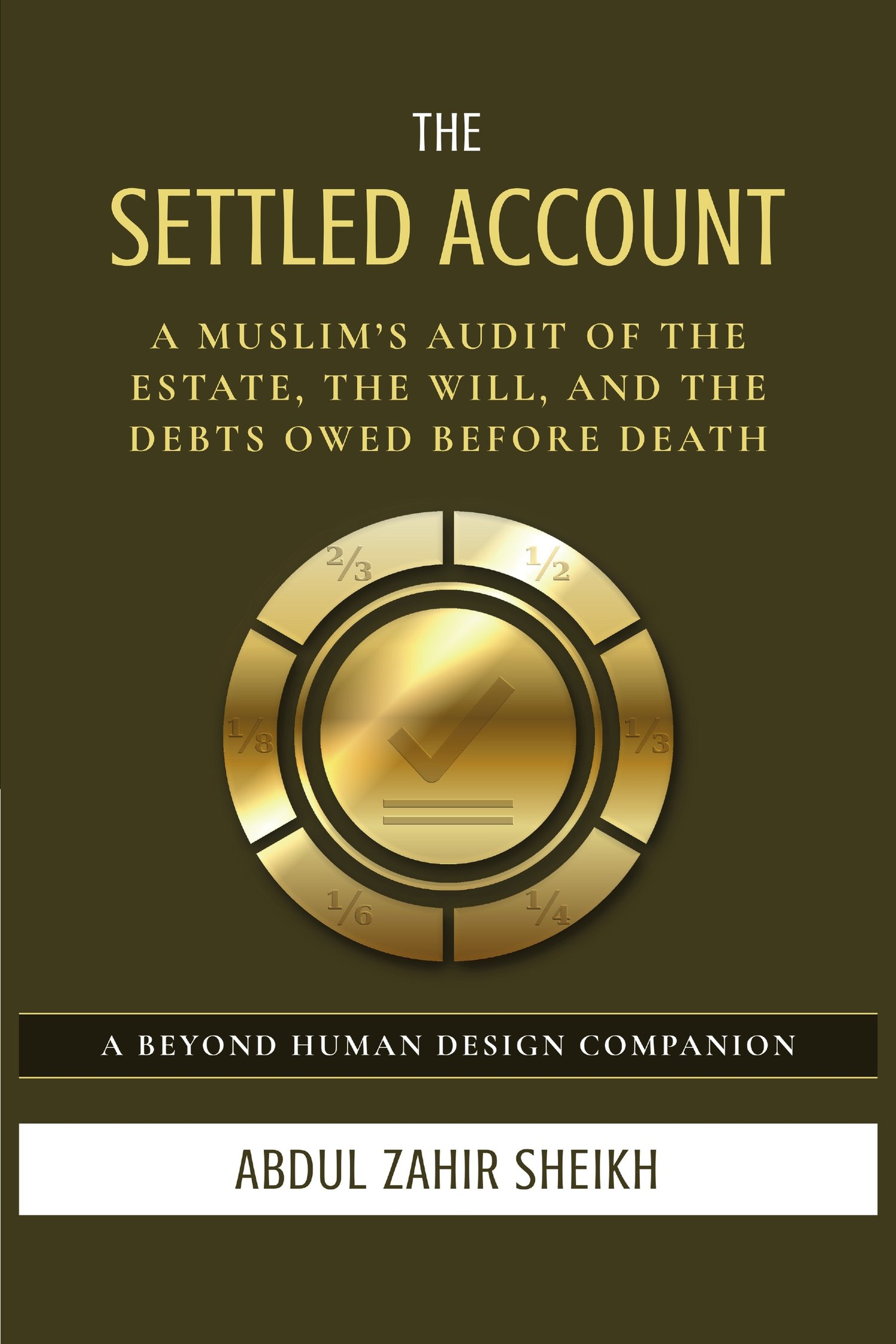
The Settled Account - eBook (EPUB)
Every estate is settled by someone. The only question is whether its owner settled it first, or left it to heirs who must guess at his debts, his trusts and his wishes.
For four decades a forensic examiner has read the records people leave behind, in more than a hundred investigations and over thirty receiverships. The hardest files were rarely the largest. They were the ones where the person who knew the answers had died and the records had not been kept. An estate is such a file. The Prophet ﷺ set the deadline: a Muslim with something to bequeath should not let two nights pass without a written will.
This book audits the settlement while the one person who can complete it is still alive. It builds the instrument before it examines the estate: a chain of custody for every text, a battery of verses and hadith rather than one text alone, convergence across the Quran, the Sunnah, the Arabic language and the practice of the Companions, and a falsifier stated first.
Seven pillars, in the order the texts set.
The rights of Allah come first: zakat arrears, missed fasts, vows and the Hajj. The rights of people come second: debts, trusts and wrongs. Then the will, the fixed shares, the family’s protection, the documents and the conversation with the heirs. Each pillar has four points on the Settlement Map, twenty-eight in all, scored 0, 1 or 2, and a 2 needs evidence: a signed and witnessed will, a receipt, a title transfer, a dated record. Its mirror, the Qata’ Map, scores the same points for what was withheld.
Three red points decide the verdict on their own: the shares withheld, the heirs not told or told falsely, and a record made falsely. A will is not the whole of the settlement. Count the will and ignore the debts, and the file is still open.
The law of the country, set beside the shares.
Annexes for Kenya, the United Kingdom and the United States set out the legal framework, the steps to settle the estate and the documents to gather, each dated and due for review. Worksheets carry the work: the Start Sheet and family tree, the Will Worksheet, the Estate Map, the Documents Checklist, the Conversation Guide and the Quarterly Tracker. The book is not a fatwa or legal advice. A Kadhi or a qualified scholar confirms the shares, and an advocate checks the law, before anyone acts.
Written by Abdul Zahir Sheikh, a Certified Fraud Examiner and Senior Partner at BDO East Africa with four decades of investigative experience across fourteen countries, this is a workbook meant to be used: three to six hours for a first audit, under an hour each quarter after that.
The file closes when you die. Until then it can still be put right.