
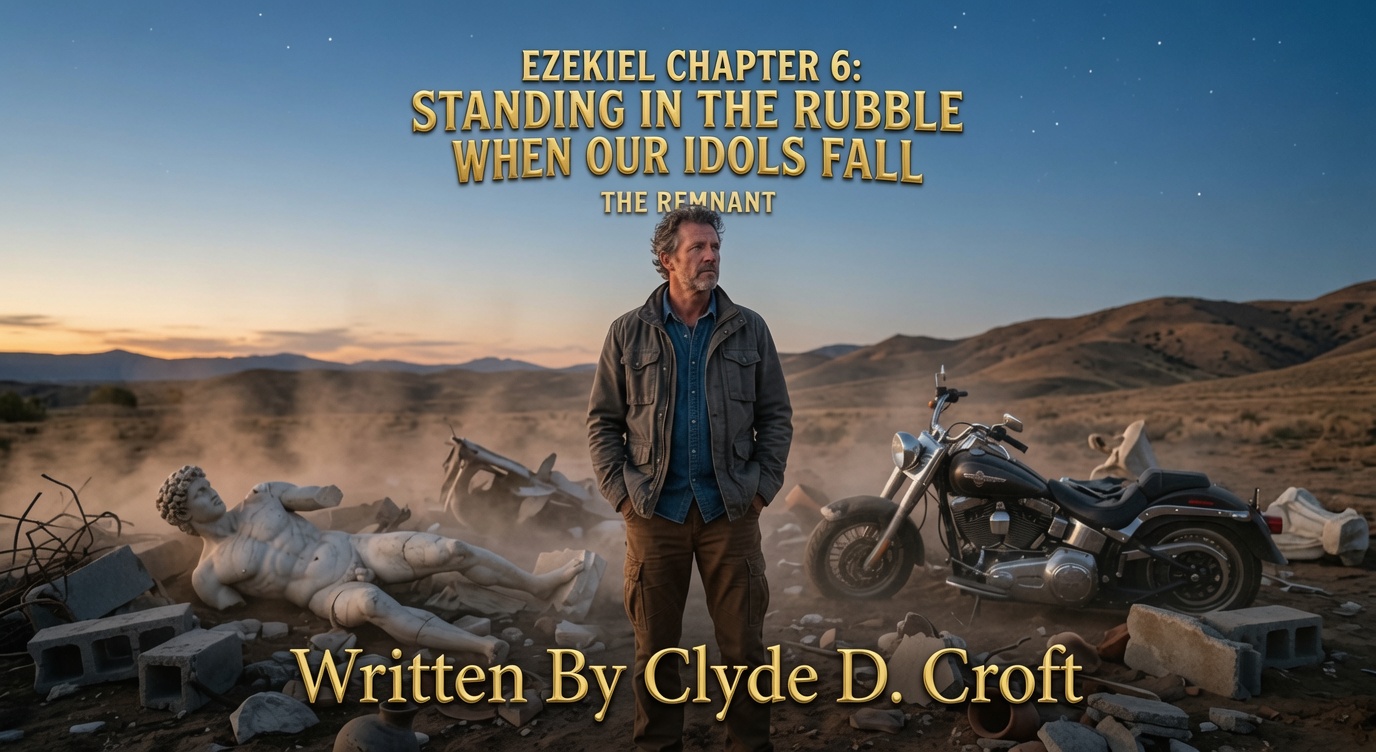
Ezekiel Ch 6 Standing in the Rubble When Our Idols Fall
When we read the ancient Hebrew prophets, it is easy to feel a cultural disconnect. We read about high places, carved stones, and physical altars, assuming these warnings belong strictly to ancient history. But if you strip away the ancient Near Eastern wardrobe, the essence of idolatry hasn't changed at all.
An idol is not merely a statue; it is the elevation of any relative entity—a career, a social system, a family structure, or a romantic partner—into an absolute position. It is looking to finite human beings to provide the identity, security, and validation that can only reside in the Infinite.
In this sharp, analytical, and deeply unapologetic commentary, Ezekiel Chapter 6 and the Book of Ezra are systematically unpacked not as dry academic relics, but as a visceral blueprint of the human condition. This paper traces the precise lifecycle of our "functional idols": from their romanticized construction to their catastrophic collapse, and ultimately, to the emergence of the "remnant"—the independent survivors who have the courage to clear the debris and set the radical boundaries required to rebuild on true bedrock.
Key Analytical Sections:
- The Architecture of Estrangement (Ezekiel 6:1–3): An examination of the profound psychological and relational silence that sets in when a foundational covenant or primal bond completely fractures.
- Hardness of Heart and Poetic Irony (Ezekiel 6:4–7): A gritty cross-examination of Ezekiel’s "dung-gods" alongside Matthew 19 (Jesus on divorce), revealing why the people we lean on most heavily often become the instruments of our deepest crushing.
- The Severe Mercy of Exile (Ezekiel 6:8–10): A deep look into the structural framework of 1 Corinthians 7 & 13, tracking the painful but necessary progression of the "remnant" who are forced into scarcity so they can finally wake up.
- The Ezra Mandate & Radical Boundaries (Ezra 3 & 10): A powerful analysis of the reconstruction process, tracking the absolute historical necessity of dissolving toxic, compromised configurations ("strange wives") to protect your new foundation.
- The Patriarchal Blueprint (Jasher & Jubilees): A deep-dive into pseudepigraphal mechanics, detailing Abraham's break from familial betrayal and the concept of the "circumcision of the mind."
- The Secular & Humanist Interface: A concluding philosophical analysis on the absolute necessity of trauma and disillusionment for breaking codependency and reclaiming personal sovereignty.
Who This Paper Is For:
This publication is written for researchers, thinkers, writers, and individuals who have experienced the visceral trauma of institutional betrayal, familial abandonment, or a devastating divorce. If you have ever watched the infrastructure of your life collapse and found yourself standing alone in the aftermath, this paper provides the historical, theological, and psychological vocabulary to understand your exile—and your survival.