

Fixing Overtrading Explained — Measured (PDF Guide)
Everybody is told they trade too much and nobody is told how much too much is. The advice arrives as a character judgement, it has no number attached to it, and so there is no way to tell whether you are doing it or to know when you have stopped.
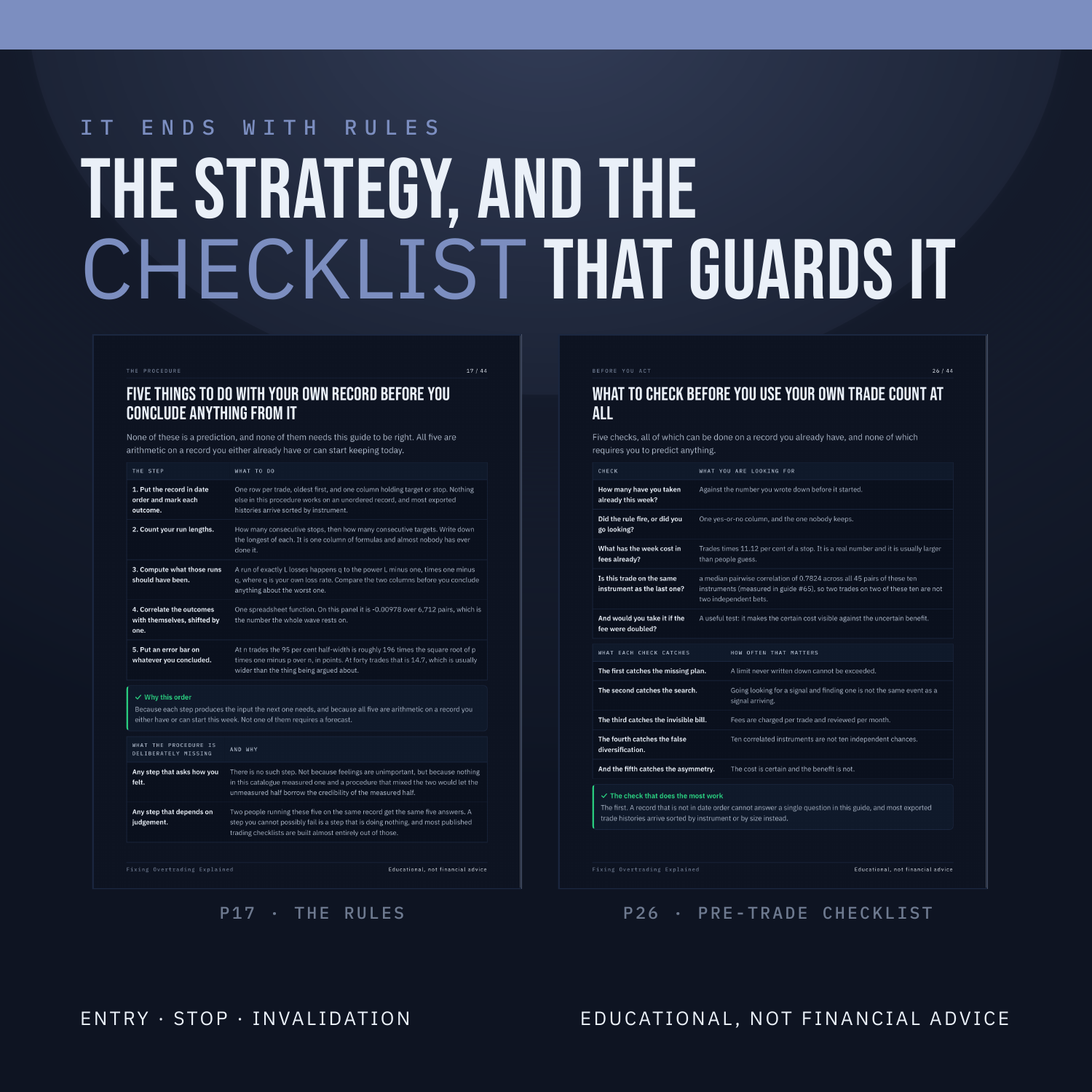
This guide splits overtrading into the half that can be measured and the half that cannot. Four pre-registered tests ask whether re-entering quickly produces worse trades, and the answer is reported exactly as it came back. Then it does the fee arithmetic, which is certain, exact, and far larger than most people expect. This is a 44-page PDF that teaches Fixing Overtrading from the first thing you see on the screen through to a written strategy with an entry, a stop and an explicit rule for when the trade is wrong.
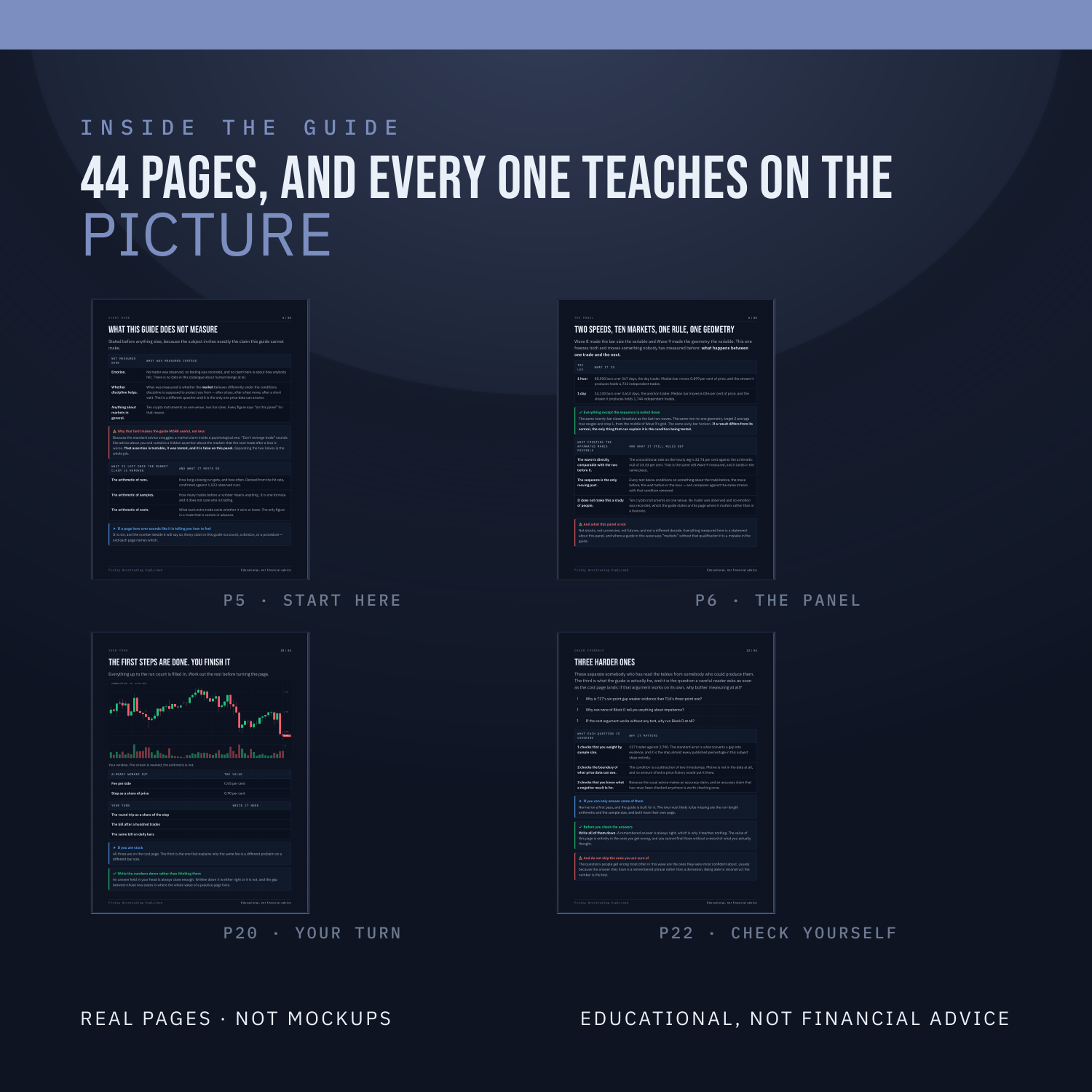
Nothing is taught underneath a chart. Every label sits on the candle, the line or the level it is describing, on real BTC, ETH, SOL and LINK charts. There are three quizzes on real charts, each followed by the same chart re-shown annotated with the reasoning, plus faded practice pages where the first steps are filled in and you finish the rest.
WHAT'S INSIDE
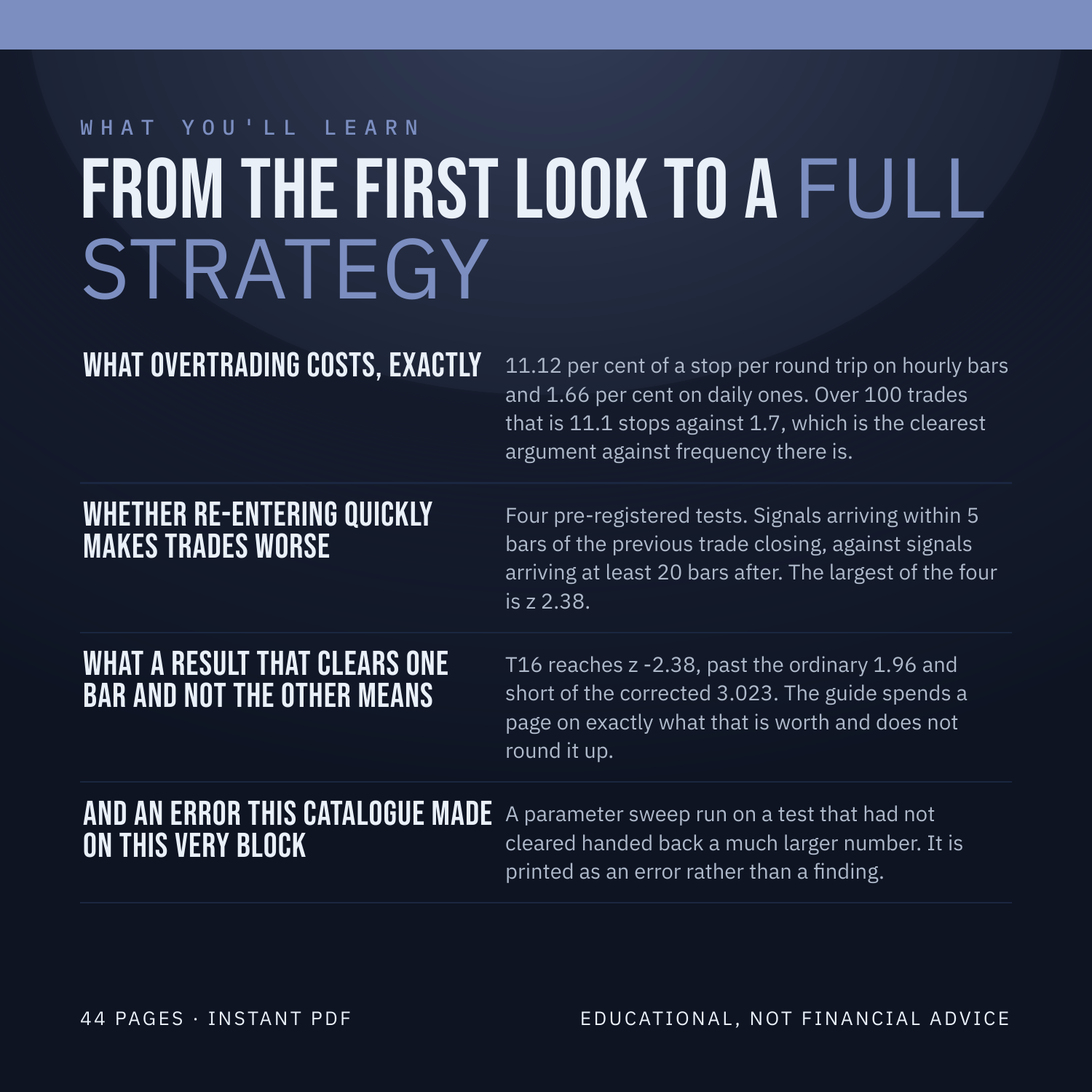
What overtrading costs, exactly -- 11.12 per cent of a stop per round trip on hourly bars and 1.66 per cent on daily ones. Over 100 trades that is 11.1 stops against 1.7, which is the clearest argument against frequency there is.
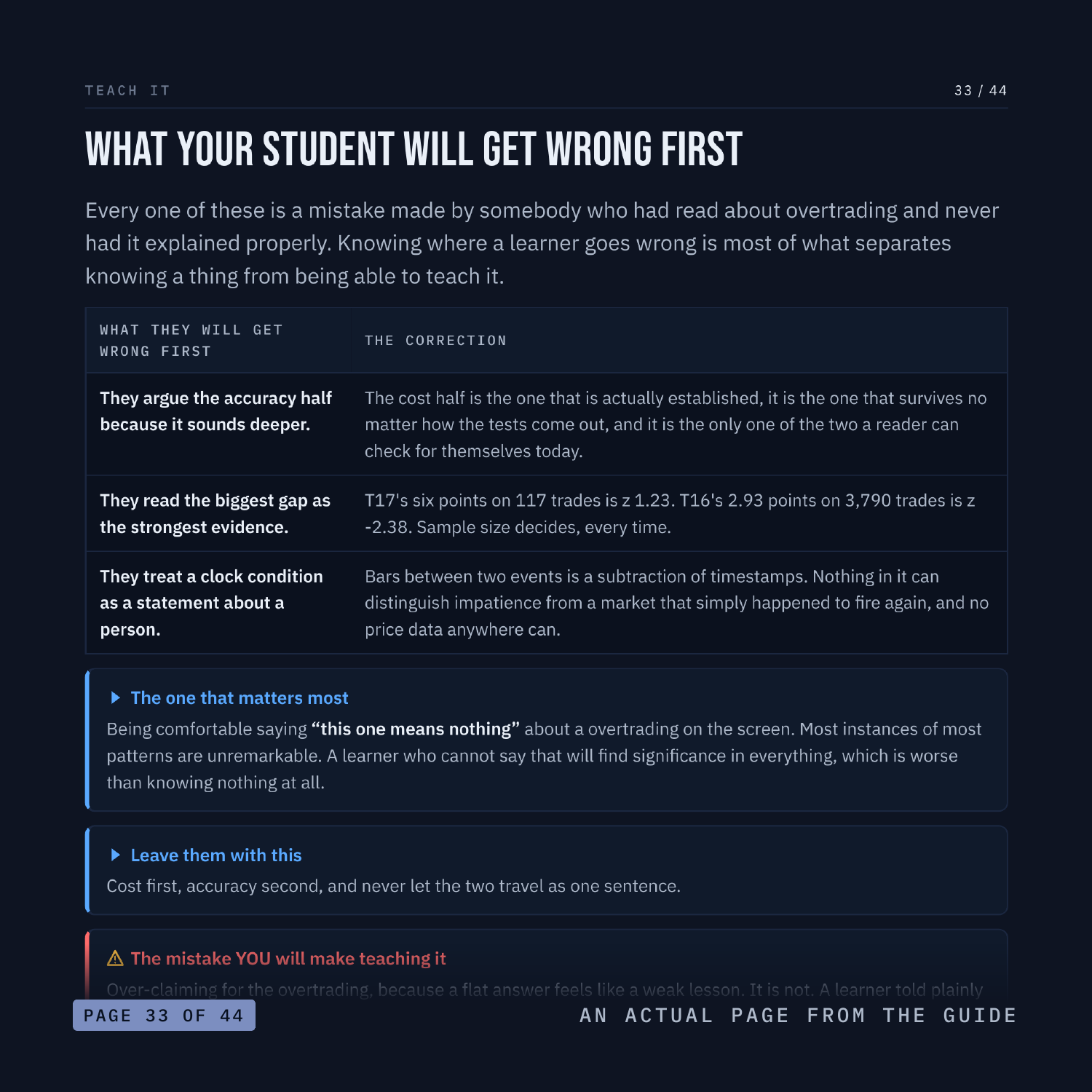
Whether re-entering quickly makes trades worse -- Four pre-registered tests. Signals arriving within 5 bars of the previous trade closing, against signals arriving at least 20 bars after. The largest of the four is z 2.38.
What a result that clears one bar and not the other means -- T16 reaches z -2.38, past the ordinary 1.96 and short of the corrected 3.023. The guide spends a page on exactly what that is worth and does not round it up.
And an error this catalogue made on this very block -- A parameter sweep run on a test that had not cleared handed back a much larger number. It is printed as an error rather than a finding.
WHAT YOU'LL BE ABLE TO DO
Compute what your own trading frequency costs you in fees.
Count your trades per week instead of judging your discipline.
Say what a z between the two bars is worth, without rounding it up.
Tell a cost argument from an accuracy argument in any advice.
Set a frequency limit as a number, decided before the week starts.
AN HONEST NOTE
Fixing Overtrading is a clue, not a crystal ball. It describes what price has already done. This guide contains no win-rates, no backtest results and no promises about what you will make, because nobody can verify those and you should not trust anyone who prints them. What it hands you instead is a set of rules you can test yourself on TradingView in an afternoon. Educational, not financial advice.
Instant download. 44 pages, PDF.