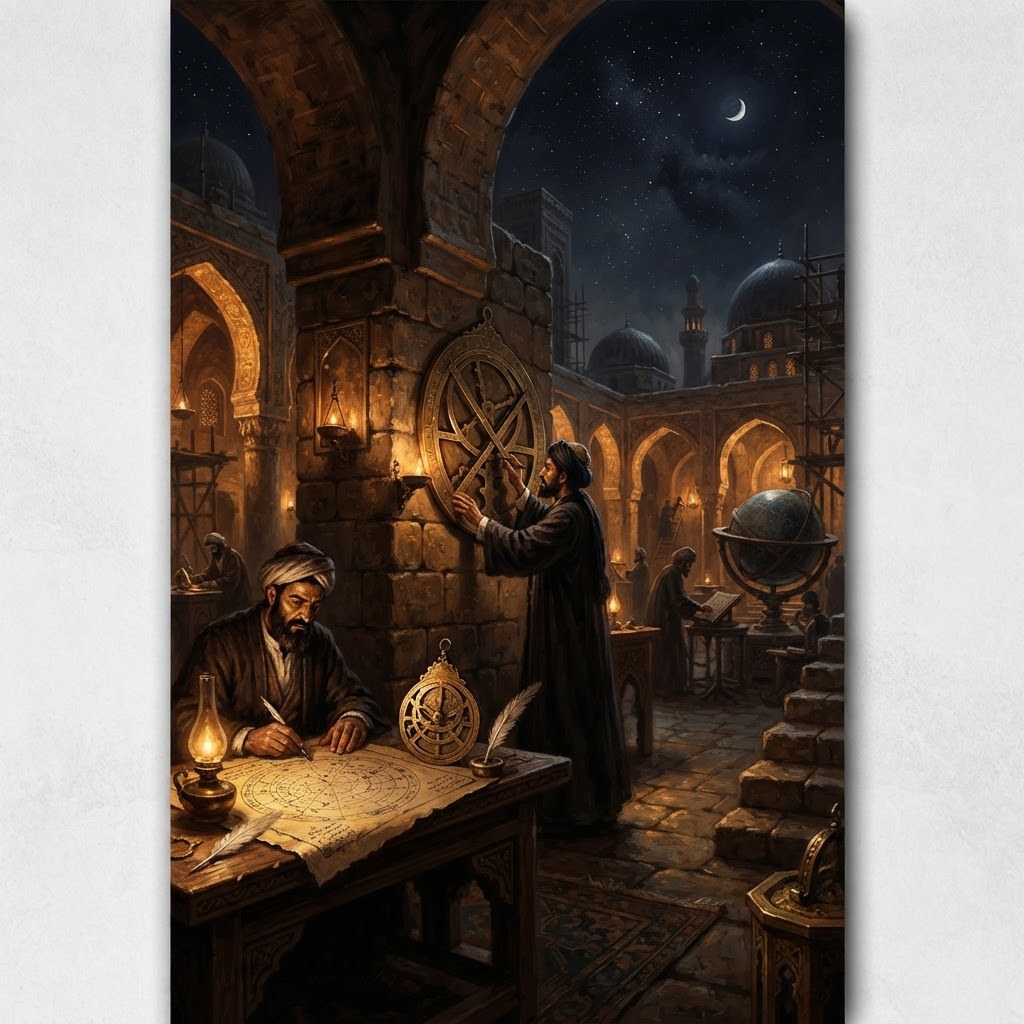
History of Astronomy: Islamic Astronomy
When Europe's sky science went dark, it burned brighter elsewhere: in Baghdad's observatories and Maragha's, Islamic astronomers translated Ptolemy's Almagest at least five times, adopted the sine function from India in place of Greek chords, and rebuilt the math. This volume covers the golden period: al-Khwarizmi's tables, al-Battani's refinements of the solar year, Ibn al-Haytham's doubts about Ptolemy's physics, al-Sufi's star catalog, the Maragha models anticipating Copernicus. It explains the astrolabe culture, the qibla-finding geometry, and how the tradition preserved, corrected, and transmitted the ancient sky to the Renaissance. Subtitle: The Golden Age. History of Astronomy: Islamic Astronomy is part of History of Astronomy in the Aira Astralis library by Aira Astralis.