

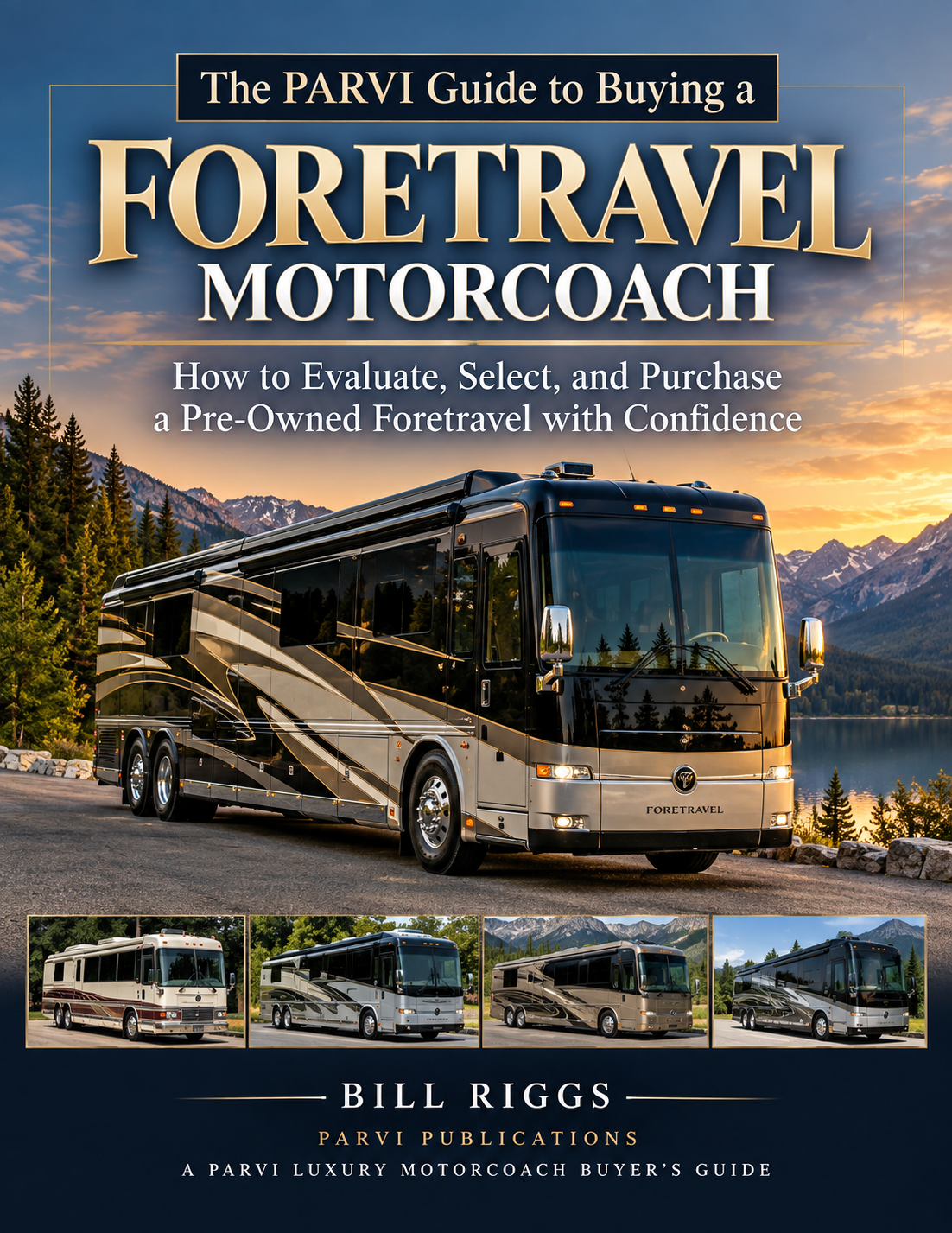
The PARVI Guide to Buying a Foretravel Motorcoach
A Foretravel is not simply another used motorhome—and buying one should not be approached like an ordinary RV purchase.
For decades, Foretravel has produced some of America's most distinctive luxury motorcoaches. From the Grand Villa and early Unihome coaches through the U270, U295, U320, Nimbus, Phenix, IH-45, and multiple generations of the Realm, the Foretravel name has become associated with sophisticated engineering, substantial construction, exceptional road manners, and motorcoaches capable of remaining desirable decades after they were built.
But reputation alone cannot tell you whether the Foretravel sitting in front of you is the right coach to buy.
The PARVI Guide to Buying a Foretravel Motorcoach helps prospective buyers understand the individual coach behind the badge. Certified Master RV Inspector and PARVI founder Bill Riggs draws upon professional inspection experience, technical research, manufacturer information, component documentation, and years of evaluating luxury motorcoaches to explain what matters when considering a pre-owned Foretravel.
This is not a generic RV buying guide. It follows Foretravel through eight distinct generations, explaining how chassis architecture, engines, transmissions, suspension and leveling systems, auxiliary braking, slides, electrical systems, hydronic heating, electronics, automation, and other major systems evolved. A classic U320, a Phenix, an IH-45, an early Realm, and a modern Realm may share the Foretravel name while representing very different ownership propositions.
Readers learn why VINs, chassis information, component data plates, factory documentation, service records, modifications, and installed equipment matter when determining what a particular coach actually is and what it may require from its next owner.
The guide examines chassis and suspension systems, air systems, steering and braking, engines and transmissions, slides and pneumatic seals, hydronic heating, generators, HVAC, batteries and inverters, plumbing and holding tanks, SilverLeaf and other electronic controls, tires and age-limited components, water intrusion, structural concerns, owner modifications, recalls, fluid analysis, service history, and road testing.
Just as importantly, the book explains how to distinguish cosmetic defects from meaningful purchase risks, definable repairs from systemic neglect, and predictable maintenance from open-ended uncertainty.
A beautiful interior does not prove that a coach has been maintained. Low mileage does not necessarily mean low risk. A thick folder of receipts does not automatically establish responsible ownership. An expensive repair does not necessarily make a coach a poor purchase, and a discounted price does not make an unknown problem inexpensive.
Extensive buyer-oriented appendices provide practical resources for model identification, seller interviews, service-record review, tire and battery planning, fluid analysis, major-system replacement planning, generation comparisons, selecting and communicating with a professional inspector, purchase decisions, first-year ownership, service resources, and long-term ownership-cost planning.
The book also carries the buyer beyond the purchase, addressing the first thirty days of ownership, building a permanent coach file, learning the exact systems installed, preventive maintenance, and knowing when specialized professional assistance is warranted.
This book does not tell you which Foretravel to buy. It gives you the knowledge to understand the one you are considering.
The best Foretravel is not necessarily the newest, least expensive, or most heavily optioned. It is the individual motorcoach whose architecture, condition, history, floorplan, serviceability, acquisition cost, and ownership demands fit the person who will be responsible for it.
Understand the coach. Verify the evidence. Buy with confidence.