
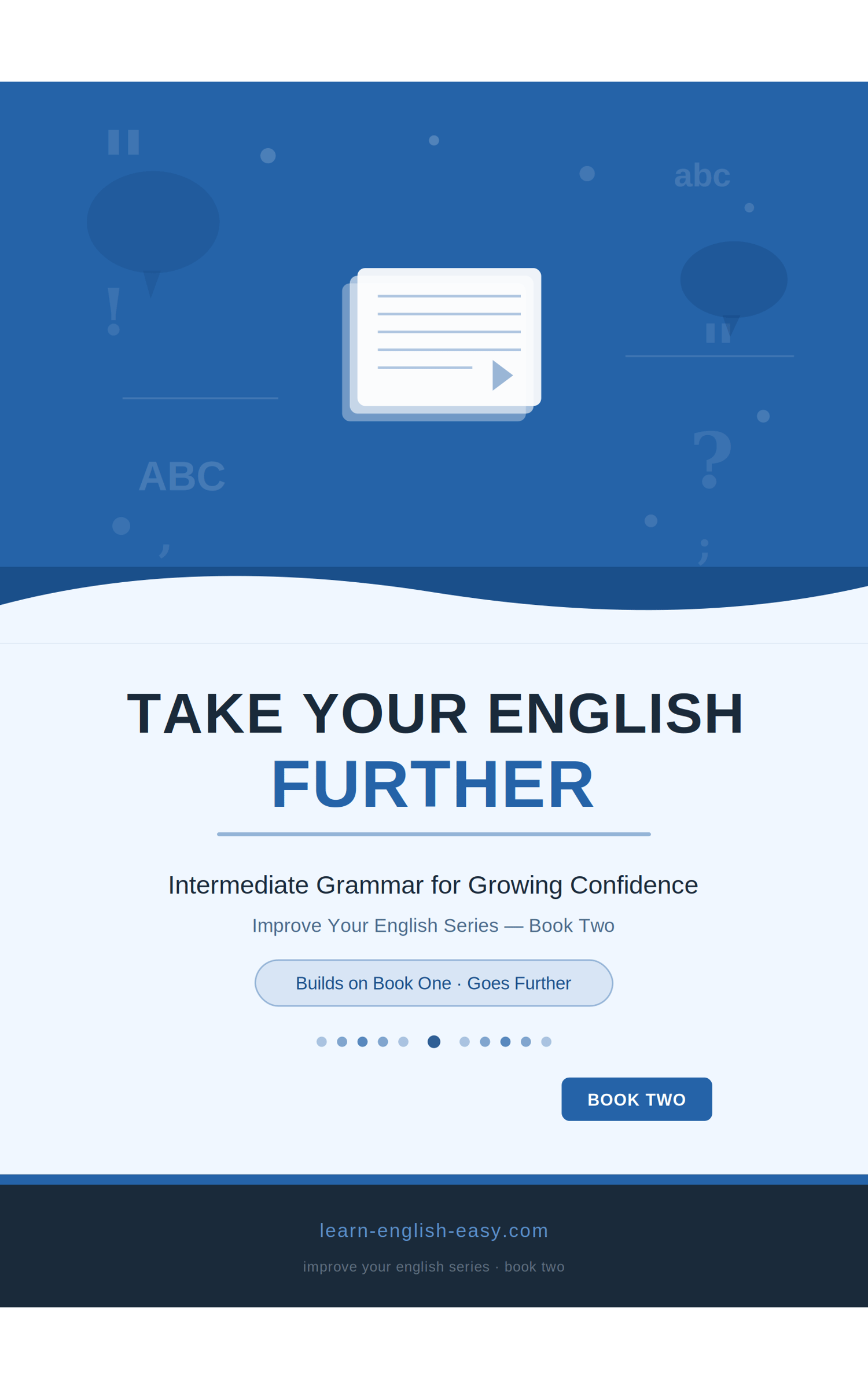
The Essentials of Intermediate English Grammar
The Essentials of Intermediate English Grammar
A Guided Journey for Secondary Students
Introduction
Learning a language is one of the most rewarding things a person can do — and you have already taken the first important step. If you are reading this book, it means you already know the basics of English. You can introduce yourself, ask questions, and talk about everyday topics. That is a real achievement, and you should feel proud of how far you have come.
Now you are ready for the next stage — and that is exactly what this book is designed for.
What Does "Intermediate" Mean?
The word intermediate simply means "in between." An intermediate learner is no longer a beginner, but has not yet reached advanced fluency. In grammar terms, you are at the intermediate level if you already understand and use the following:
- Basic sentence structure (subject + verb + object)
- Common present, past, and future tenses
- Everyday vocabulary for familiar situations
- Simple questions and negatives
- Basic use of articles (a, an, the) and prepositions
If that description sounds like you — great. You are in exactly the right place. If you are unsure about one or two of those points, do not worry. This book will help you build confidence as you move forward.
What This Book Will Teach You
At the intermediate level, grammar stops being about memorizing rules and starts being about understanding why English works the way it does. That shift makes a real difference. When you understand the reason behind a rule, you do not just remember it — you can use it in new situations you have never practised before.
This book covers the grammar topics that intermediate learners need most. You will learn how to:
- Use the full range of English verb tenses with confidence and accuracy
- Understand the difference between active and passive voice, and choose the right one
- Connect ideas clearly using a wider range of conjunctions and linking words
- Report what others have said accurately, using reported speech
- Form conditional sentences to talk about possibilities, hypotheticals, and regrets
- Understand and use modal verbs to express ability, obligation, permission, and likelihood
Each chapter introduces one topic, explains it clearly, and gives you plenty of examples in natural, everyday English. Exercises at the end of each chapter let you practise what you have learned before moving on.
How to Use This Book
You can work through this book from beginning to end — the chapters are arranged so that each one builds on what came before. However, if there is a topic you already know is difficult for you, you are welcome to go straight to that chapter and use it as a focused reference.
Read the explanations slowly. It is better to understand one idea completely than to rush through several. When you try the exercises, attempt them without looking back at the chapter first — this is how you discover what you have truly learned, rather than what you can only remember with help.
Mistakes are part of the process. Every error you notice and correct is your grammar getting stronger.
A Note to the Reader
English is one of the most widely used languages in the world. It is the primary language of international business, science, technology, and higher education. Reaching a strong intermediate level opens doors — to clearer communication, to academic success, and to opportunities you may not even be able to see yet.
This book was written with you in mind — a student who is ready to take their English seriously, who wants clear explanations rather than confusing technical jargon, and who learns best by seeing grammar in action through real sentences.
You have already come further than you might think. Let's keep going.
— W. David Jollymore