
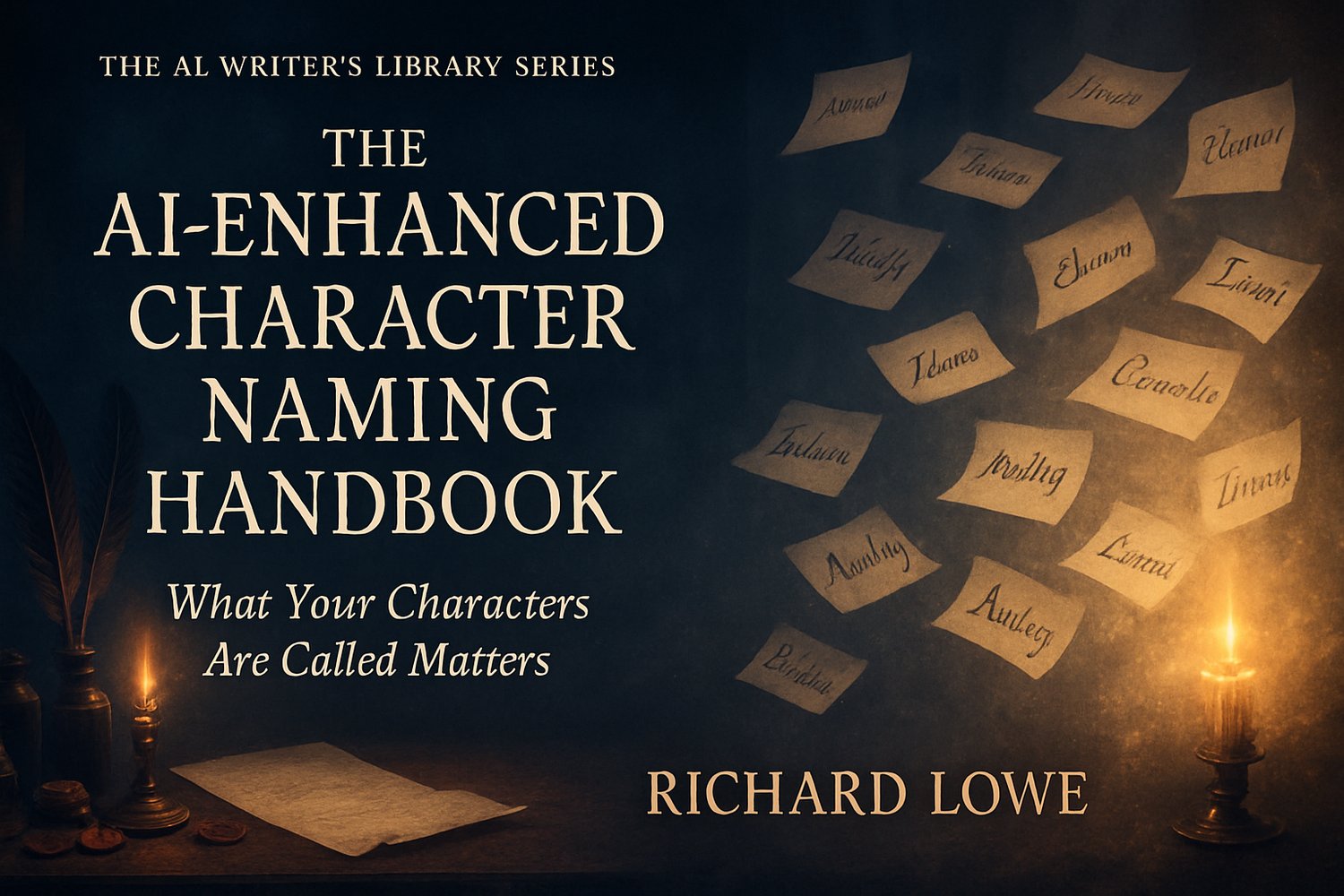
AI-Enhanced Character Naming Handbook
Character Names That Sell Books
That's the difference between "Sarah Miller" and "Temperance Brennan." Between "Jack" and "Atticus." Between a name grabbed from a baby website and a name chosen with intention.
Great names work on every single page. They signal class, culture, era, and psychology before you write a line of description. Readers process these signals before conscious thought kicks in. They form attachments. They remember.
Bad names create confusion. Readers mix up characters. They put the book down. They leave reviews saying "I couldn't keep the characters straight." They never buy the sequel.
Names are the first promise you make to readers about who this person is. Break that promise and readers feel betrayed, even if they can't say why.
What Names Signal to Readers
Readers process character names before they process anything else. Those signals shape how they experience every scene.
Sound quality sends immediate messages. Hard consonants signal strength while soft sounds suggest tenderness or vulnerability. Think Brick versus Lily. Era markers date characters instantly. Madison screams 1990s-2000s while Edith screams 1920s. Class markers signal social position, with some names reading as aristocratic and others as working class. Reginald versus Billy. Cultural origin carries ethnic and regional associations readers recognize instantly. Siobhan versus Maria. Distinctiveness determines whether readers can tell characters apart. Memorable names stick while generic names blur together. Atticus versus John.
The handbook teaches you to control these signals intentionally, matching names to the characters you're creating.
Genre-Specific Naming That Readers Expect
Romance character names carry emotional weight before the first kiss. Readers expect certain sounds, certain rhythms. Name your billionaire hero "Eugene" and watch the fantasy deflate.
Fantasy character names need to feel authentic to invented cultures without being unpronounceable. Tolkien understood this. So did Ursula K. Le Guin. The writers who pepper everything with apostrophes did not. You'll learn how to build naming systems that feel like real languages.
Thriller and mystery names should stick in memory through fast-paced plots. Your detective needs a name readers won't forget between action scenes. Your villain needs a name that doesn't accidentally sound comedic.
Historical fiction names must fit the era without confusing modern readers. A Regency romance heroine named "Madison" shatters immersion. But authentic period names can feel alien. The handbook shows you how to research what names existed and choose ones that work for contemporary audiences.
Science fiction names range from near-future familiar to completely alien. When do you use modified Earth names? When do you invent something new? How do you make alien names pronounceable?
YA character names follow trends that date fast. Yesterday's edgy is today's cringe.
Built for Writers Who Use AI
AI can accelerate naming research. It can also poison your manuscript with the same generic defaults plaguing every other AI-assisted project.
Ask AI for a Chinese character name and you'll get Wei Chen. Ask for Japanese and you'll get Yuki Tanaka. Ask for Mexican and you'll get María García. These aren't wrong. They're just the same names appearing in thousands of other books by writers who didn't push past the defaults.
The handbook teaches you to use AI as a naming tool while avoiding the traps. You'll get prompts for specific problems, verification methods that catch AI errors, and techniques for pushing past generic suggestions to find distinctive, authentic options.
What's Inside
The handbook covers the psychology of character names, explaining why readers trust some characters instantly and distrust others before a single line of dialogue. Genre conventions break down what romance readers expect versus thriller readers versus literary fiction readers. Cultural authenticity covers research methods, stereotype avoidance, and how to recognize when you're getting it wrong. Period-appropriate naming for historical fiction explains how to access census records and parish registers. Fantasy and science fiction naming systems covers building consistent conventions and the apostrophe problem.
Common naming disasters and how to fix them addresses similarity problems, forgettable protagonists, stereotypes, anachronisms, and accidental comedy. 50+ AI prompts handle cultural research, historical verification, fantasy generation, and problem diagnosis.
Plus ten more chapters covering nicknames and forms of address, places and worlds, animals and creatures, ethics and sensitivity, pen names, audiobook considerations, legal issues, series management, and the complete naming process from first draft to final revision.
Nine Deep-Dive Case Studies
Old Time Radio examines when names had to carry everything because audiences couldn't see faces. Lamont Cranston, Sam Spade, The Lone Ranger. Justified and Ozark show how regional naming creates place and signals who belongs. Dickens reveals the master of meaningful names, when obvious works, and why Scrooge became a word. Marvel and DC cover ninety years of naming decisions, the alliteration epidemic, and names that dated badly. Star Wars shows George Lucas at his best with Darth Vader and Han Solo and his worst with Count Dooku and Elan Sleazebaggano. Video Game Naming covers Mass Effect, The Witcher, and Final Fantasy. YA Naming Trends explains why Katniss worked and Renesmee became a punchline. Animal Farm analyzes political allegory through animal names. Bad Television Naming shows what happens when long-running series lose control.
From an Author With 113 Published Books
My ghostwriting clients have secured over $30 million in venture capital with books where every name was chosen with intention. My brain doesn't accept "just pick something that sounds good" as methodology. When I realized I'd been naming characters on instinct for decades without understanding why some names worked and others didn't, I dug until I found the systems underneath.
200+ pages of naming craft. 17 chapters. 9 case studies. 50+ AI prompts. Complete naming checklist.
Readers remember great characters. Great characters start with great names.