
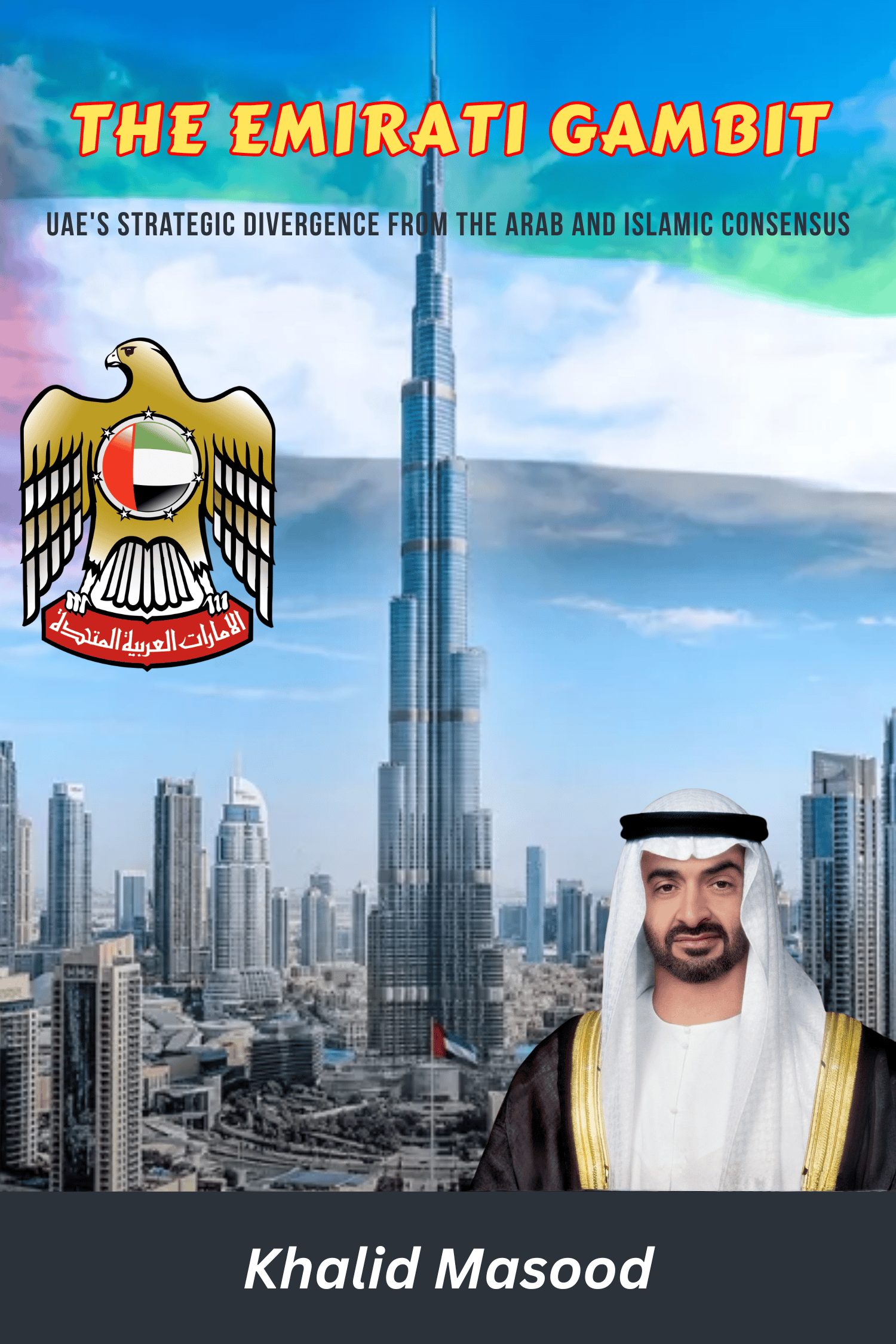
The Emirati Gambit
This book explains the UAE's foreign policy revolution—encompassing normalisation with Israel, withdrawal from OPEC, construction of a Hindu temple, and consistent Iranian attribution—represents a calculated break from Arab and Islamic solidarity frameworks. The Indian diaspora, comprising 38 percent of the UAE's population and serving as the economic backbone of the federation, exerts structural influence that shapes these policy choices through labour dependency, remittance flows, and commercial networks penetrating the highest levels of Emirati decision-making. Driven by threat perceptions, economic diversification imperatives, and sovereign convenience, the Al Nahyan family has prioritised bilateral great-power partnerships over multilateral umma cohesion. While these choices address immediate security and fiscal pressures, they fracture the collective structures—GCC, OPEC, Arab boycott—that historically protected smaller Muslim states. From a Pakistani Muslim perspective committed to Islamic unity, this trajectory risks reducing divine solidarity to disposable policy, substituting transactional pragmatism for the perseverance that sustained Muslim civilisation through fourteen centuries of adversity.