

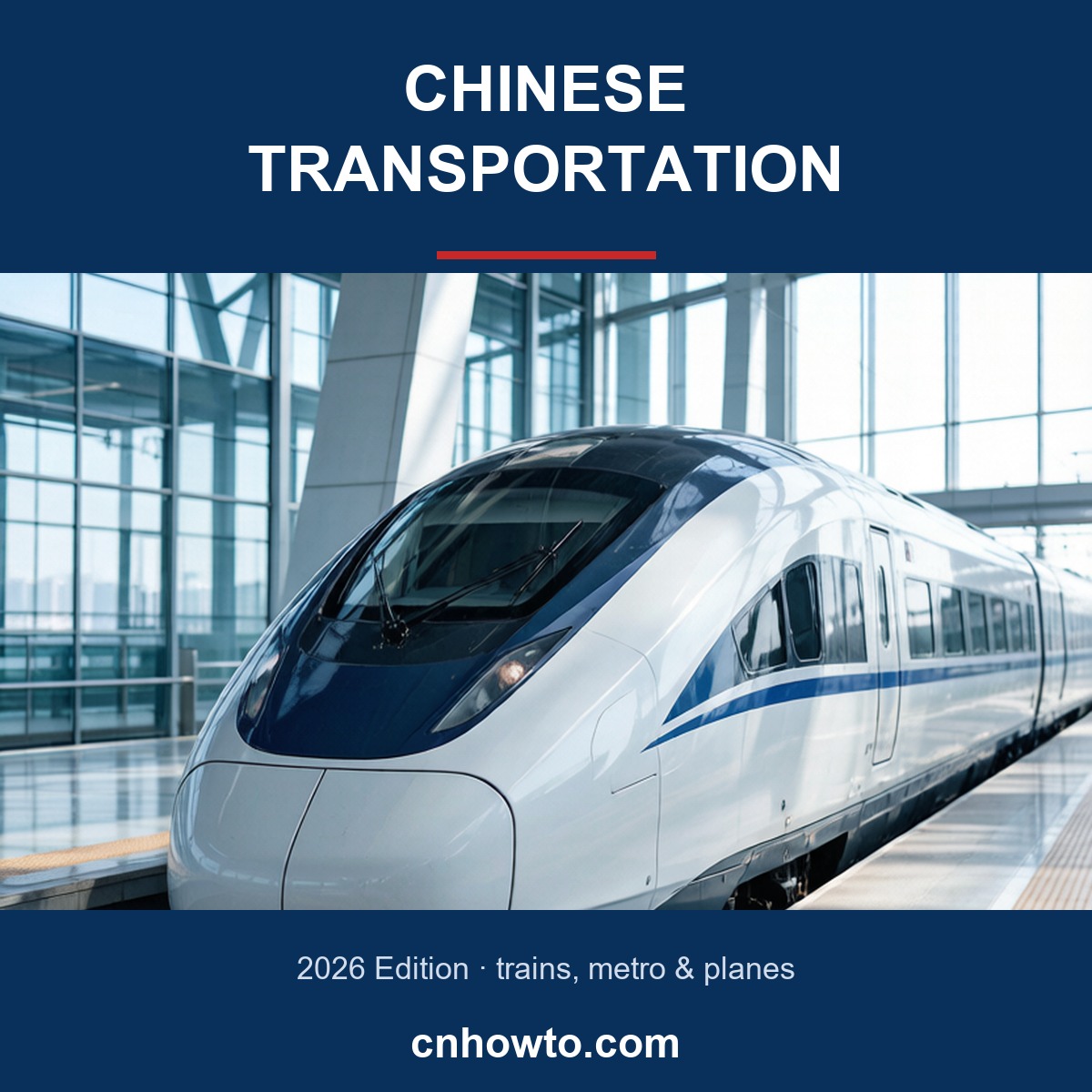
Chinese Transportation Guide (2026 Edition)
On Sale
$7.99
$7.99
You land in China. Google Maps won't load. Uber doesn't exist. The train station has 28 platforms, your ticket is entirely in Chinese, and the automated gate won't scan your passport. This is not a vacation — this is a logistics operation.
China has the world's largest high-speed rail network, the most extensive metro systems, and a ride-hailing app that actually works. The problem: none of it was designed for non-Chinese speakers. This guide fixes that.
WHAT'S INSIDE (8 Chapters):
- High-speed trains: G/D/C classes explained, seat classes (second/first/business with real price ranges), buying tickets on 12306 vs Trip.com, passport scanning at the gate (and what to do when it fails), station navigation
- Regular trains & sleepers: hard sleeper vs soft sleeper vs hard seat, the 12-hour overnight journey, securing your belongings, the squat toilet situation
- Metro systems: single-journey tickets vs transit cards vs Alipay QR codes, security checks at every entrance, peak hours, last train times by city, reading Chinese-English station maps, electric scooter awareness
- Didi & taxis: how to use Didi without Chinese, car types (Express, Premier, Hitch — with safety warnings), what to do when your driver calls you, airport pickups, the Didi Rider international app
- Domestic flights: train vs plane decision rule (under 4 hours = train, over 6 = fly), Chinese airlines, power bank rules (max 100Wh per bank, max 2), flight delays and compensation rules
- Buses & coaches: when to use intercity buses, the chaos of bus stations, the sleeper bus that's being phased out
- Quick reference: transportation apps at a glance, ticket-buying phrases with pinyin, station vocabulary, the one rule that solves everything (book 2-3 weeks ahead for holidays, never travel during Chunyun without reservations)
FORMAT: PDF (instant download) UPDATED: July 2026 PRICE: $7.99