
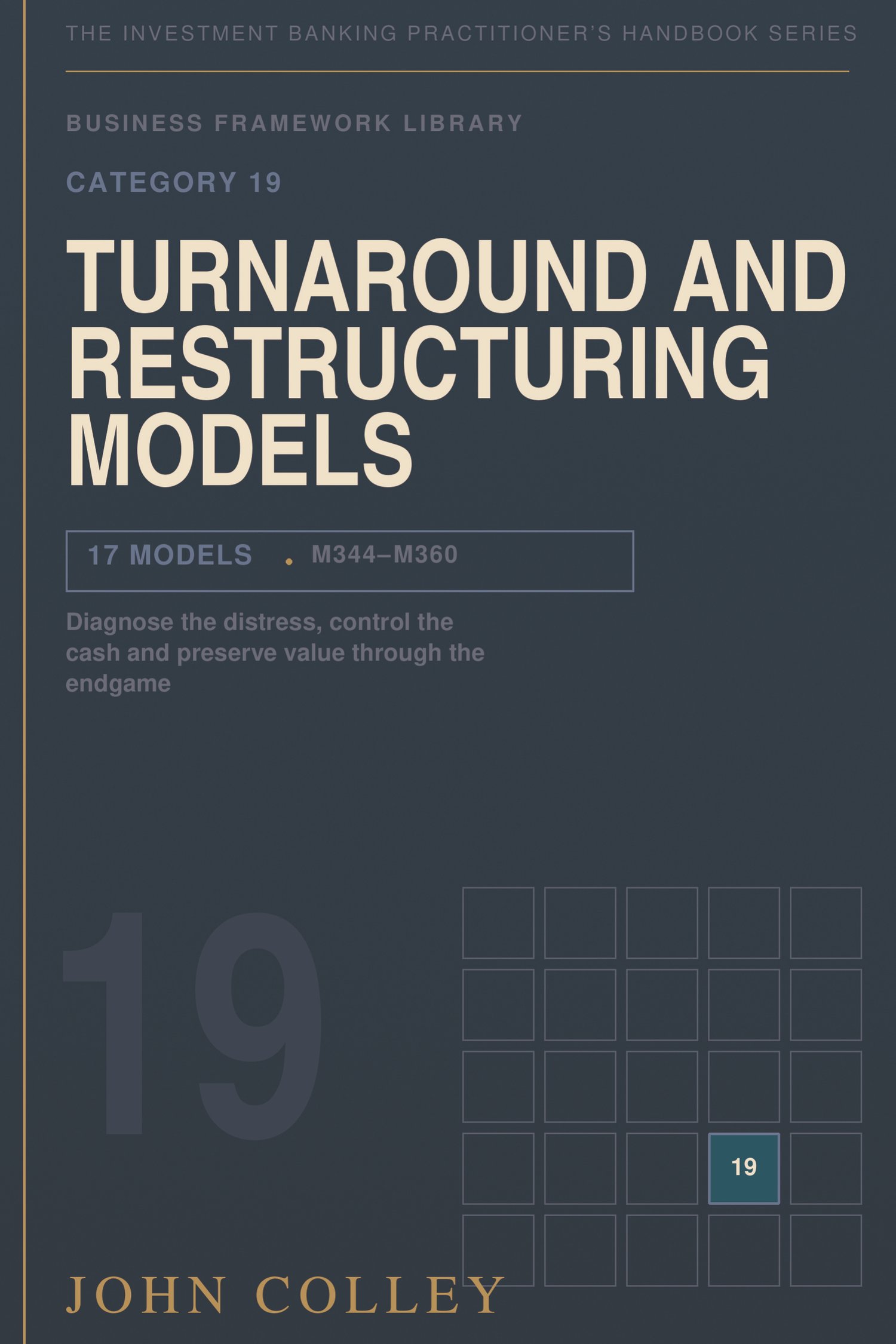

19 How to Master Turnaround and Restructuring Models
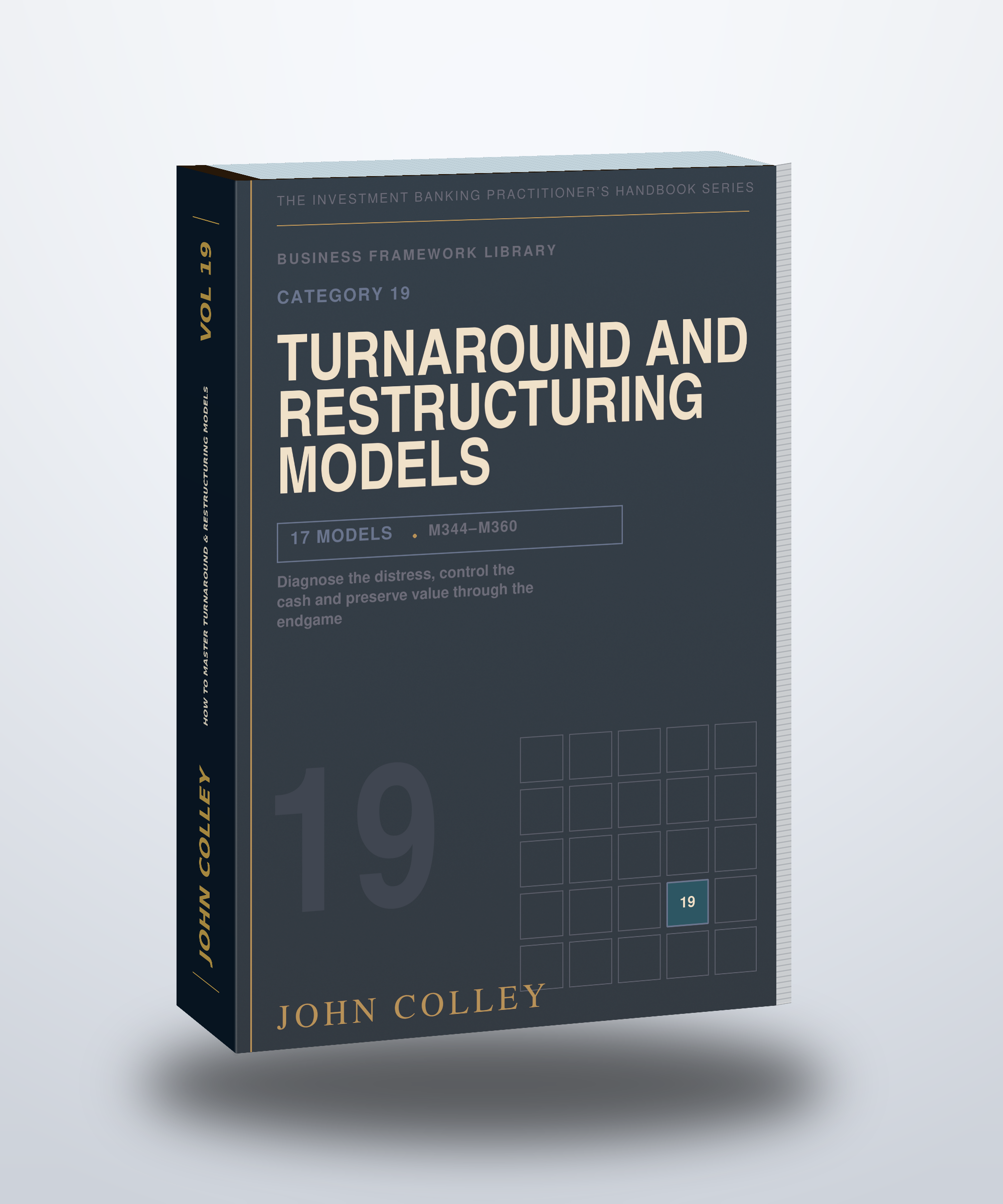 Seventeen turnaround and restructuring models, each taught end to end — with the worked models to run them.
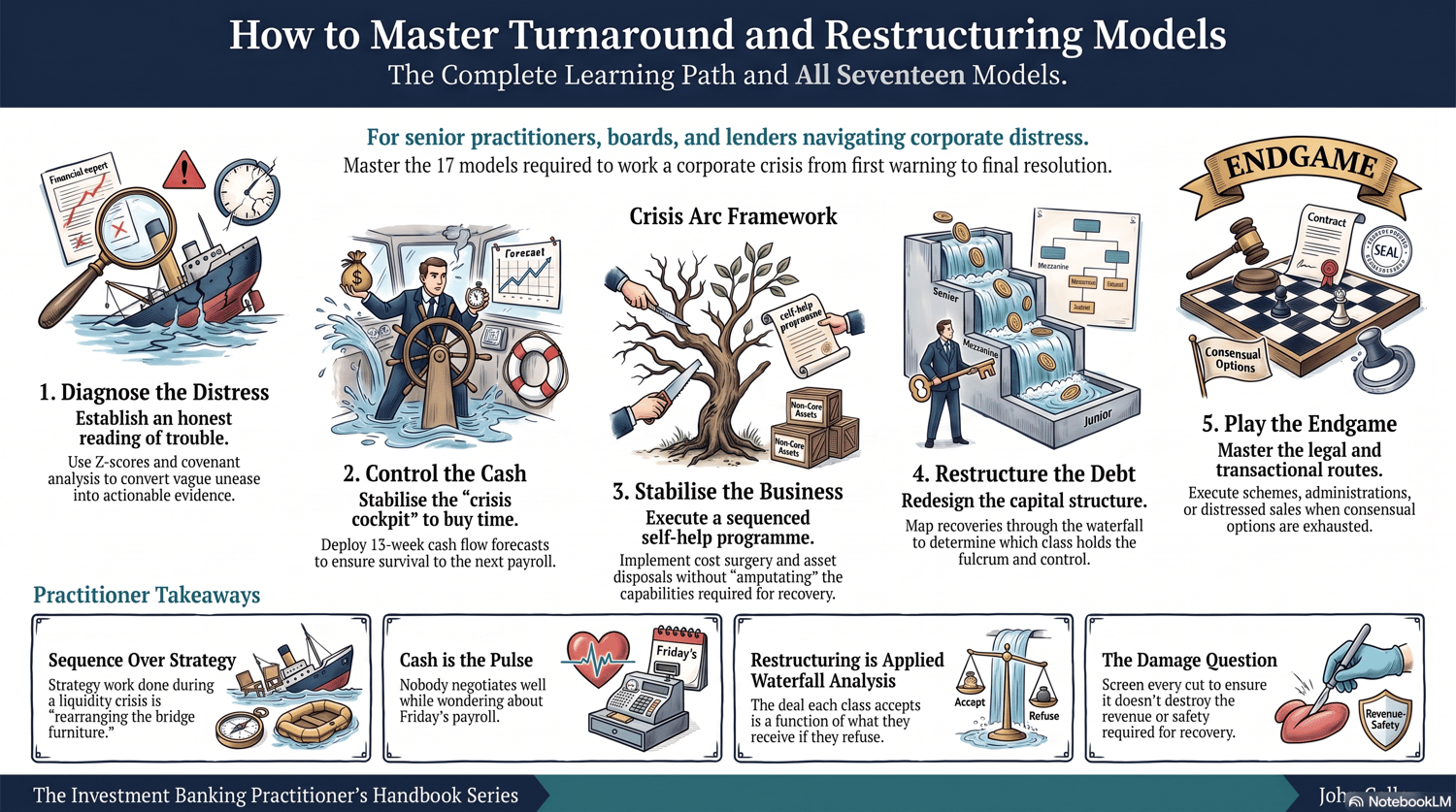
Turnaround and restructuring is the discipline of stabilising a business under stress — buying time, fixing the balance sheet and finding value where others see only distress. This handbook teaches all seventeen models in the Turnaround and Restructuring category — one chapter each — from the cash-flow and liquidity tools that keep the lights on, through the debt-restructuring, creditor-waterfall and intercreditor analysis that reshape the balance sheet, to the operational turnaround, disposal and going-concern models that decide the outcome. From the 13-Week Cash Flow and the Creditor Waterfall to the Altman Z-Score, the Debt-for-Equity Swap and the Going Concern Assessment.
What you get
The complete PDF handbook plus seventeen worked Excel models — one for every model in the book. Blue input cells you change, formula cells that respond, and a Read-me tab on each, so you can run the numbers on your own assumptions.
How every chapter is built
Read one and you can build any. Each model follows the same thirteen-section rhythm: the question it answers, what it is, who uses it, its anatomy, inputs and outputs, how to build it step by step, a worked example, strengths, limits and pitfalls, industry notes, how it connects to the other models, modern relevance, using AI on it, and a practitioner’s checklist.
The seventeen models
the 13-Week Cash Flow, the Liquidity Runway Model, the Debt Restructuring Model, the Creditor Waterfall, Intercreditor Analysis, Administration Scenario Analysis, the Scheme and Restructuring Plan, the Operational Turnaround Plan, the Cost Reduction Model, the Asset Disposal Model, the Distressed Sale Framework, Covenant Breach Analysis, the Altman Z-Score, the Amend-and-Extend Model, the Debt-for-Equity Swap, the Entity Priority Model and the Going Concern Assessment.
The learning path
The chapters are ordered as a single connected build, not an alphabetical list — from the cash-flow tools that buy time, through the debt-restructuring and creditor analysis that reshape the balance sheet, to the operational, disposal and going-concern models that decide the outcome.
Who it’s for
Restructuring advisers, CROs and turnaround managers, distressed-debt investors, lenders and CFOs who must stabilise a business under stress and find value in distress.
How to use it
Work straight through to master the category, or jump to a single model when you need it for live work.
Book 19 of the Business Framework Library, part of The Investment Banking Practitioner’s Handbook Series. Master this category on its own, or reach for the Business Framework Compendium when you want the one-page reference to all 467 frameworks.
By John Colley — Cambridge University MA · MBA with Distinction, Bayes Business School · 30+ years in investment banking, M&A and private equity.