

NCLEX-RN Hospice, Palliative Care & End-of-Life Nursing Guide (Comfort, Dignity, Family Support)
On Sale
$22.00
(60% off)
$8.80
Hospice, palliative care, and end-of-life nursing for the Next-Gen NCLEX-RN — every topic with its discriminating cues, its closest look-alike, its assessment, priority, action and reassessment logic, its red flags, one original worked case, and its exceptions.
Inside:
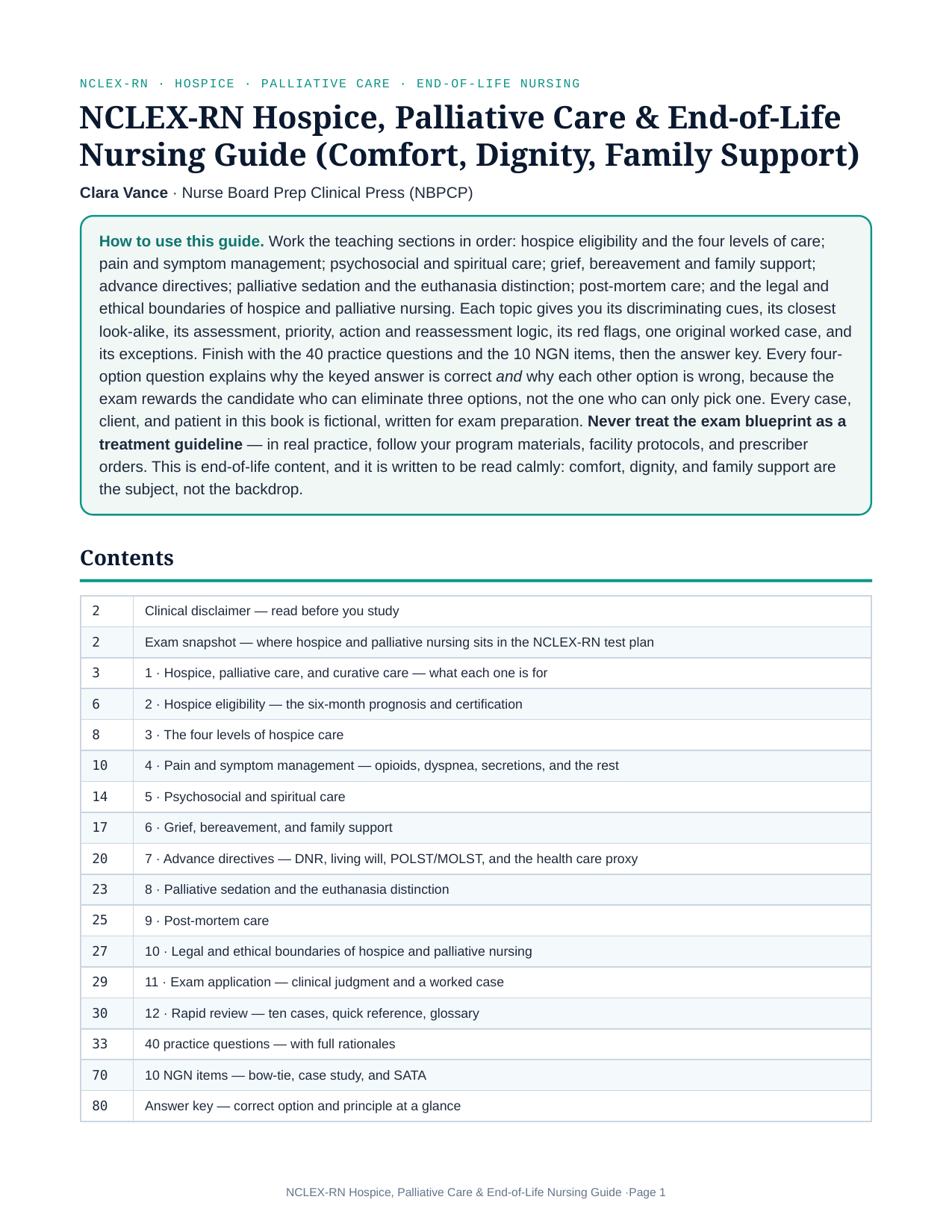
- Hospice vs. palliative vs. curative care — the decision table that settles every "which kind of care" question
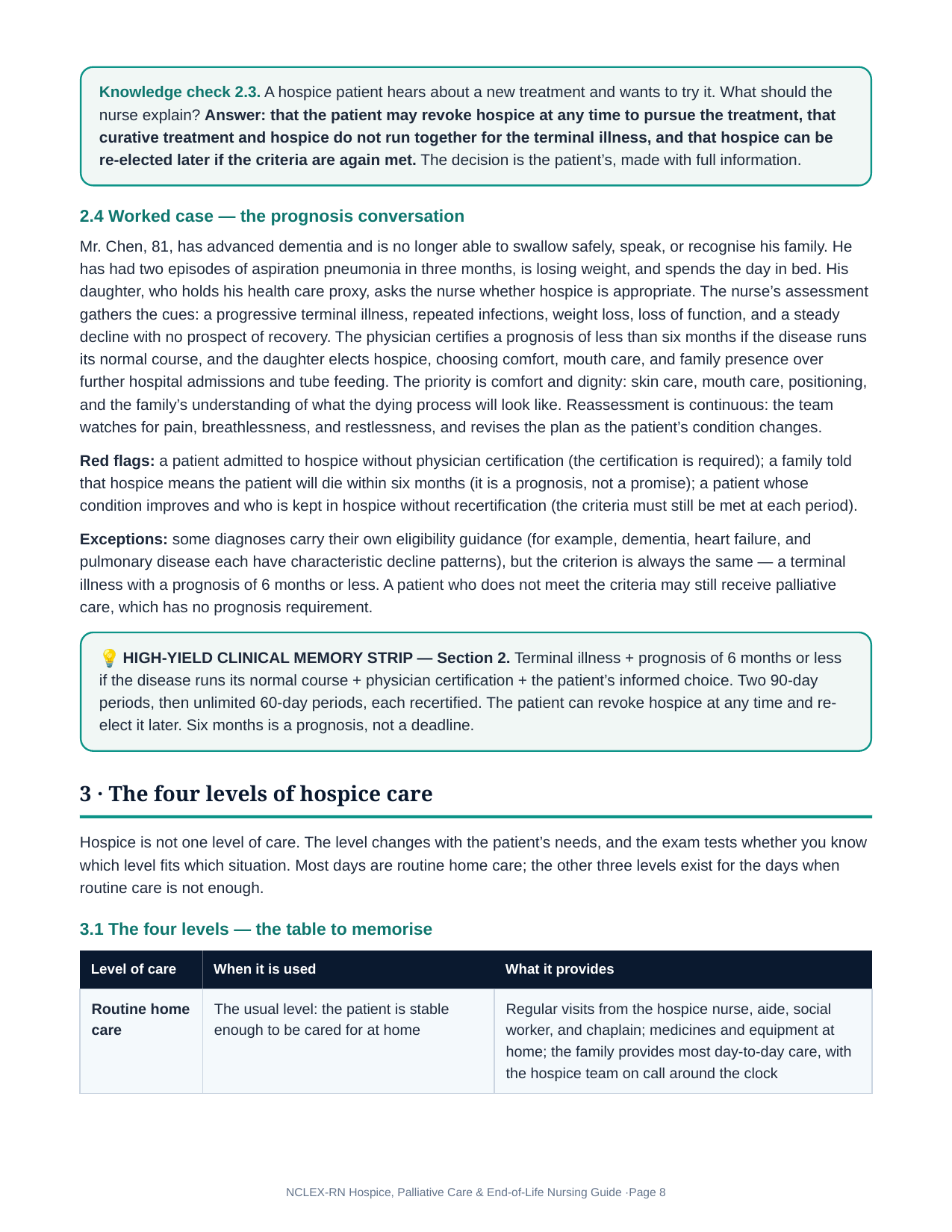
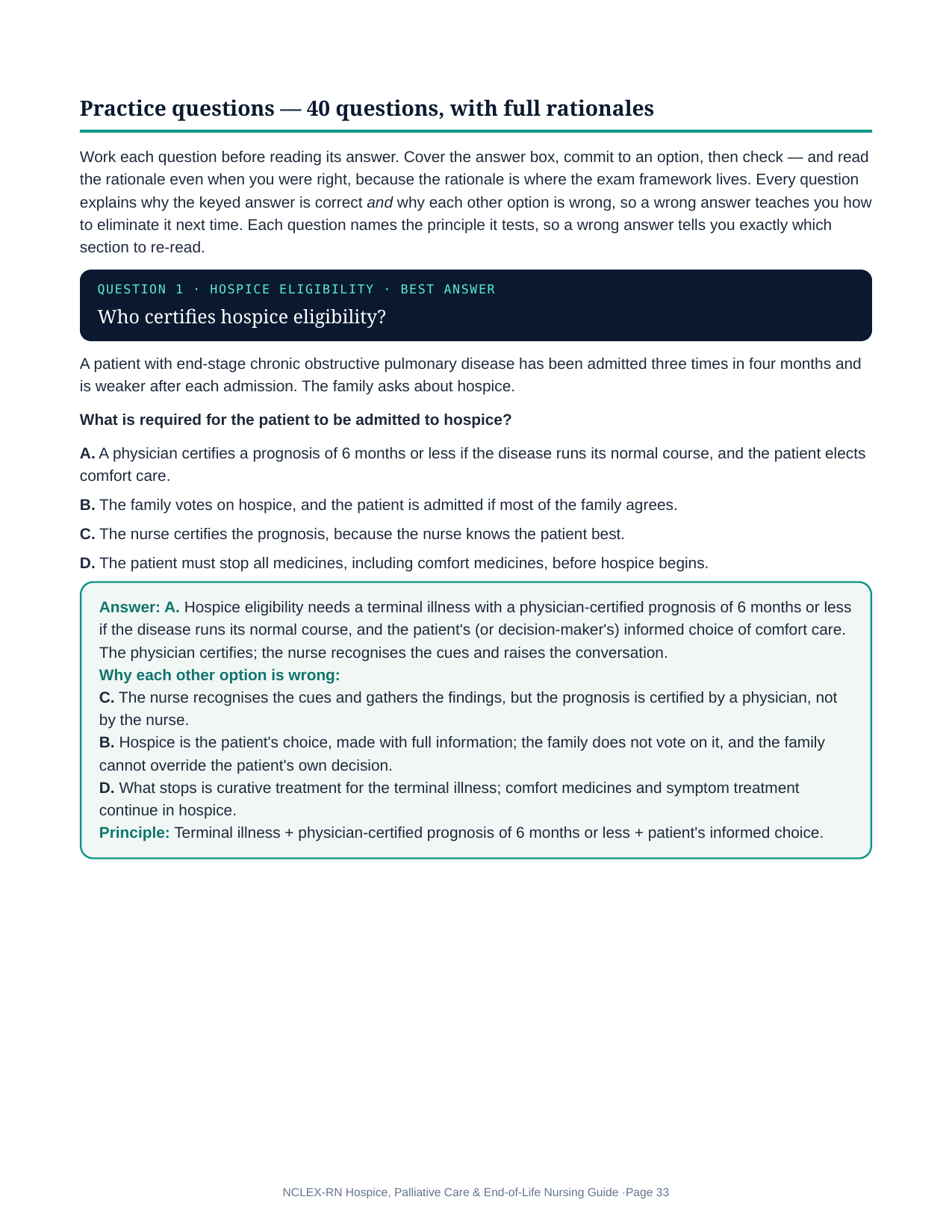
- Hospice eligibility: terminal illness, a physician-certified prognosis of 6 months or less, the patient's informed choice; two 90-day benefit periods, then unlimited 60-day periods, each recertified; revocation at any time
- The four levels of hospice care: routine home care, continuous home care, inpatient respite care (up to 5 days, for the caregiver), and general inpatient care
- Pain and symptom management: opioids scheduled + breakthrough, titrated to comfort per prescriber order; dyspnea (sit up, fan, calm presence, medicines as ordered); secretions and the death rattle; terminal restlessness and the reversible cause; nausea, constipation, mouth care, and loss of appetite
- Psychosocial and spiritual care: presence, listening, unfinished business, the patient's own beliefs, and asking about culture instead of assuming
- Grief, bereavement, and family support: anticipatory grief, the five responses as a framework not a ladder, complicated grief that needs referral, and caregiver strain
- Advance directives: living will (wishes), health care proxy (the person who decides), DNR (a medical order — no CPR, comfort care continues), and POLST/MOLST (portable medical orders that emergency responders follow)
- Palliative sedation and the euthanasia distinction: intent, proportionate titration, informed consent, and the principle of double effect
- Post-mortem care: confirm, notify, give the family time, prepare the body gently, respect rituals, tag and list belongings, document — and leave tubes in place when an autopsy is planned
- Legal and ethical boundaries: autonomy, beneficence, nonmaleficence, justice, fidelity; informed consent and refusal; futility; artificial nutrition and hydration at the end of life
- Exam application: the NCJMM steps applied to the end of life, with a worked case
- Rapid review: 10 cases, a quick-reference table, and an 18-term glossary
- 40 practice questions with full rationales — why the keyed answer is correct AND why each other option is wrong — plus 10 NGN items (bow-tie, case study, SATA, matrix), each with an EHR, a dated cue timeline, a response structure, a rationale, and an answer-to-cue crosswalk, plus an answer key
No real medicine doses are asserted in this book — dosing is prescriber-ordered and product-specific. Morphine and other medicines are named for recognition, priority, and reporting only; titration is stated only as per prescriber order or protocol, titrated to comfort. Original teaching cases written for exam practice. This guide is not affiliated with NCSBN and does not guarantee a pass. If you find an error, a corrected version will be sent free.