

The Context Habit — Getting Better Answers from Your AI Assistant (PDF Guide)
Somewhere in the third hour of a good session, your AI assistant changes. The early answers were sharp — it found the bug, it followed the plan. Now it re-suggests an idea you rejected before lunch, asks for a path you gave it twice, and edits a file that stopped mattering an hour ago. The model did not get worse. What changed is what it can see — and that is a lever you can learn to manage.
The Context Habit is a 24-page field guide to that lever: managing your assistant's context — the files, instructions, history, and logs in front of it when it reads your message. Seven habits do the managing. Each fits in a single sentence, each takes minutes to adopt, and none needs a new tool — they work inside whatever assistant you already use, from Claude Code to Cursor, Copilot, Codex, or Gemini CLI. This is the quality lever: the same assistant, the same spend, steadier answers across a long session.
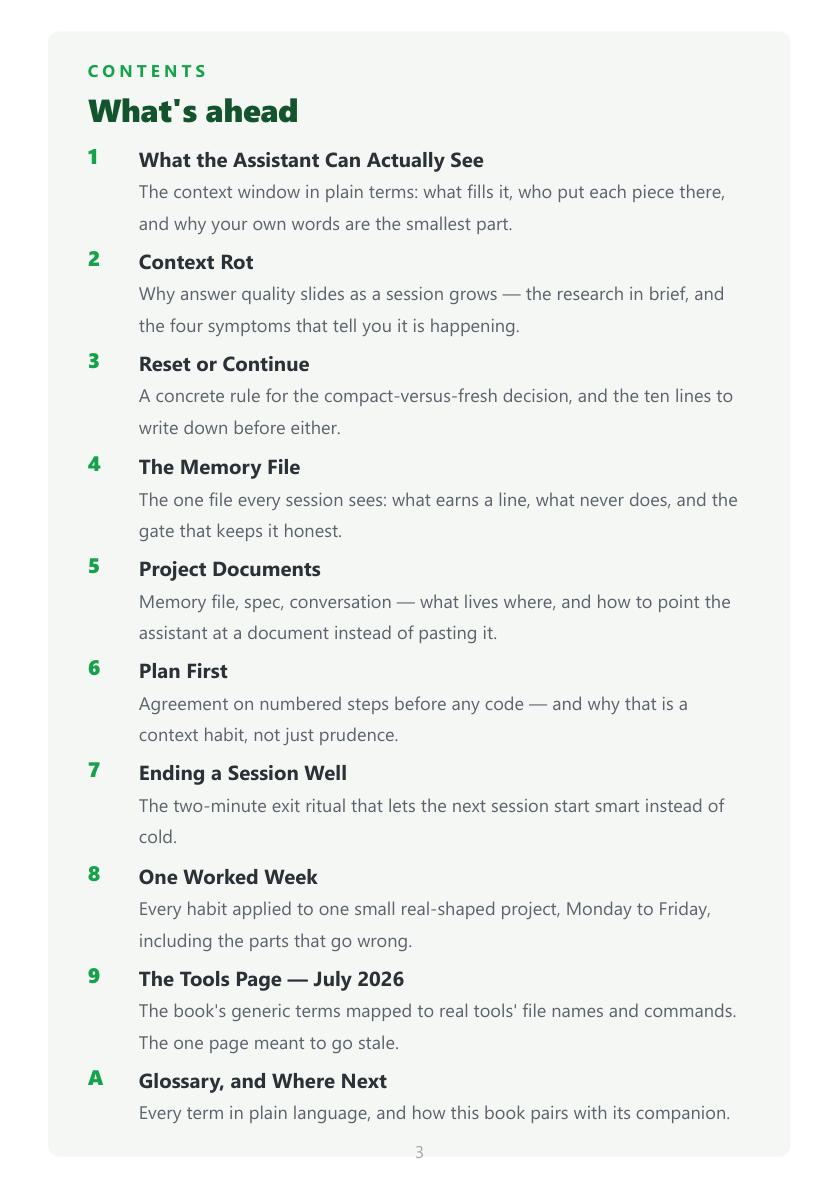
WHAT'S INSIDE
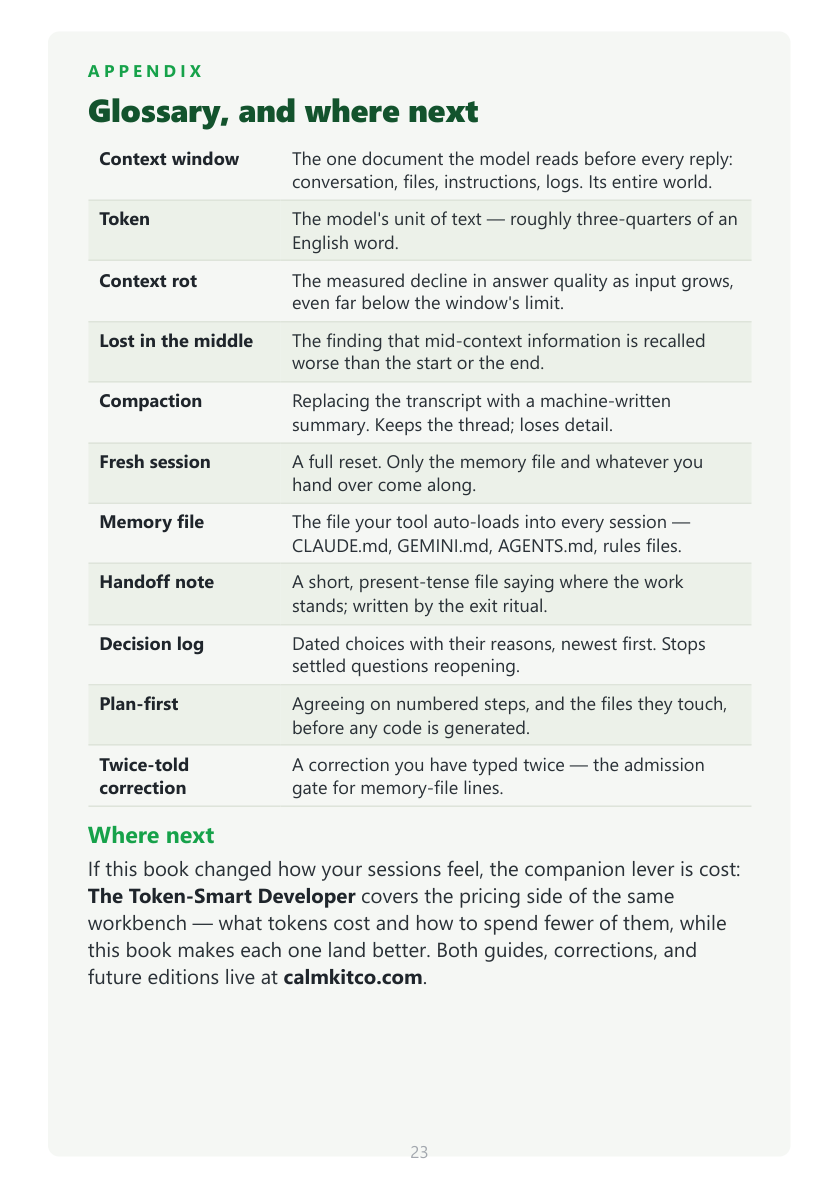
• What the assistant can actually see — the context window in plain terms: what fills it, who put each piece there, and why your own words are usually the smallest slice
• Context rot — the 2025 research that named the third-hour slide, plus four specific symptoms that tell you it is happening in your own session
• Reset or continue — a concrete compact-versus-fresh-session rule you can apply immediately, and the ten lines to write down before you do either
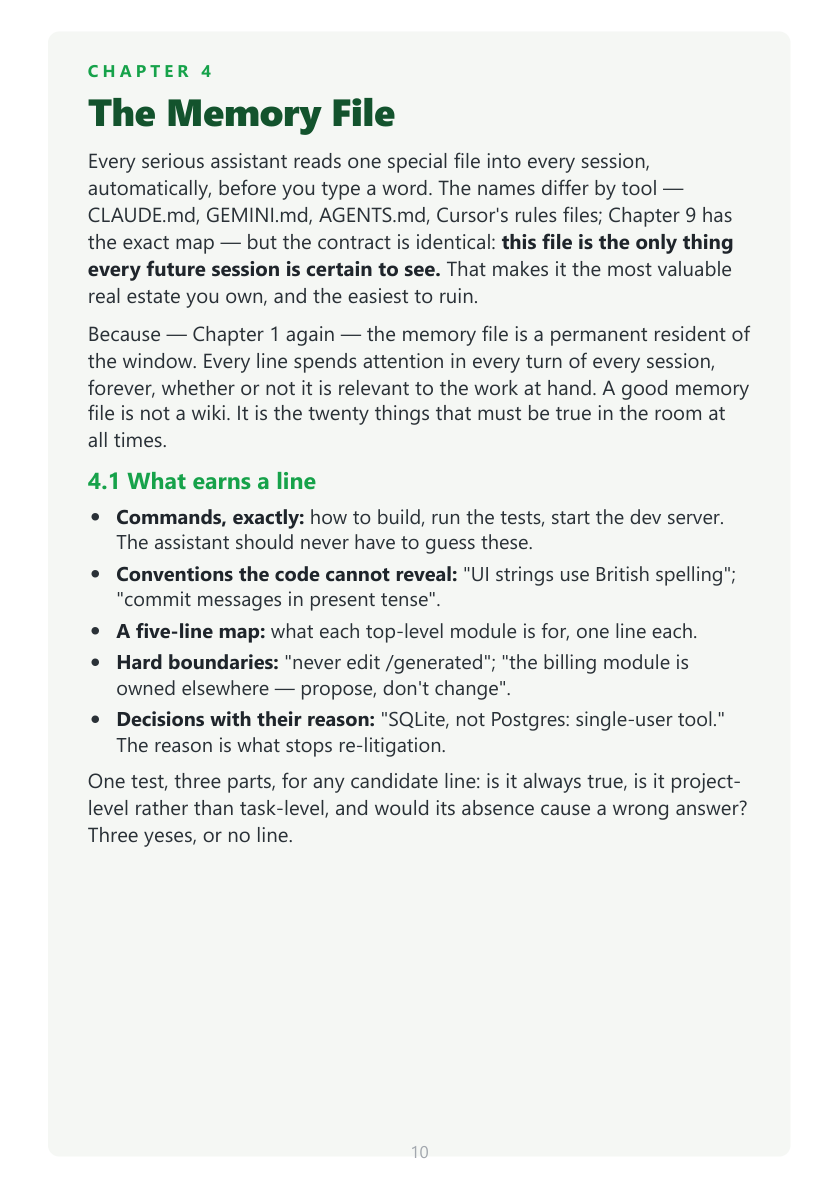
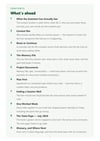
• The memory file — what earns a permanent line (CLAUDE.md, GEMINI.md, AGENTS.md, rules files), what never belongs there, and the twice-told-correction gate that keeps it honest
• Project documents — what lives in the memory file versus the spec versus the conversation, and why pointing the assistant at a file beats pasting it in
• Plan first — why agreeing on numbered steps before any code is written is a context habit, not just prudence, and how to read a plan in ninety seconds
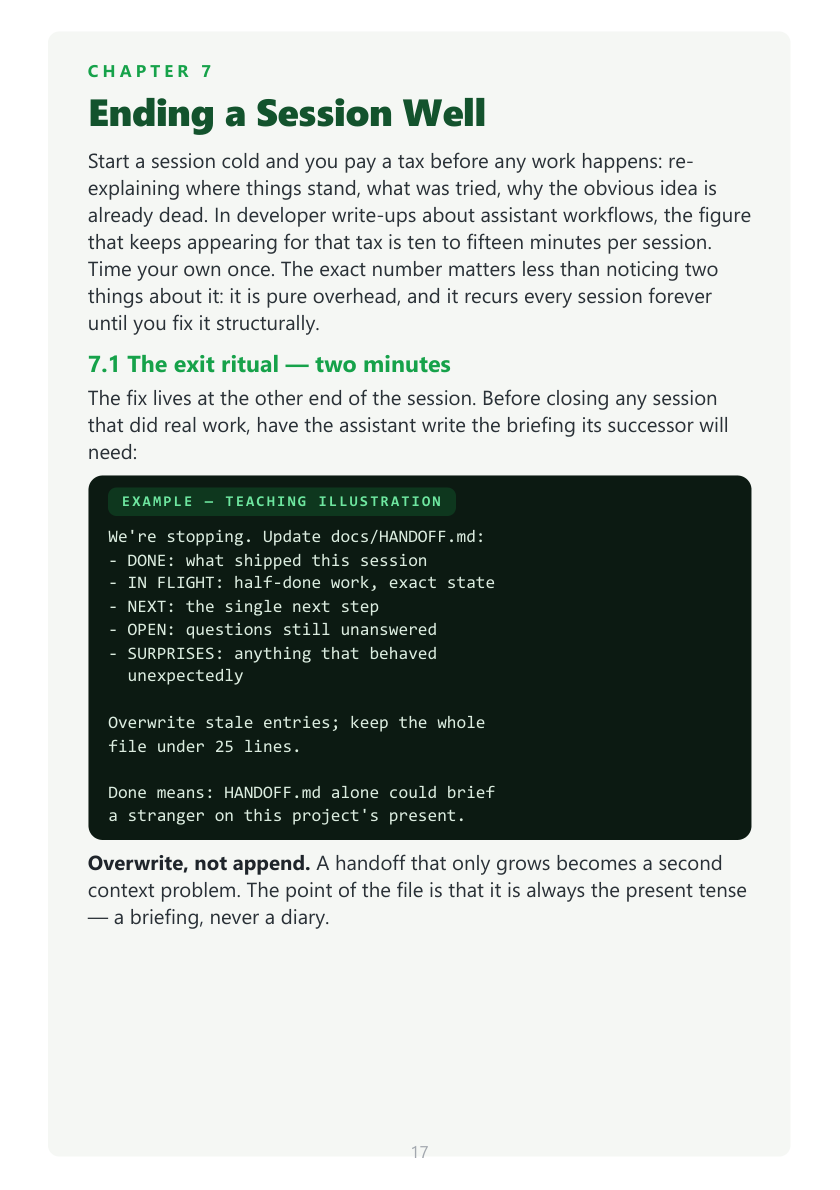
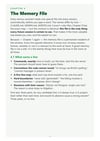
• Ending a session well — a two-minute exit ritual that removes the ten-to-fifteen minutes of re-explaining you otherwise pay at every cold start
• One worked week — every habit applied to one small invoicing project, Monday to Friday, honest about the parts that go wrong
• The tools page (July 2026) — the book's generic terms mapped to Claude Code, Cursor, GitHub Copilot, OpenAI Codex CLI, and Gemini CLI: the file each auto-loads, its reset, its compaction, its context meter
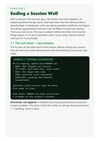
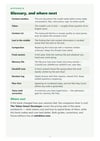
• A plain-language glossary of every term the book uses
HONEST NOTES
The habits ask you to buy nothing new — they run inside whatever assistant you already use daily. Some tools named commonly involve a paid plan (around US$20/month as of July 2026) and some offer a free tier; the book stays tool-agnostic and points you at your own tool's documentation rather than at a purchase. The context-rot research it draws on is young: these habits are directional, distilled from daily practice and the 2025–2026 literature, not from controlled trials — where your own measurements disagree with the book, trust your measurements. Tool names, commands, and window sizes were last reviewed July 2026 against each vendor's documentation, which always wins where a screen has since moved. No vendor sponsored, reviewed, or approved this book, and the worked week is a composite built to teach the method, not a report on a real person or company. One honest boundary up front: if your sessions run five minutes, they never live long enough to degrade — save this book for the month that changes. Its companion, The Token-Smart Developer, covers the cost side of the same workbench (token pricing, caching, model routing); this book is the quality side — better output from the same spend, not cheaper tokens.
Guidance, not gospel — this is a practical field guide, not professional, financial, or purchasing advice.
Drafted with AI assistance and then reviewed and curated by a real person who works inside these tools daily.
Instant download. A5 pages, designed for screen reading; prints cleanly on A4 or US Letter. Personal use only.
First Edition — July 2026.
Questions? Reach us at calmkitco.com.