
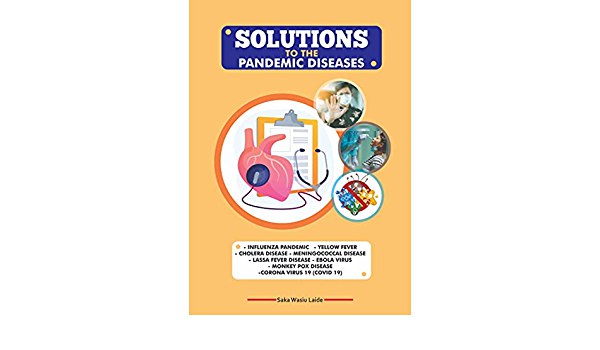
SOLUTIONS TO THE PANDEMIC DISEASES TEXTBOOK
An Influenza Pandemic is a global outbreak of a new influenza. A virus that is very different from current and recently circulating human seasonal influenza A viruses. It happens when new (Novel) influenza A viruses emerge which are able to infect people easily and spread from person to person in an efficient and sustained way.
Yellow fever is a hemorrhagic condition that can lead to a high fever, bleeding into the skin, and cell die, liver damage occurs, leading to jaundice, a condition in which the skin takes on a yellowish colour. It is an acute, systematic disease, meaning that it starts suddenly, and it affects the whole body. It is known as a virus that transmitted by mosques, mainly the Aedes and Haemogoies species. Symptoms take infection 3- 6 days to develop after infection.
Cholera is an acute diarrheal disease caused by vibrio cholera, a grain negative rod-shaped bacterium. This is disease that spread through contaminated water. It is a potentially life-threatening; primarily water borne disease cholera can be both endemic and epidemic.
Meningococcal meningitis is a bacterial form of meningitis that is a serious infection of the thin lining that surrounds the brain and spinal cord. It is observed in a range of situations, from sporadic cases, small clusters, with seasonal variations. This is an endemic disease with cosmopolitan mode of distribution and seasonal variations.
Poliomyelitis can be defined as a crippling and potentially fatal infections disease. It can be an infectious viral disease that affects the central nervous system and can cause temporary or permanent paralysis, most especially in the leg. Children younger than five years old are more likely to contract the virus than any other groups. It is caused by an enterovirus found throughout the world.
Lassa fever is an acute and fatal viral disease with fever occurring mainly in West Africa. It is an animal borne, or zoonotic, acute viral illness. It is typically transmitted by the urine or feces of mastomys rats to humans hassa fever occurs in areas where there rodents live.
Ebola virus disease is also known as Ebola hemorrhagic fever that is a rare and deadly disease caused by infection with one of the Ebola virus species. Ebola can cause disease in humans and non-human primate (monkeys, gorillas, and chimpanzees).
Monkey pox is a member of the orthopox virus genus in the family poxvirisdae. The virus can cause a fatal illness in humans. Monkey pox is a rare viral zoonotic disease (a virus transited to humans from animals) and it is infectious disease caused by monkey pox virus. The virus does not have a cure or vaccine till now.
Coronavirus disease 2019(COVID 19) can be defined as an illness caused by a novel coronavirus now called severe acute respiratory syndrome Coronavirus 2 which was first identified amid an outbreak of respiratory illness cases in Wuhan City, Hubei Province, China. The illness caused by SAR- COV-2 was recently termed COVID l-19 by WHO, the new acronym derived from ''Coronavirus disease 2019. They asked to avoid stigmatising the virus's origin in terms of populations, geography, or animal association.