
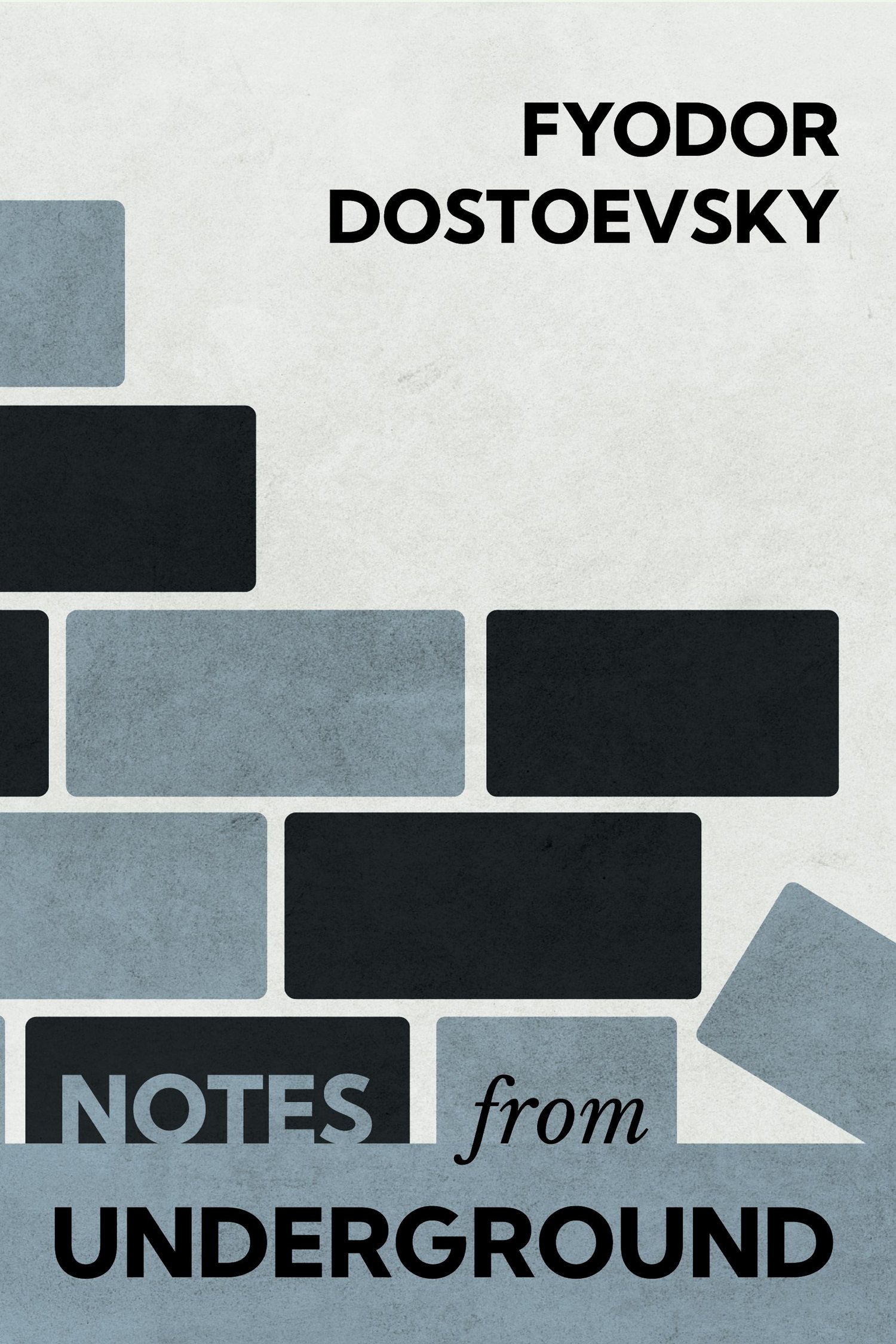
Notes from Underground
Fyodor Dostoevsky’s Notes from Underground begins with one of literature’s most infamous opening lines: “I am a sick man… I am a spiteful man.” The narrator, a retired civil servant living alone in a St. Petersburg basement, launches into a rambling, brilliant attack on everything the 19th century’s progressive intellectuals believed about human nature. They claim humans act rationally in our self-interest? Nonsense. We’ll choose suffering, destruction, and irrationality just to prove we’re free agents, not piano keys being played by the laws of nature. They promise a rational utopia where everyone’s needs are scientifically met? We’ll smash it out of spite because being predictable is worse than being miserable. The Underground Man argues that consciousness itself is a disease, that free will means the freedom to choose against our own interests, and that we prefer chaos to the Crystal Palace of rational perfection. It’s philosophy as wound-probing, and it’s devastatingly convincing.
Part Two drops us into the Underground Man’s memories, showing us exactly what his theories look like in practice—and it’s excruciating. Twenty years earlier, consumed by pride and resentment, he crashes a farewell dinner for a former schoolmate who despises him. Nobody wants him there, but he forces himself into the party, oscillates between grandiose speeches and humiliated silence, and ends up chasing after them to a brothel to continue making everyone uncomfortable. There he meets Liza, a young prostitute, and in a twisted attempt at superiority, delivers a melodramatic speech about how terrible her life is and how she should change. When she actually shows up at his apartment days later, genuinely moved and seeking connection, he panics. He can philosophize about human dignity, but he can’t handle actual human vulnerability. In a moment of pure cruelty born from shame, he thrusts money at her like she’s just a prostitute after all, destroying the one genuine connection he might have made.
Notes from Underground is the Big Bang of modern literature—the moment the anti-hero was born and the optimistic Enlightenment project got its most vicious critique. Dostoevsky wrote it as a response to the utopian novel What Is to Be Done?, and he created something that predicted Nietzsche, Kafka, Camus, and every bitter, self-aware narrator who came after. The Underground Man is toxic, pathetic, and impossible to dismiss because he’s also uncomfortably perceptive about human nature’s uglier truths. We do sabotage ourselves. We do choose spite over happiness. We are walking contradictions who crave both freedom and someone to blame for our failures. At barely 100 pages, this is the most influential novella you’ve never read—essential for understanding existentialism, modern psychology, and why we keep making the same self-destructive choices while knowing exactly what we’re doing. You’ll hate the Underground Man. You’ll also recognize way too much of yourself in his basement rants. That’s precisely the point.
About the author
Fyodor Dostoevsky (1821–1881) was one of Russia’s greatest novelists, celebrated for his profound psychological insight and exploration of moral and existential dilemmas. His works, including The Brothers Karamazov, The Idiot, and Notes from Underground, continue to resonate with readers worldwide for their timeless examination of the human condition.