
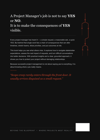
"YES" The Most Dangerous Word in Project Management
HOW TO USE THIS BOOK
This book can be read start to finish, or used as a reference.
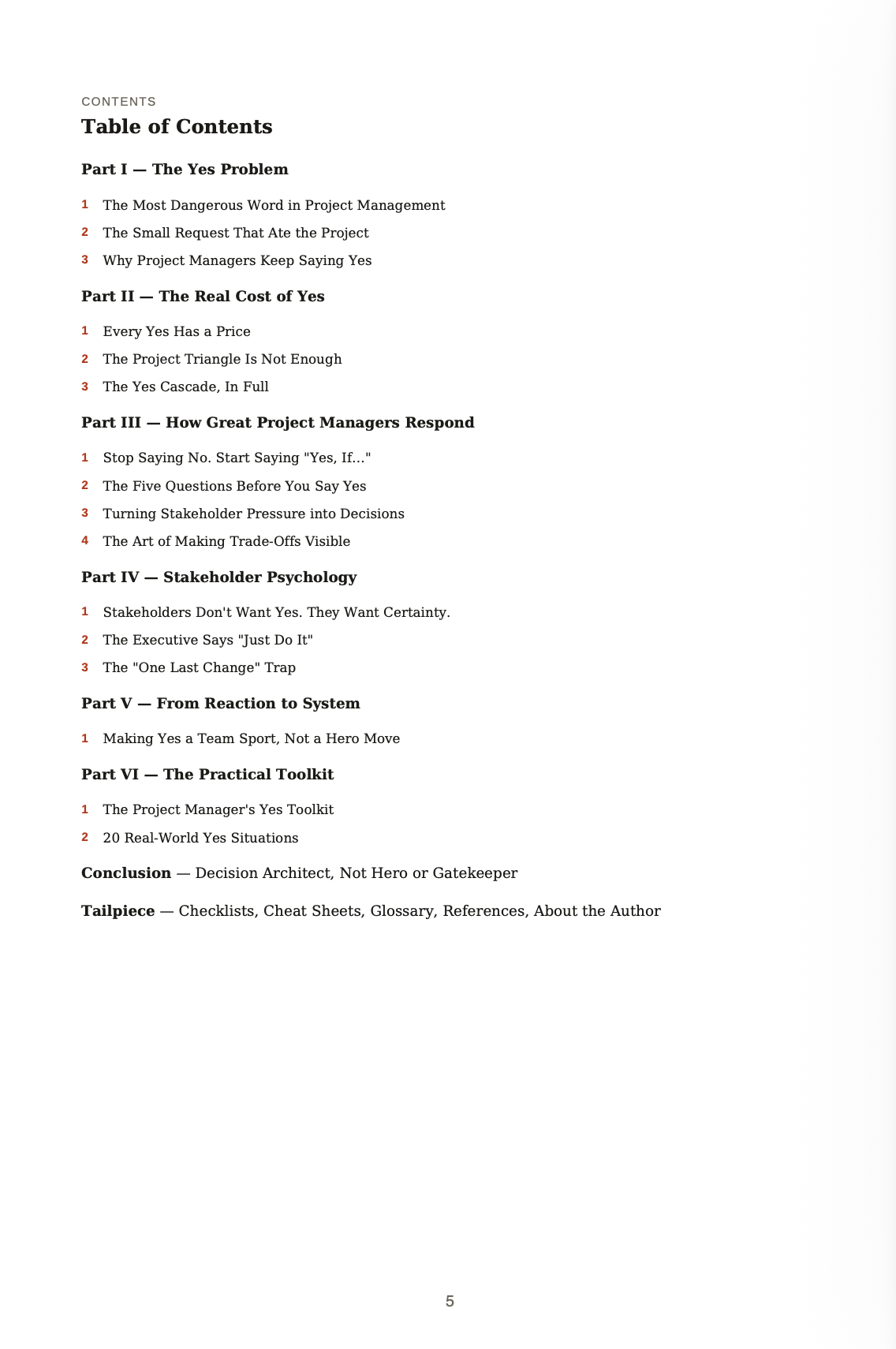
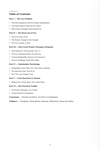
If you're reading it for the first time, read it in order. Part I establishes why this problem exists and
why it's harder to see than it should be. Part II gives it a precise vocabulary. Part III is where the
tools live — if you only have time for one section, make it this one. Part IV addresses the psychology
on the other side of every conversation. Part V and VI turn the ideas into something a team, not just
an individual, can use.
If you're returning to this book with a specific problem in front of you, go straight to Chapter 16's
scenario bank, or to the Tailpiece's cheat sheets — both are built to be used without re-reading the
chapters that produced them.
Every chapter ends with the same five elements: a Key Insight, a short set of Takeaways, three
reflective questions under Ask Yourself, one action under Try This Tomorrow, and a pointer to
where the next framework builds on this one. Use them as a fast way to extract the chapter's value
without re-reading the whole thing.
One note on language: this book uses "Project Manager" throughout as shorthand for the full range
of Project Management Professionals it's written for — Program Managers, PMO leads, Project
Coordinators, Project Controls professionals, consultants, Business Analysts, Product Managers,
and anyone else who carries this kind of decision on a project. Wherever you see "Project
Manager, " read it as your own title.