

NCLEX-RN Cranial Nerves (I to XII), Neurological Assessment & Stroke NIHSS Guide
On Sale
$22.00
(60% off)
$8.80
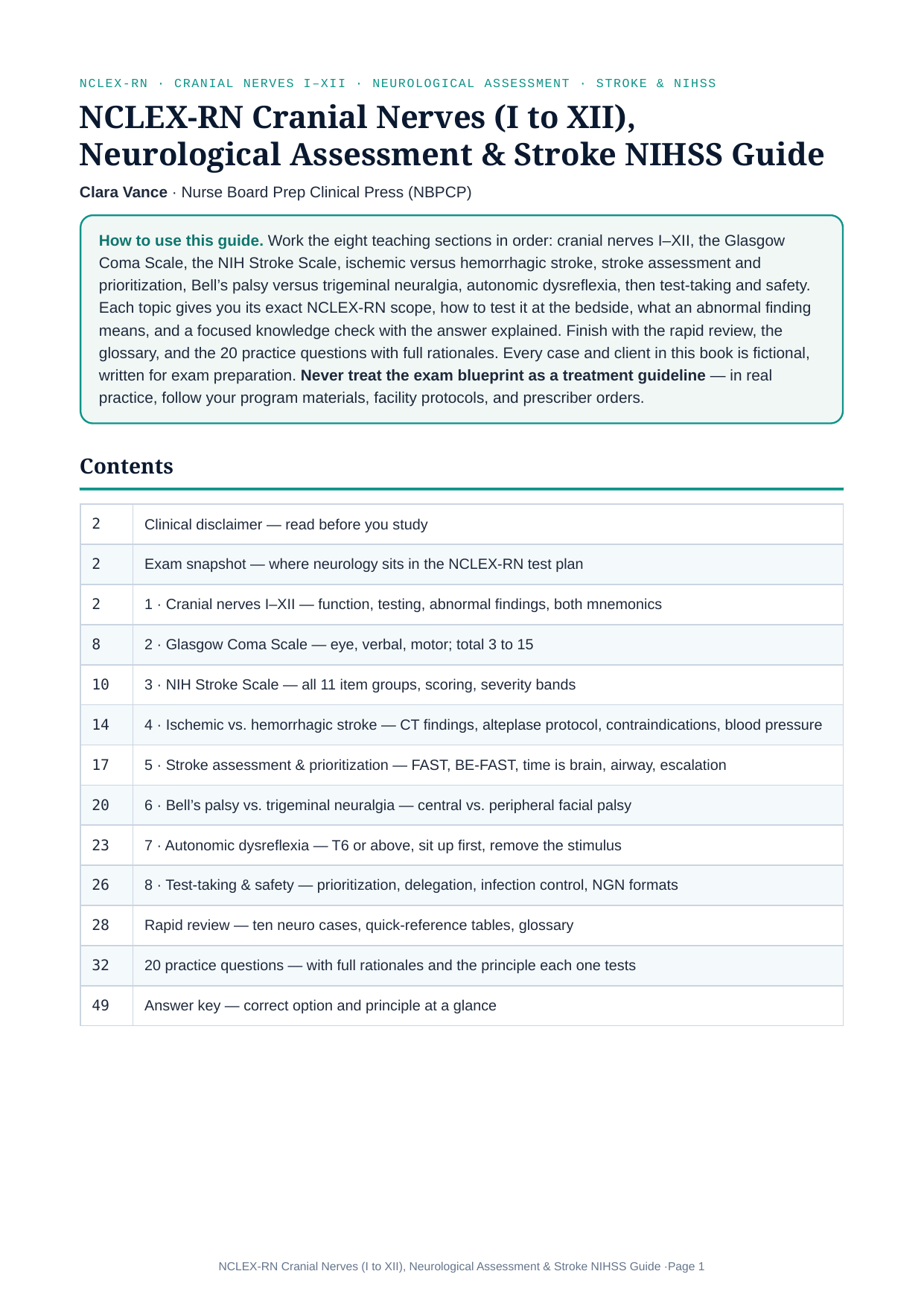
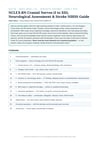
Cranial nerves I–XII, neurological assessment, and stroke care for the Next-Gen NCLEX-RN — every topic with its exact exam scope, how to test it at the bedside, what an abnormal finding means, and a focused knowledge check with the answer explained.
Inside:
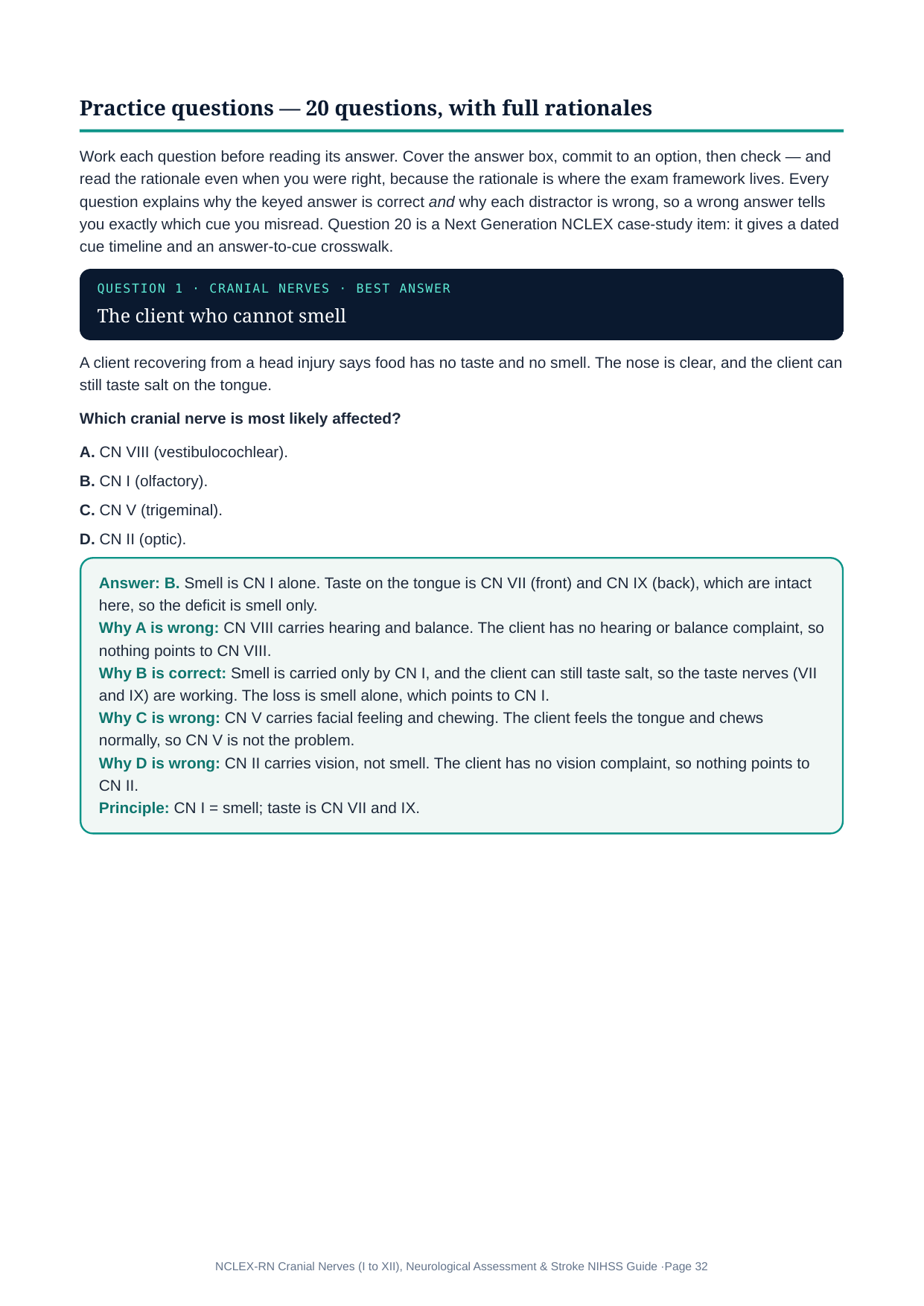
- Cranial nerves I–XII: function, sensory/motor/mixed type, bedside testing, abnormal findings, both standard mnemonics, eye-movement nerves III/IV/VI, face and jaw (V vs. VII), hearing and balance (VIII), swallowing and voice (IX/X), shoulder and tongue (XI/XII)
- Glasgow Coma Scale: eye, verbal, and motor scoring, total 3 to 15, severity bands, the intubation rule (V(NT), no total), trend vs. single score
- NIH Stroke Scale: all 11 item groups (15 scored components), score ranges, severity bands 0–42, scoring rules, and a full worked scoring case (NIHSS 17)
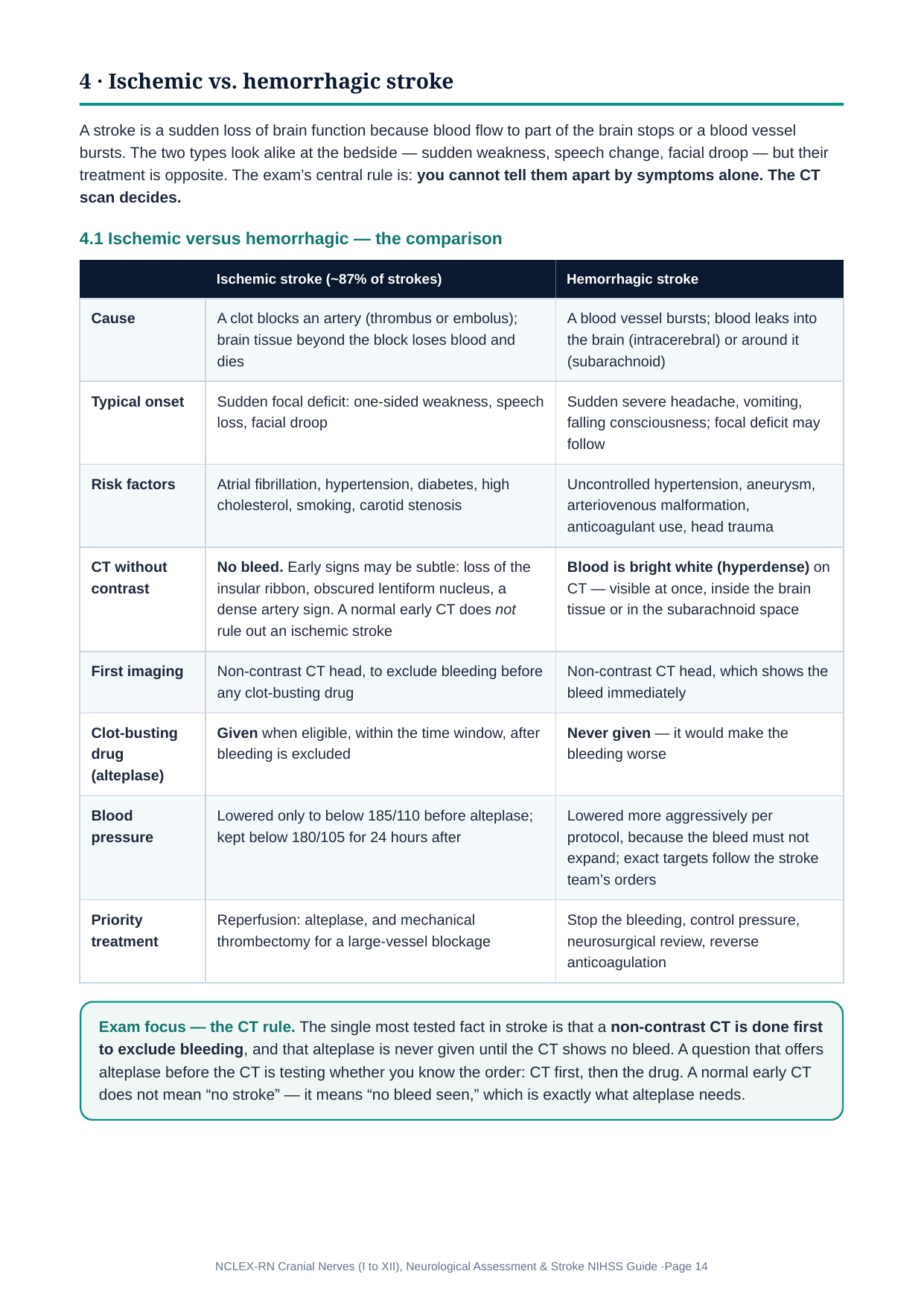
- Ischemic vs. hemorrhagic stroke: CT findings, alteplase protocol (0.9 mg/kg, max 90 mg, 10% bolus over 1 minute, 90% over 60 minutes), contraindications, blood pressure below 185/110 before and below 180/105 after, plus a worked dose calculation with reverse-check
- Stroke assessment & prioritization: FAST vs. BE-FAST, time is brain, airway first, neuro checks, escalation
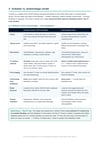
- Bell's palsy vs. trigeminal neuralgia: central vs. peripheral facial palsy (the forehead test), eye protection, triggers, carbamazepine first-line
- Autonomic dysreflexia: T6 or above, sit up first, remove the stimulus, check the kinked Foley catheter
- Test-taking & safety: prioritization, delegation, infection control, NGN case-study and bow-tie formats
- Rapid review: 10 neuro cases, quick-reference tables, glossary (18 terms)
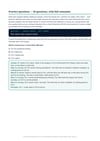
- 20 practice questions with full rationales — why the keyed answer is correct AND why each distractor is wrong — plus an answer key, including 1 NGN case-study item with a dated cue timeline and answer-to-cue crosswalk
Drug doses named here are the labelled regimen as published in the official drug label and current stroke guidance, given so you can recognize them on exam questions — in real practice, dosing is prescriber-ordered and must be independently double-checked. Original teaching cases written for exam practice. This guide is not affiliated with NCSBN and does not guarantee a pass. If you find an error, a corrected version will be sent free.