
China’s Parallel AI Stack: Built on Chips, Waiting on Memory (2026 Edition)
On Sale
$99.00
$99.00
One line
Chinese companies now report training runs on domestic AI chips at every level of difficulty. This report shows what is known about the cost, who finances the build, and why memory and advanced wafers are likely to set the pace.
Three questions this report answers
- China can now train large AI models on its own chips. What does the public record show about the cost against Nvidia, and what would a fair comparison need?
- Who is financing China’s domestic AI chip build: buyers, suppliers and banks, or the stock market?
- Which inputs decide when the gap narrows, and which layers of the stack do not need a Chinese version at all?
Contents
- Executive Summary. The full argument in short points.
- Introduction. Why the question has moved from whether Chinese chips can do the job to what it costs.
- Can Is Settled. Cost Is Not. A public training run at each level, and why none of the 12 closest readings measures training cost against Nvidia.
- Who Pays for the Build. What the filings of seven Chinese AI chip designers show about bills, customer advances, bank loans and new equity, and what they cannot show.
- The Demand Gate Runs Both Ways.Washington’s export rules and Beijing’s evaluations and purchasing targets, read from official documents and Nvidia’s own filing.
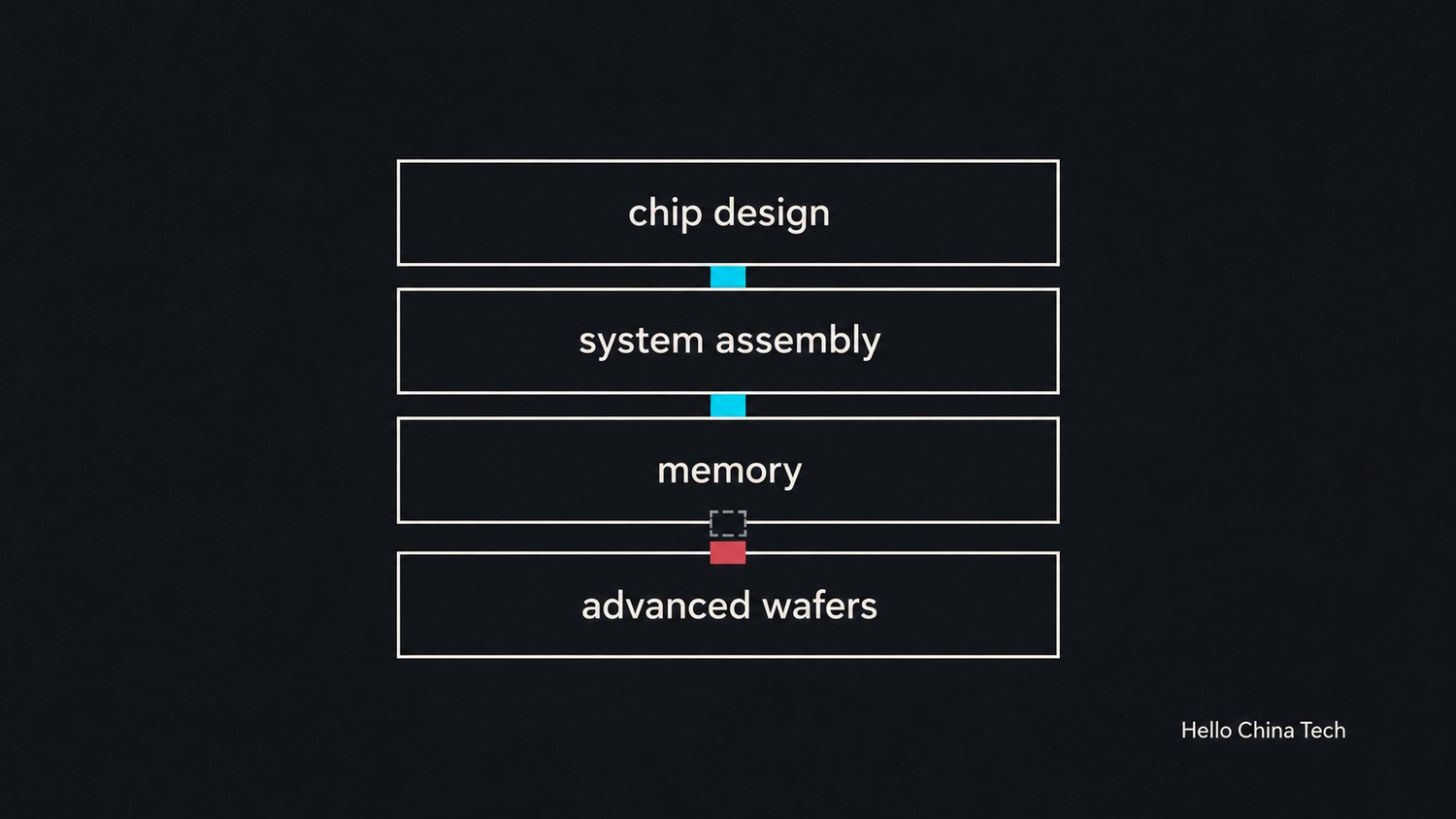
- The Bottleneck Is Memory and Wafers.Teardowns, card prices and one shared pool of advanced capacity.
- The Layers That Need Not Be Parallel. Optical modules and mature-node foundry, where China already supplies the global build.
- How the Pieces Fit and Where to Look. How the constraints connect, six directions to watch, and a short guide to what the next chip headline can and cannot show.
- Data Appendix. Six tables: chip designers’ first-half accounts, 2025 accelerator shipments, the efficiency readings, delivery statements, the state evaluation list, and memory and foundry indicators. Each figure carries its source.
Who it is for
- Investors who follow Chinese AI chip, memory and foundry stocks, or Nvidia’s China exposure.
- Policy researchers who track export controls and China’s purchasing rules for AI compute.
- Industry readers who need a map of China’s AI compute stack by layer, not by company.
What makes it different
The report separates what Chinese companies claim, what filings and official documents show, and what nobody has measured yet. Where my earlier calls on this sector were wrong or are still open, I say so in the chapter where it matters.
Format
About 9,600 words, plus data tables. PDF, 32 pages. 2026 Edition. Data as of October 7, 2026.
Price
$99. Paid subscribers to Hello China Tech pay $49 with their member code. Institutional clients receive the report as part of their plan.