

Does It Actually Work? — Test the App You Built With AI Without Reading the Code (PDF Guide)
You built an app by talking to an AI — it took shape on your screen, and it works when you drive it. But you have not sent the link to anyone, because a quiet question keeps stopping your hand: how would you even know if it's broken? You can't read the code, so you can't inspect your way to confidence.
Does It Actually Work? is a 24-page field guide that replaces that shrug with evidence you can point to. Reading the code was never how anyone really verified software; working developers earn trust by watching a real person use the thing, by attacking it on purpose while mistakes are still cheap, and by keeping small automated checks they have personally watched fail. None of that requires reading a line of code. The book walks you up that evidence ladder in order — cold-user test, deliberate abuse, the states your app has never lived in, tests you can own, and a hard look at the coverage number — and hands you a one-page smoke check to run in ten minutes before every share. One boundary is stated up front and held throughout: this book verifies; it does not fix. When a check fails, you log it and finish the sweep, then hand clean findings to your assistant afterwards.
WHAT'S INSIDE
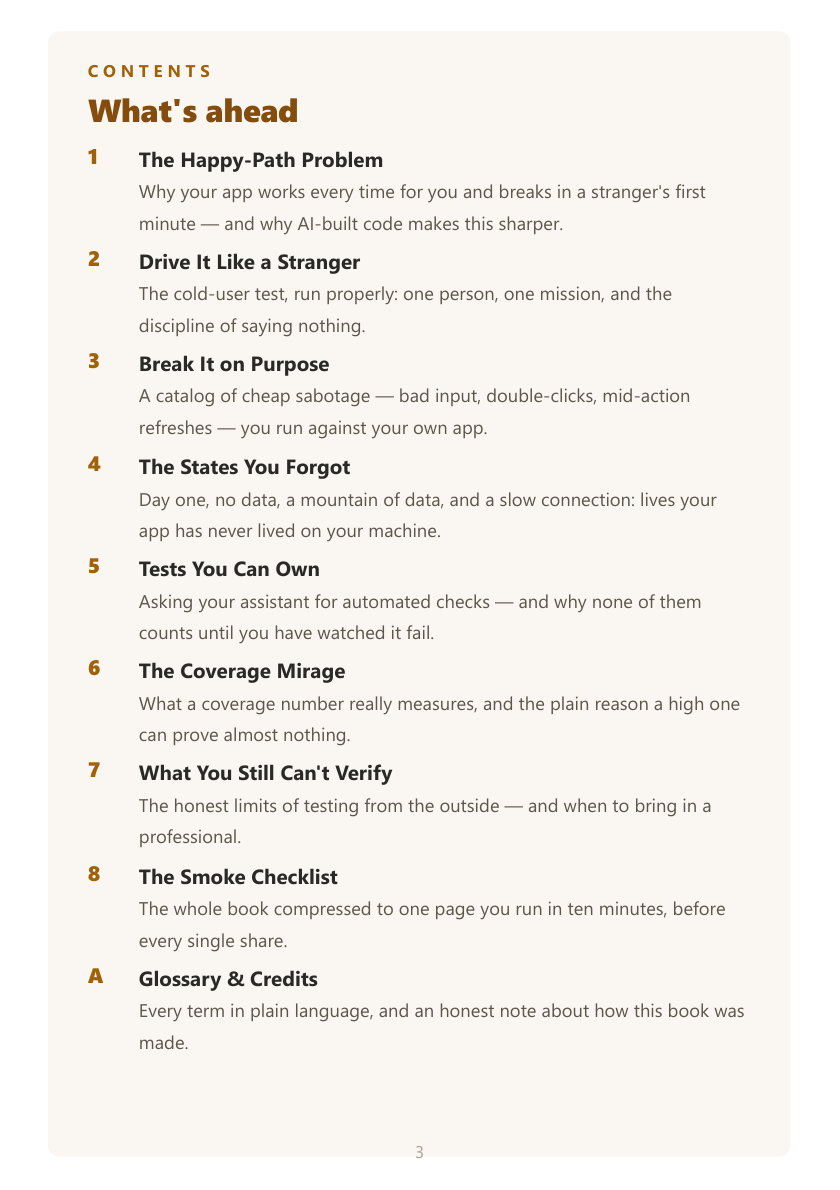
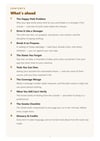
• The Happy-Path Problem: why an app works thirty times for you and dies in a stranger's first minute — and why AI-built code sits on the happy path unevenly, in ways you cannot see by looking
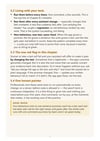
• Drive It Like a Stranger: the cold-user test run properly — one real person, one written mission, the discipline of saying nothing, a four-column sheet of what to record, and a Blocked/Confused/Annoyed triage that decides what happens next
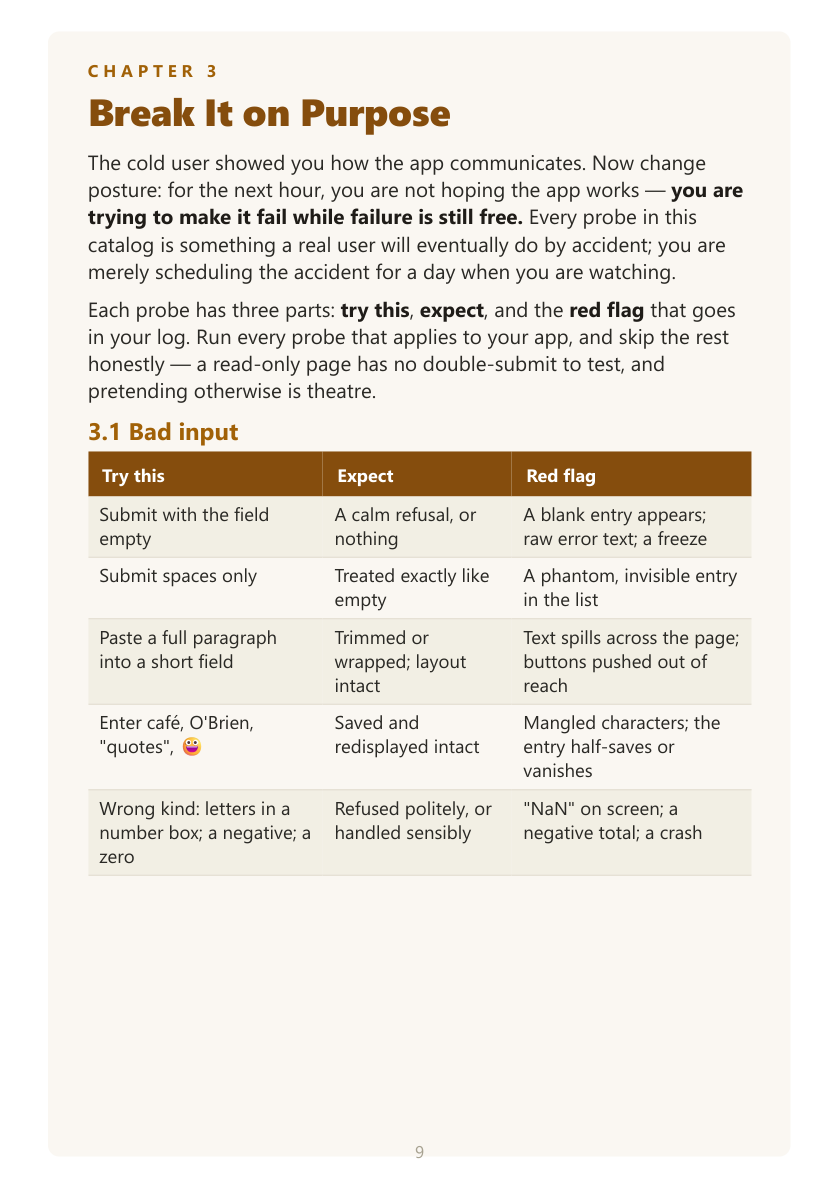
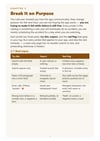
• Break It on Purpose: a catalog of cheap sabotage you run against your own app — empty and junk input, café/O'Brien/emoji, double-clicks, mid-action refresh, two tabs at once, midnight and month boundaries, keyboard-only — each with what to expect and the exact red flag to log
• The States You Forgot: day one with no data, empty-again after use, a mountain of data, a throttled connection, honest offline failure, and someone else's device
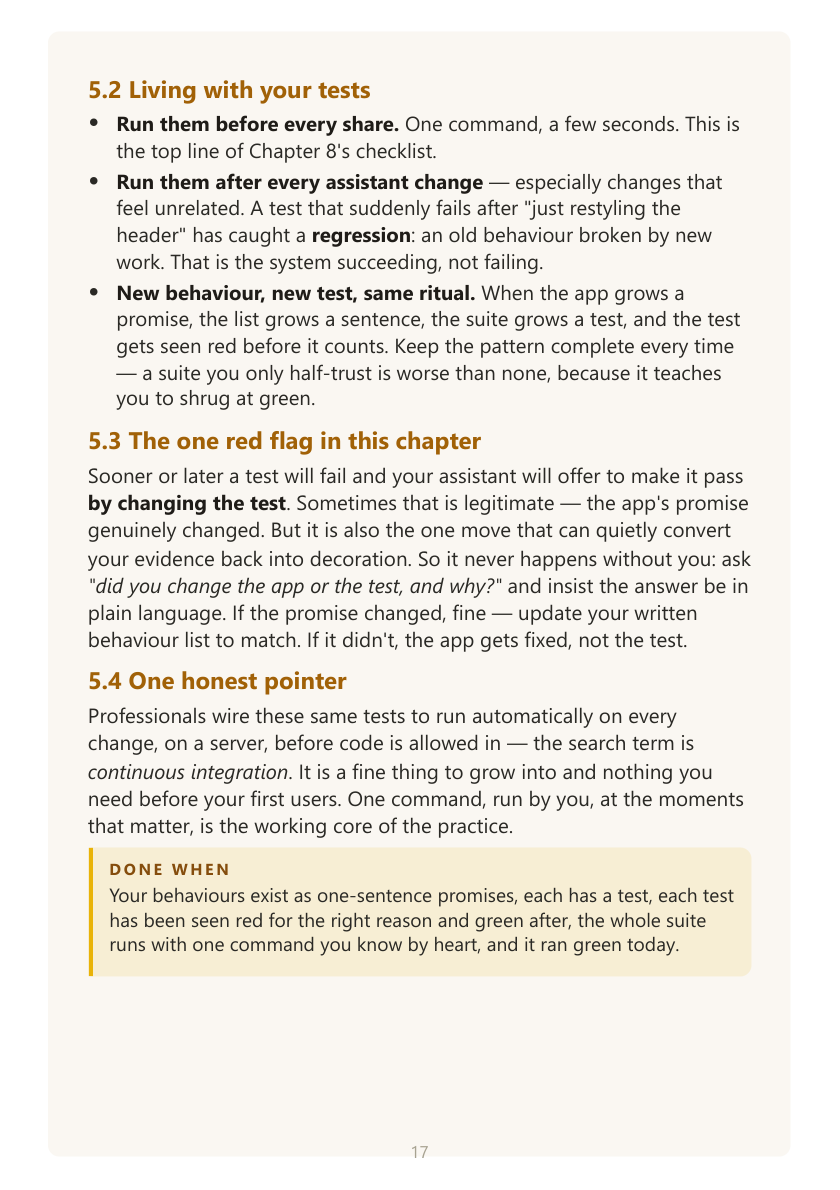
• Tests You Can Own: how to ask your assistant for automated checks you can't read — and the "see it fail first" ritual that turns a wall of green from decoration into evidence, plus the one red flag (a test quietly changed to pass)
• The Coverage Mirage: why a high coverage number can prove almost nothing, the proofreader who "read every page," and the one question to ask instead of "what's the coverage?"
• What You Still Can't Verify: the honest limits — security, crowds, data over time, maintainability, correctness between the points you sampled — and when to stop and pay a professional
• The Smoke Checklist: the whole book compressed to one page you rerun in ten minutes before every share, first stranger or hundredth update
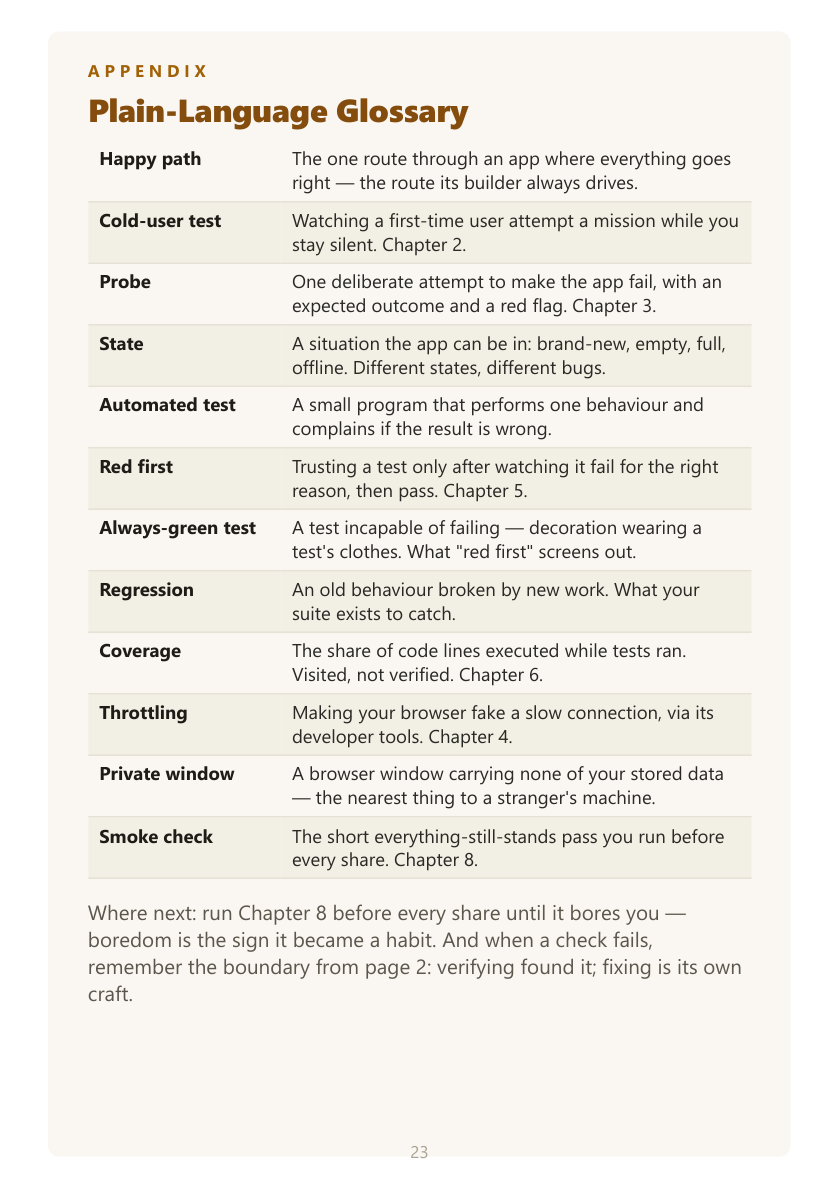
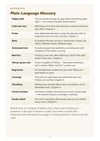
• A plain-language glossary of every term, and an honest note on how the book was made
HONEST NOTES
Everything in this book uses the browser you already have and the AI assistant you already build with — it names Claude Code, GitHub Copilot, and Gemini CLI as examples and requires none of them in particular; there is nothing new to buy. Some assistants run on a paid plan (roughly US$20/month as of July 2026) and some offer a free tier that works the same way, and the book is explicit that no named tool is required. The browser developer-tools labels it leans on — the connection-throttle preset names — drift between versions and were last reviewed July 2026; where a label has moved, the book tells you what to look for instead of the exact words. No statistics, user counts, or customer stories appear anywhere, because there were no real ones to report. And the book holds itself to the same standard it asks of you: passing every check inside is evidence, not proof that your app is correct — it states that ceiling plainly rather than selling past it.
Guidance, not gospel — this is a practical field guide, not professional, security, or legal advice.
Drafted with AI assistance and then reviewed and curated by a real person who verifies software this way.
Instant download. A5 pages, designed for screen reading; prints cleanly on A4 or US Letter. Personal use only.
First Edition — July 2026.
Questions? Reach us at calmkitco.com.