
Woodworking Pricing Calculator Spreadsheet | Board Foot Yield, Finish Coats & Shop Rate, Quote Builder | Excel Google Sheets
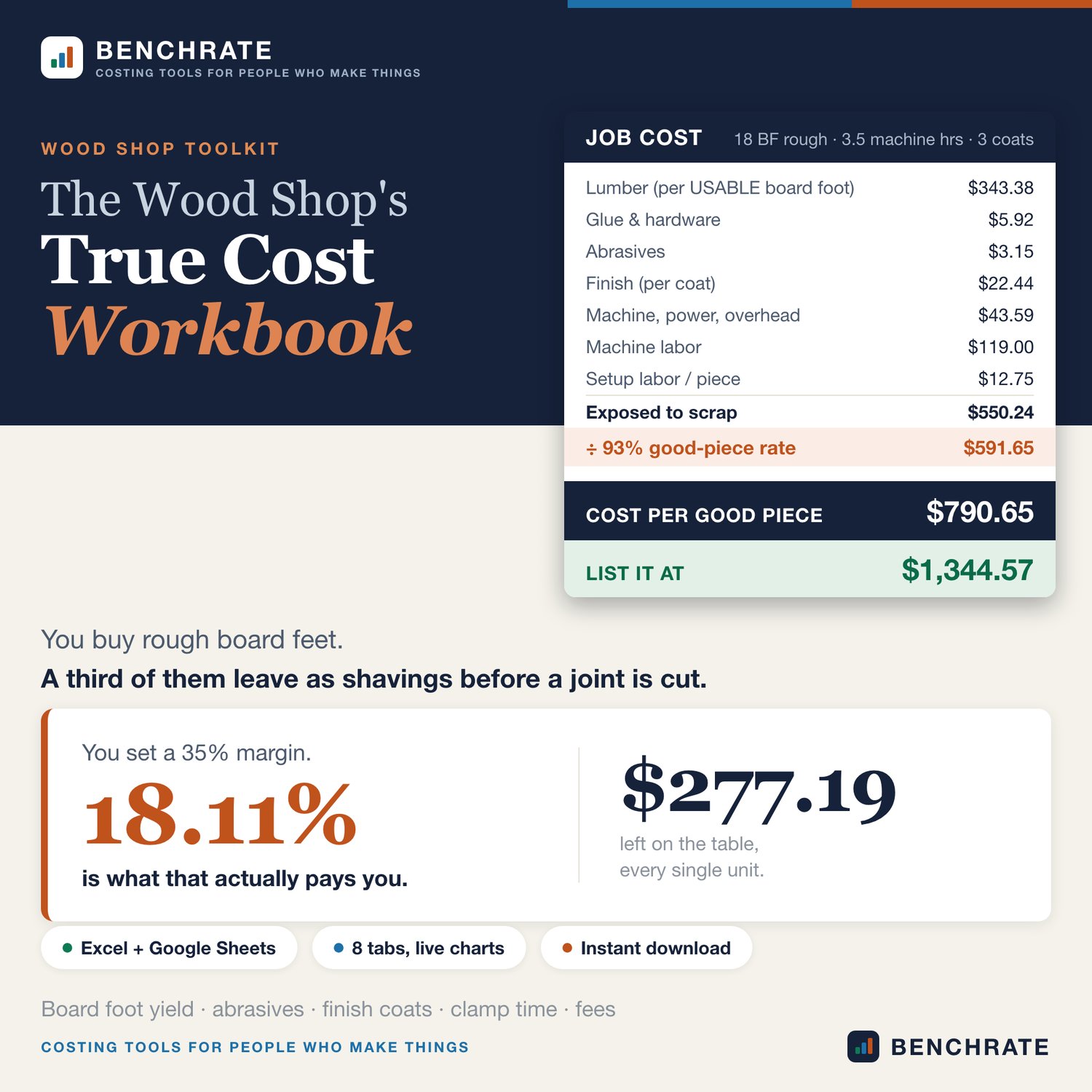
A THIRD OF THE LUMBER YOU PAY FOR LEAVES AS SHAVINGS.
Most woodworking pricing multiplies board feet by a price and adds a shop rate. That
is not what the wood costs you, and it is why custom furniture so often prices like a
hobby.
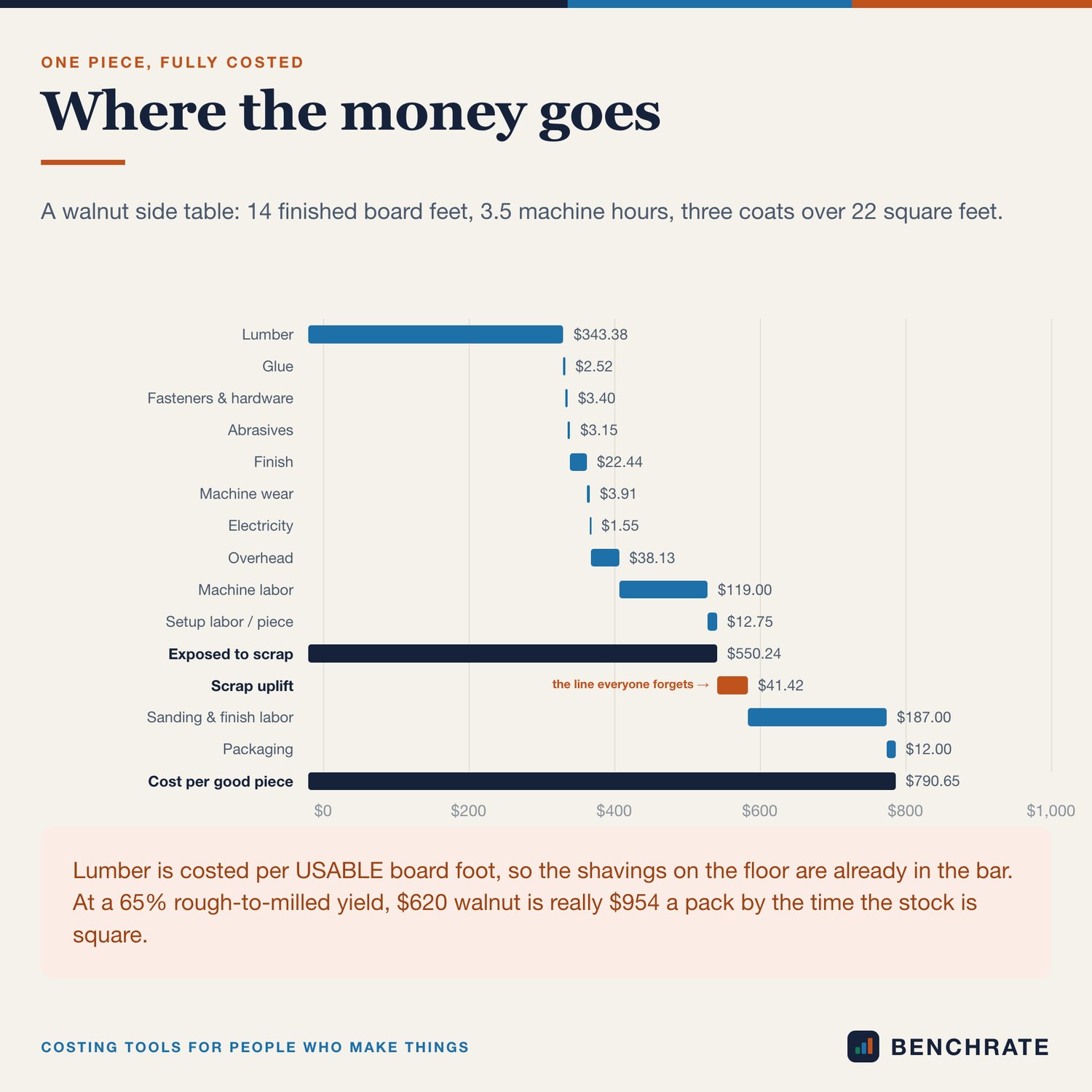
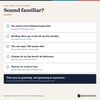
ROUGH TO MILLED YIELD IS THE BIGGEST HIDDEN COST IN THE SHOP. Rough stock loses
thickness to the jointer and the planer, and width to ripping it straight. Sixty to
seventy percent yield is normal. At sixty-five percent, $620 walnut is really $954 a
pack by the time it is square, and none of that appears on an invoice.
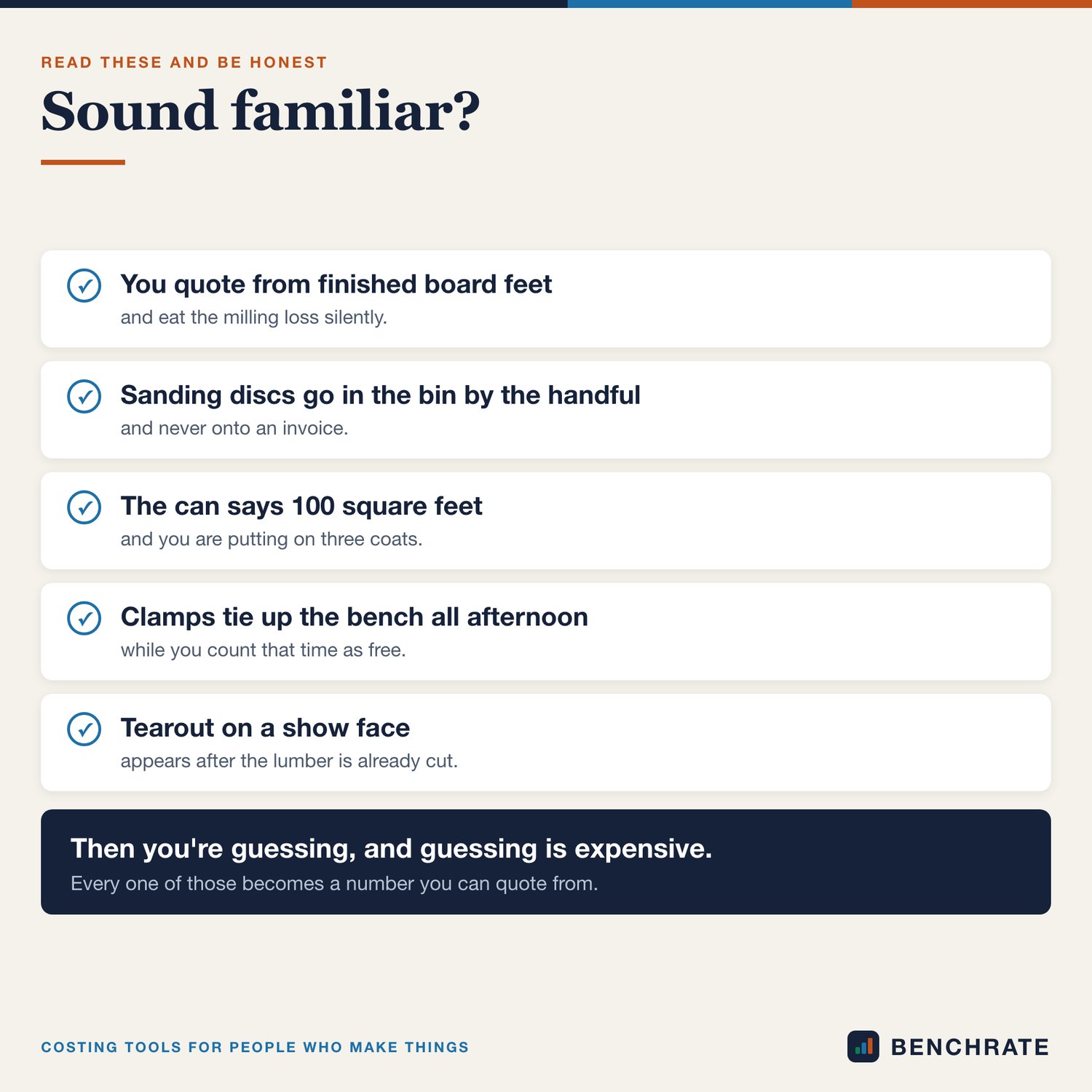
ABRASIVES ARE INVISIBLE AND CONSTANT. Discs and belts load up on hardwood and get
thrown away by the handful. An hour of sanding costs real money in paper alone, and
almost nobody counts it.
FINISH IS PRICED PER COAT, NOT PER CAN. The coverage printed on the tin is for one
coat. Three coats over twenty-two square feet is three times what you estimated from
the label.
CLAMP TIME OCCUPIES THE SHOP. Your hands are free during a glue-up but the bench and
the clamps are not, and nothing else can happen on them. That is capacity, and it
belongs in your overhead.
REWORK IS DISCOVERED LATE. Tearout on a show face, a blown joint or a run in the
finish all appear after the lumber and most of the labor are spent. The good pieces
carry them, and the way to handle that is to divide by your good-piece rate.
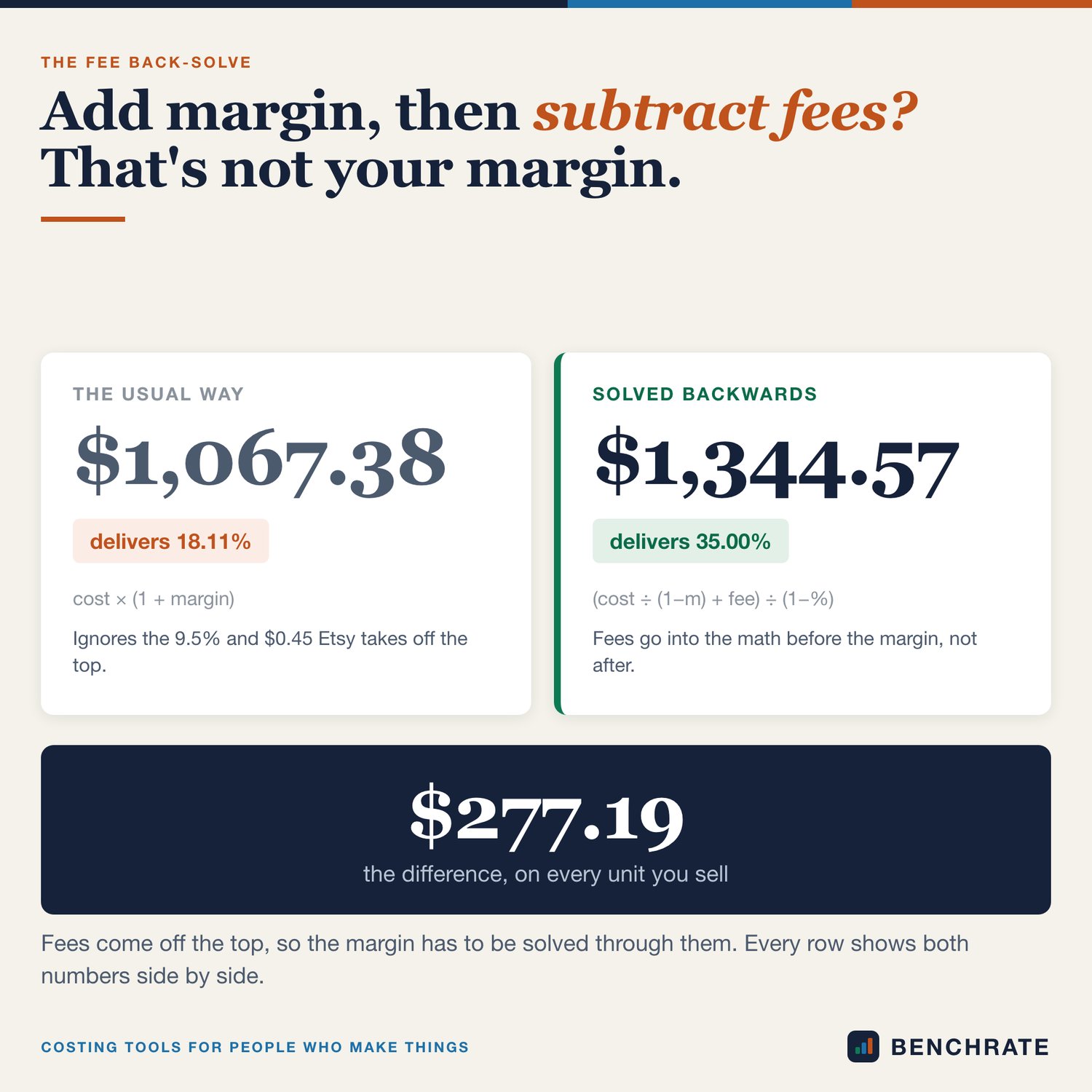
MARKETPLACE FEES. You cannot add your margin and then subtract fees. That arithmetic
does not leave you with your margin. The price has to be solved backwards.
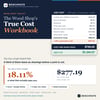
On the worked example included, a shop targeting 35% using the standard method actually
earns 18.11%. That one row leaves $277.19 on the table, and the workbook shows that gap
on every row you enter.
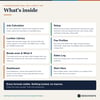
WHAT YOU GET
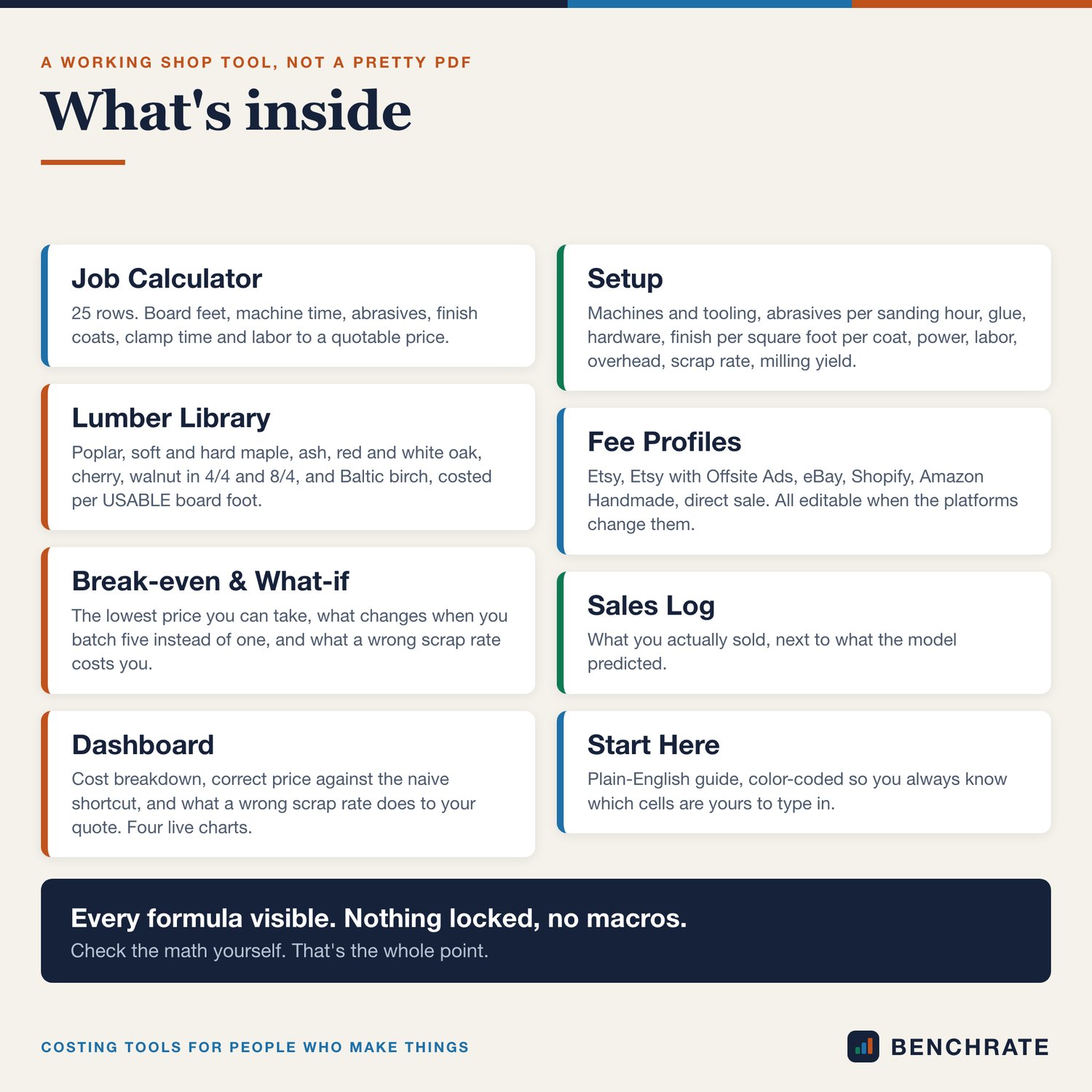
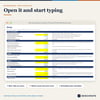
- Job Calculator: 25 rows, full breakdown per piece, correct list price calculated, plus
a column showing exactly what the shortcut would have cost you
- Board feet costed per USABLE foot: enter what ends up in the finished piece and the
workbook grosses it up for milling loss automatically
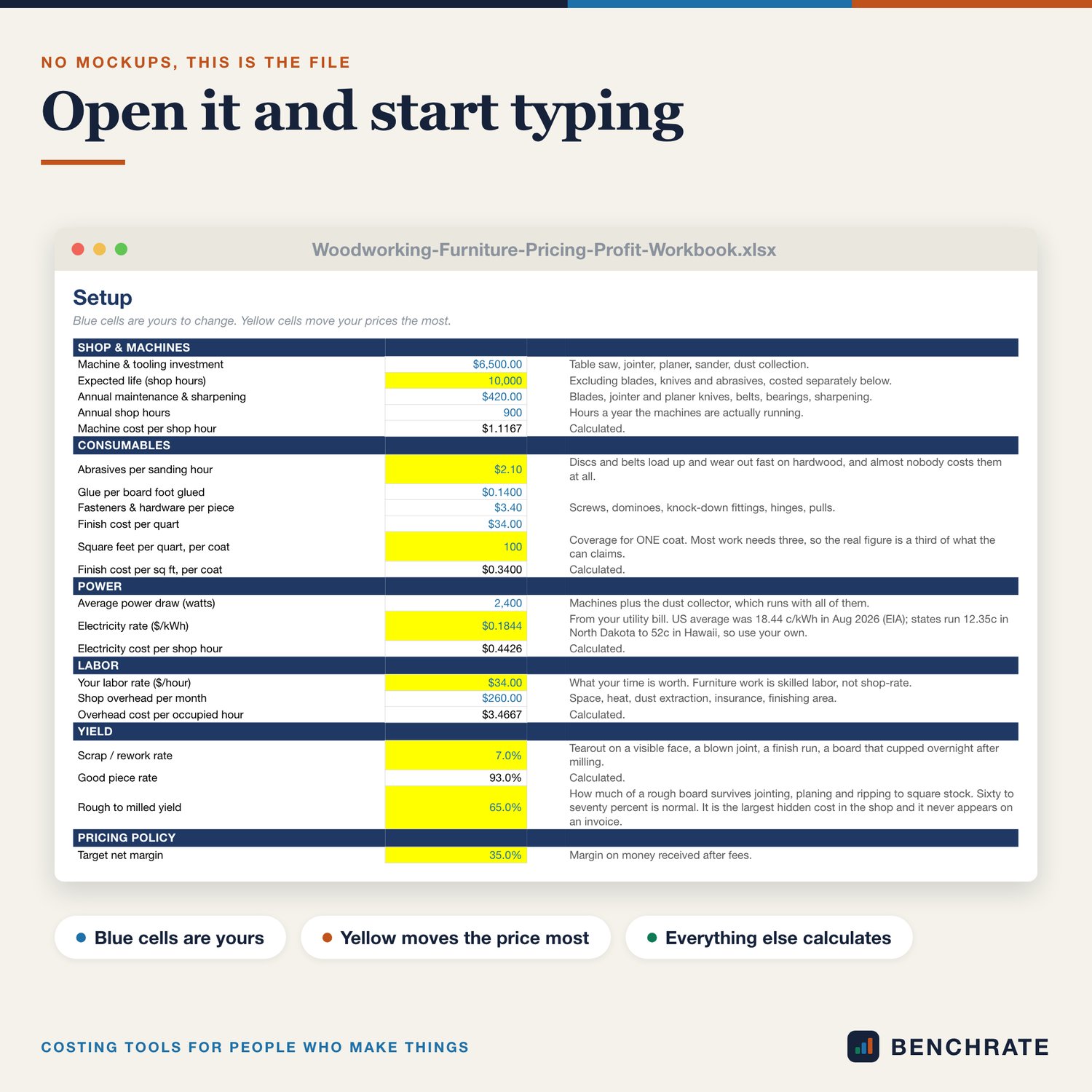
- Setup: machines and tooling, abrasives per sanding hour, glue, hardware, finish per
square foot per coat, power, labor, overhead, scrap rate, rough-to-milled yield
- Lumber Library: poplar, soft and hard maple, ash, red and white oak, cherry, walnut in
4/4 and 8/4, and Baltic birch pre-loaded, costed per USABLE board foot
- Fee Profiles. Etsy, Etsy with Offsite Ads, eBay, Shopify, Amazon Handmade and direct. All editable
- Break-even & What-if: your lowest acceptable price, a volume table showing what
changes when you batch five instead of one, and a grid showing what a wrong scrap
rate costs you
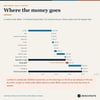
- Dashboard: four live charts (cost breakdown, correct vs naive vs break-even, cost
and price as the batch gets bigger, and price against scrap rate) that follow whichever
job row you select
- Sales Log: what you actually sold, against what the model predicted
- Start Here: a plain-English guide, color-coded so you know which cells to touch
Works for furniture, cabinets, cutting boards, turned work and built-ins. Hand tools
or a full machine shop. The tooling doesn't matter. The cost structure does.
Eight tabs. Works in Microsoft Excel and Google Sheets, both tested. Instant digital
download. No macros, no add-ons, nothing to install. Every formula is visible and editable,
and so is the data behind every chart, so you can check the math yourself.
WHO THIS IS FOR
Custom furniture makers quoting commissions, cabinet shops, Etsy sellers running
cutting board and small-goods lines, and anyone who has finished a piece and quietly
wondered where the money went. If you already price lumber per usable board foot
and charge for clamp time, you don't need this.
DISCLOSURE
Portions of this workbook, including its layout and formulas, were produced with the
assistance of AI tools, then reviewed and tested by a human before publication.
NOT ACCOUNTING ADVICE
This is a costing tool, not tax or accounting software. Results depend entirely on the
figures you enter. Check them against your own records.