

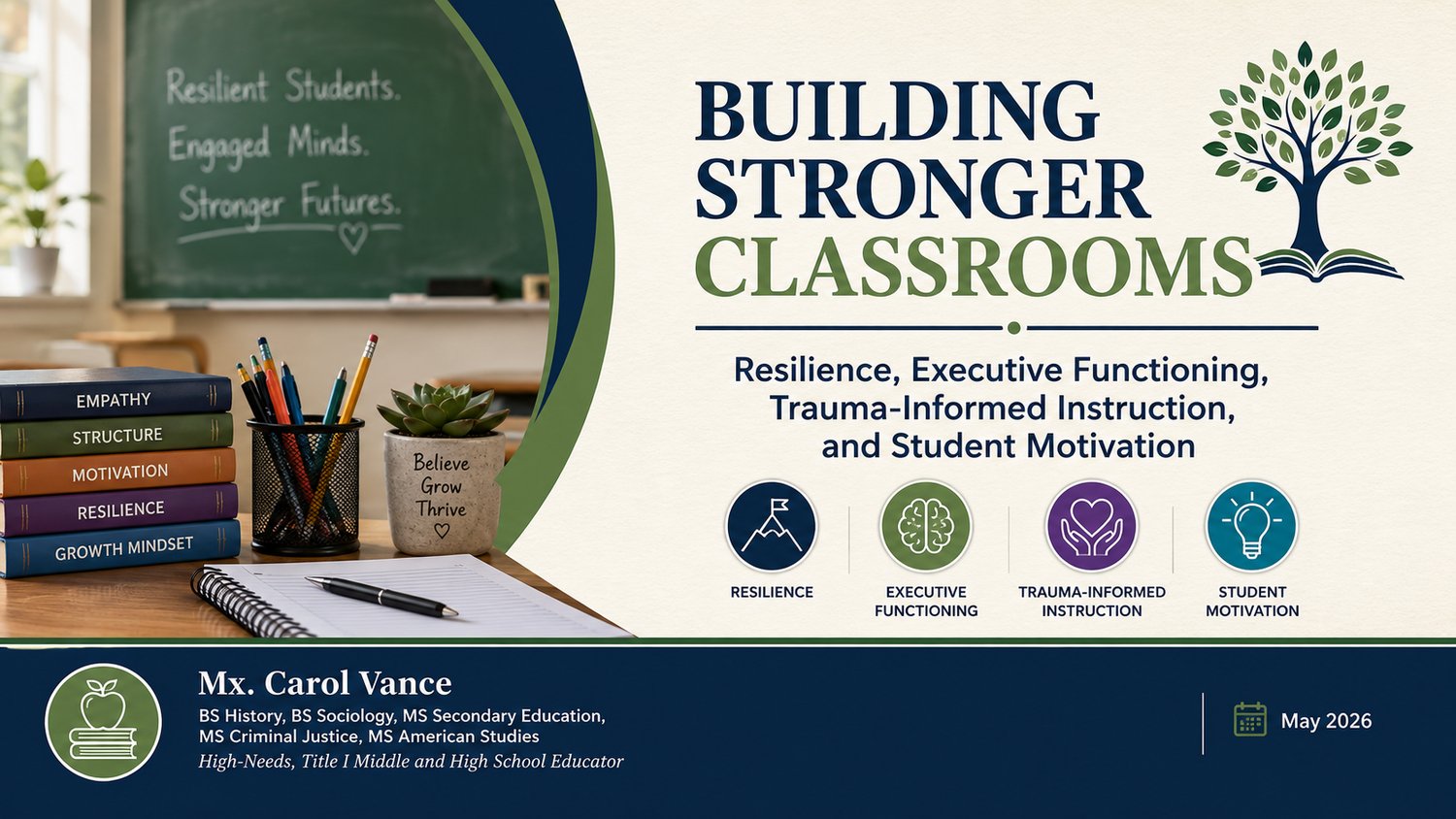
Building Stronger Classrooms: Resilience, Executive Functioning, Trauma-Informed Instruction, and Student Motivation
Introduction
Teachers are often asked to do more than deliver content. They are also expected to help students regulate emotions, stay organized, recover from setbacks, and stay engaged long enough to learn deeply. That is a tall order, but it becomes more manageable when schools intentionally train teachers in resilience-building practices, executive functioning supports, trauma-informed instruction, and motivation strategies.
These areas are connected. Students who have experienced trauma may struggle with attention, memory, trust, and self-control, which can affect how they participate in class. At the same time, students who lack executive functioning skills may have trouble starting work, planning ahead, or finishing tasks, even when they are capable. When teachers understand both needs, they can create classrooms that feel safer, more predictable, and more productive for everyone.
This essay argues that training in classroom resilience-building practices, executive functioning, trauma-informed instruction, and student motivation can help teachers create more effective learning environments because these approaches strengthen students’ ability to persist, regulate themselves, and engage meaningfully in learning.