
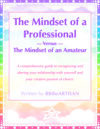
The Mindset of a Professional Versus The Mindset of an Amateur
This book is for any and all creative individuals who either feel a sense of stagnation, limitation, or dissatisfaction with their work and their self-expression, or, those who might feel a disconnect from typical online art communities yet cannot seem to figure out why.
For a helpful sample, please download the Preview PDF which is entirely free.
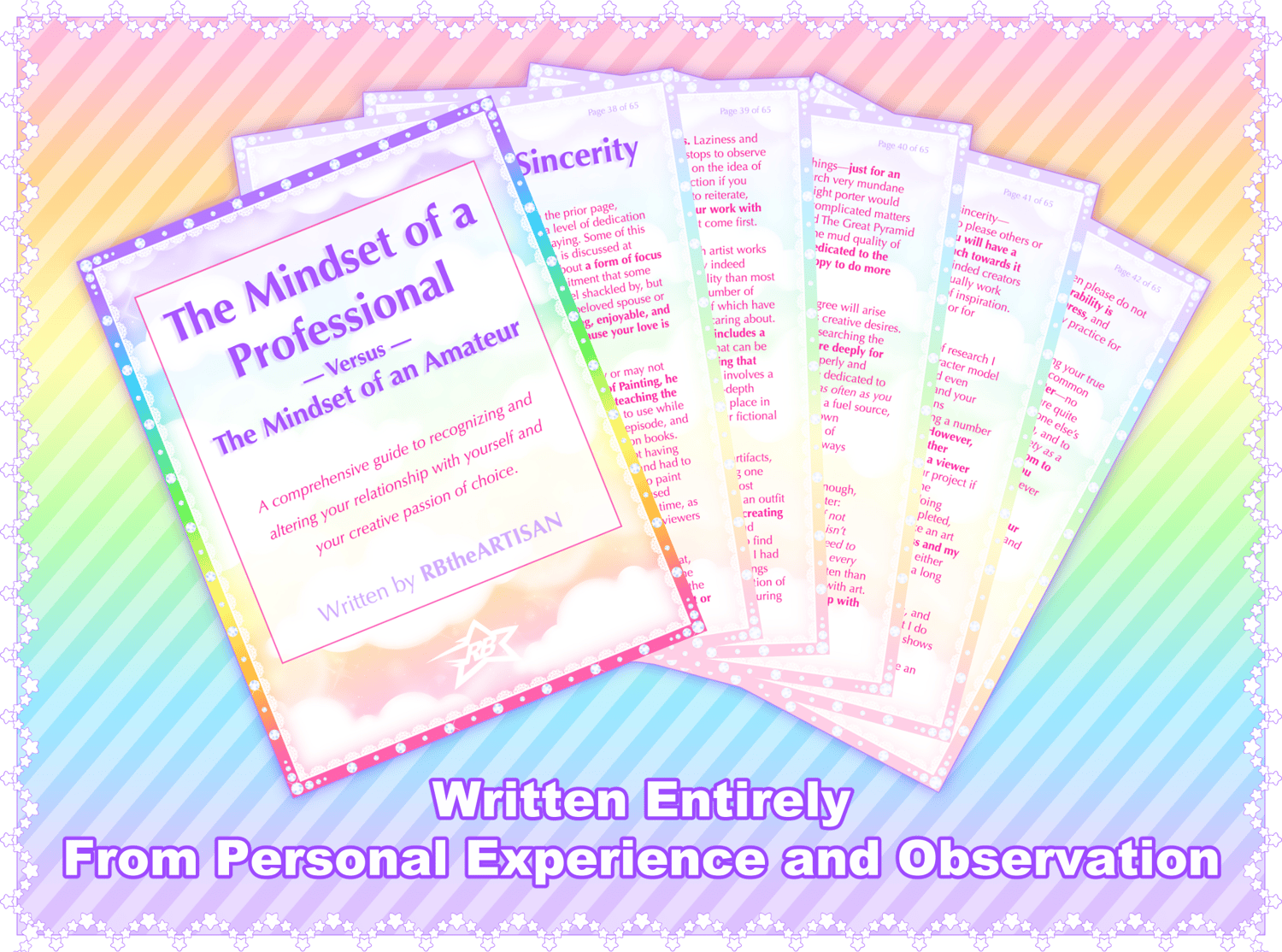
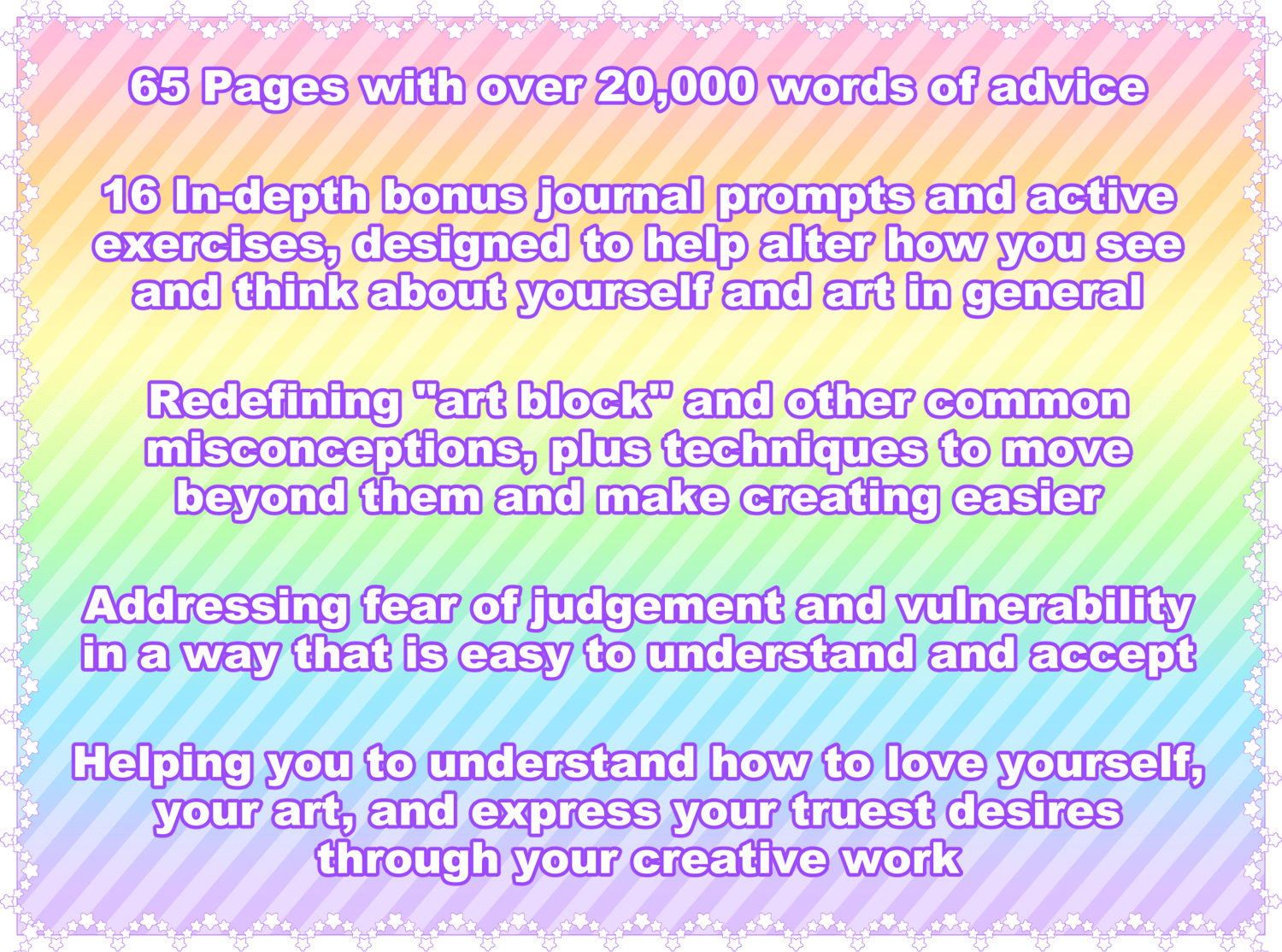
The Mindset of a Professional Versus The Mindset of an Amateur features 65 pages with over 20,000 words of advice and guidance, written entirely from my own personal experiences and observations as a lifelong artist. There are 16 bonus journal prompts and exercises at the end that are quite hefty and involved, urging you to take actions and think differently whilst doing things you are likely already doing regularly.
Each chapter covers a different topic that is relevant to being a creative person, and while the majority of the examples and technical advice is for illustrators, the words within this book can be studied and understood by someone in most any artistic field.
Above all, this guide is to help you understand how to love yourself and your artwork, express yourself the way you truly want to, and do so with the reverence and respect your work actually deserves.
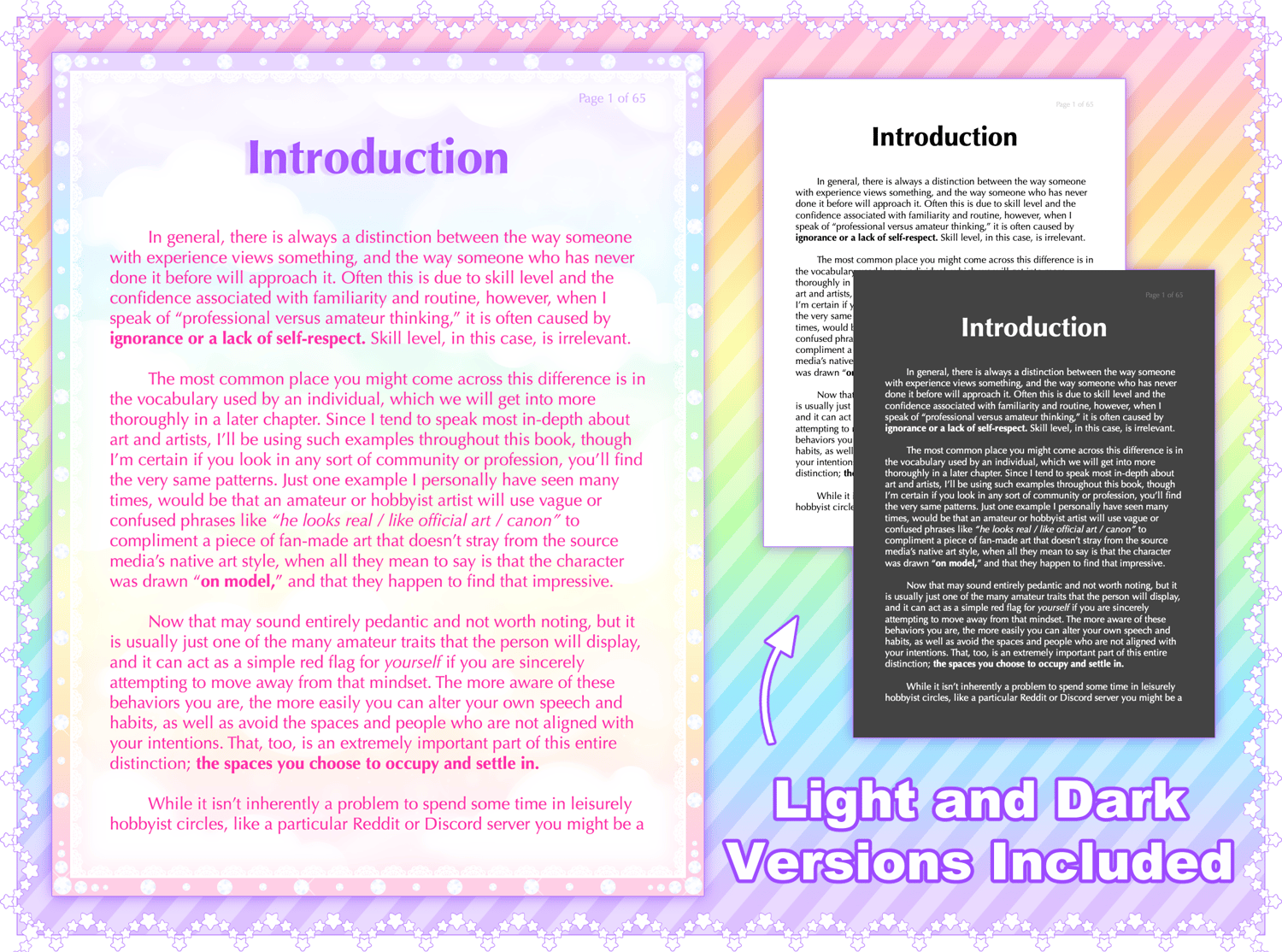
And, for your convenience, with your purchase I have included a light version and a dark version alongside the standard rainbow design.
As implied in the title, this book is mostly a lesson in psychology and understanding the self, with a few art techniques peppered in. This is not a how-to-draw book, and it is not intended for beginners or hobbyists.
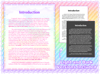
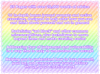
Here is a condensed sample from the "Introduction" chapter:
In general, there is always a distinction between the way someone with experience views something, and the way someone who has never done it before will approach it. Often this is due to skill level and the confidence associated with familiarity and routine, however, when I speak of “professional versus amateur thinking,” it is often caused by ignorance or a lack of self-respect. Skill level, in this case, is irrelevant.
This really all just boils down to one thing, and that is treating your art (or other passion) with the reverence and respect that it truly deserves. It requires knowing yourself well enough, and honestly enough, to acknowledge and accept your actual individual preferences when removed from external or group influence, and expressing those things in a way that shows you earnestly care about them.
When you love something deeply, you want to take care of it, and you want to shower it with the affection you feel it deserves. If your work is something you love, then you should treat it accordingly. If you want to remain a hobbyist in your art, then this book and my teachings are not for you and that is fine, but otherwise, you probably feel like art is your whole world. Like it is an intrinsic part of you that cannot ever be separated nor abandoned, no matter what circumstances you might be going through. If that is the case, then love it fully, respect it, and honor it without the need to fit in with the majority crowd of amateurs.
One thing that I can say for certain about my own experience with shifting into a professional attitude, is that the quality of my art increased massively, practically overnight once I put these things to action—well, it was within a few weeks, but for an artist of about three decades that might as well be overnight. While I do not know your own capacity for learning and change in regard to your work, I am fairly confident that you’ll experience a version of what I did; a clearer understanding of how to use references and tools, being able to style match more easily and remain on model, feeling less limited by your own skill level overall, less overthinking as a result of all those things, and most importantly, you may actually learn to love your art rather than hate it.
The biggest difference between how I thought about and treated my work two years ago, versus now, is that I genuinely love my art. I had gone from a six or seven year period where I could not get myself to draw, at all, because it made me feel physically ill and start crying every single time… to almost overnight, drawing tons of things that I was actually proud of and enjoyed looking at for days and days afterward. Still, I often have my own art open on my phone or computer just so I can look at it throughout the day, feeling happy and satisfied with what I see, rather than disgusted and ashamed. I never in my life imagined I’d feel this way, as extreme toxic shame associated with self-expression still disrupts my daily existence. But at least now, I am most often pleased with the outcome of each thing I create, to the point where I might stare at it lovingly for long stretches of time. It is an invaluable feeling.
If you are someone who finds themselves often frozen in fear when approaching art, or sickened by the sight of it during or after the process, then I hope—if nothing else—that I am able to help you see things differently enough to change that aspect of your work. Your relationship with art and yourself is ultimately the key, and what makes you either an amateur or a professional in terms of your attitude. You are either in a loving, committed relationship with your work, or it is simply an occasional indulgence that means very little to your overall life experience and trajectory.
At the very least, may you find something within these pages that is eye-opening or thought-provoking to some degree. Anyone can learn or unlearn anything. The majority of differences between people are within the mind—one’s overall attitude and beliefs—and those things can be changed if so desired. Typically through the acknowledgment and acceptance of current data, and the repeated observation of opposing data. Data can include external factors and results, internal thoughts, emotional reactions, inspiration, intuition, avoidance behavior, and everything else that makes up a life experience. Knowing that alone grants you a starting point to begin paying attention to how you interact with the subject of art, or whatever it is you are passionate about.
Please keep an open mind while reading, and if something truly does not resonate with you, then feel free to discard it. Everything I say is an observation that I personally have found to be both accurate and helpful—but it is not law.
All text is written by RBtheARTISAN
All artwork and graphic design is made by RBtheARTISAN
The character "RB" and the RB Star logo belong to RBtheARTISAN