

FIRST IN™ Paramedic Quick Sheets | 2026 Edition
FIRST IN™ Paramedic Quick Sheets | 2026 Edition
PREPARE WITH CONFIDENCE.
THINK WITH PURPOSE.
KNOW WHAT MATTERS FIRST.™
Paramedic school throws a lot at you.
Medications. Cardiology. Pediatrics. Acid-base. Airway. Shock. Clinical judgment.
The problem usually is not just learning the information.
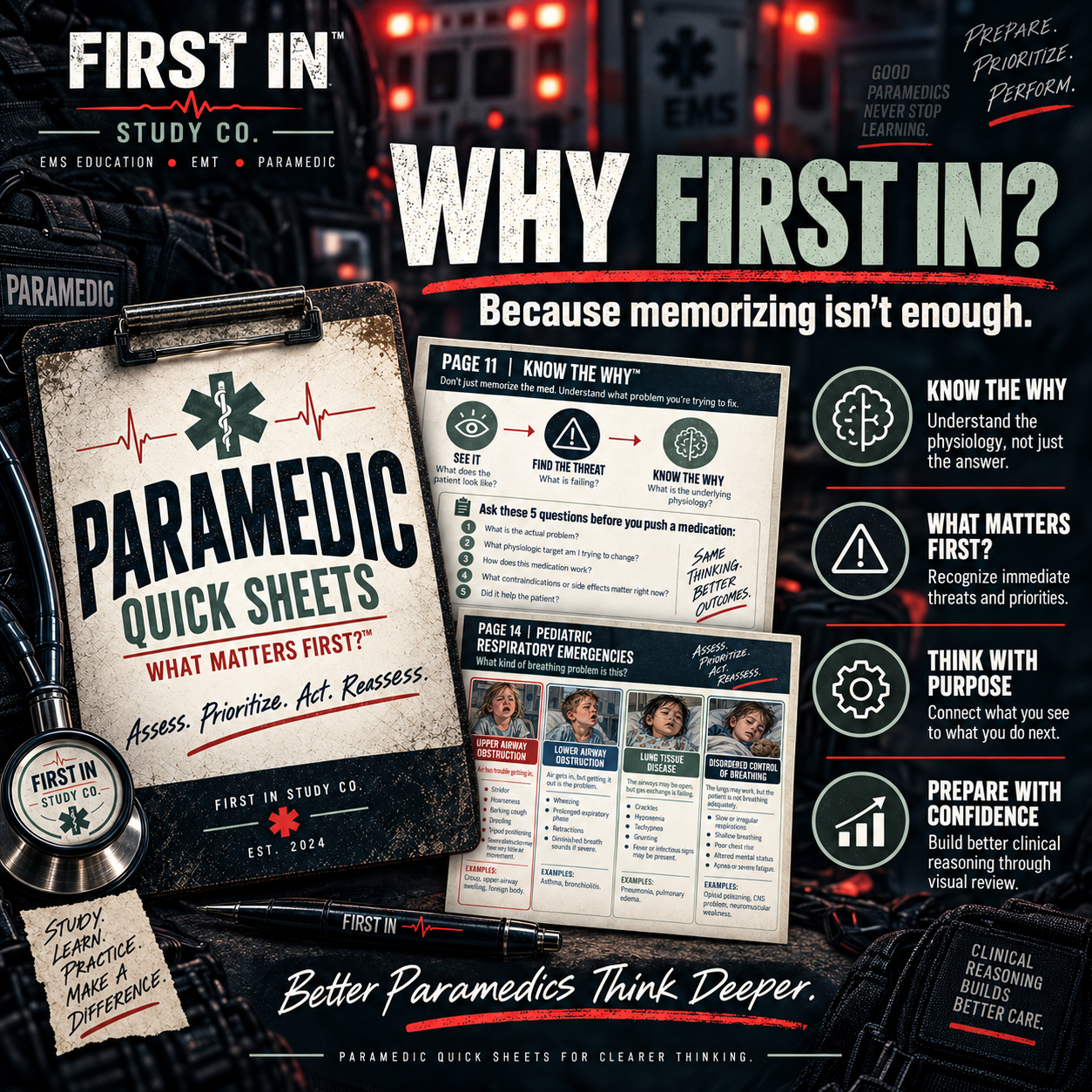
It is learning how to connect it, recognize what matters first, and understand why one decision makes more sense than another.
That is why I created the FIRST IN™ Paramedic Quick Sheets.
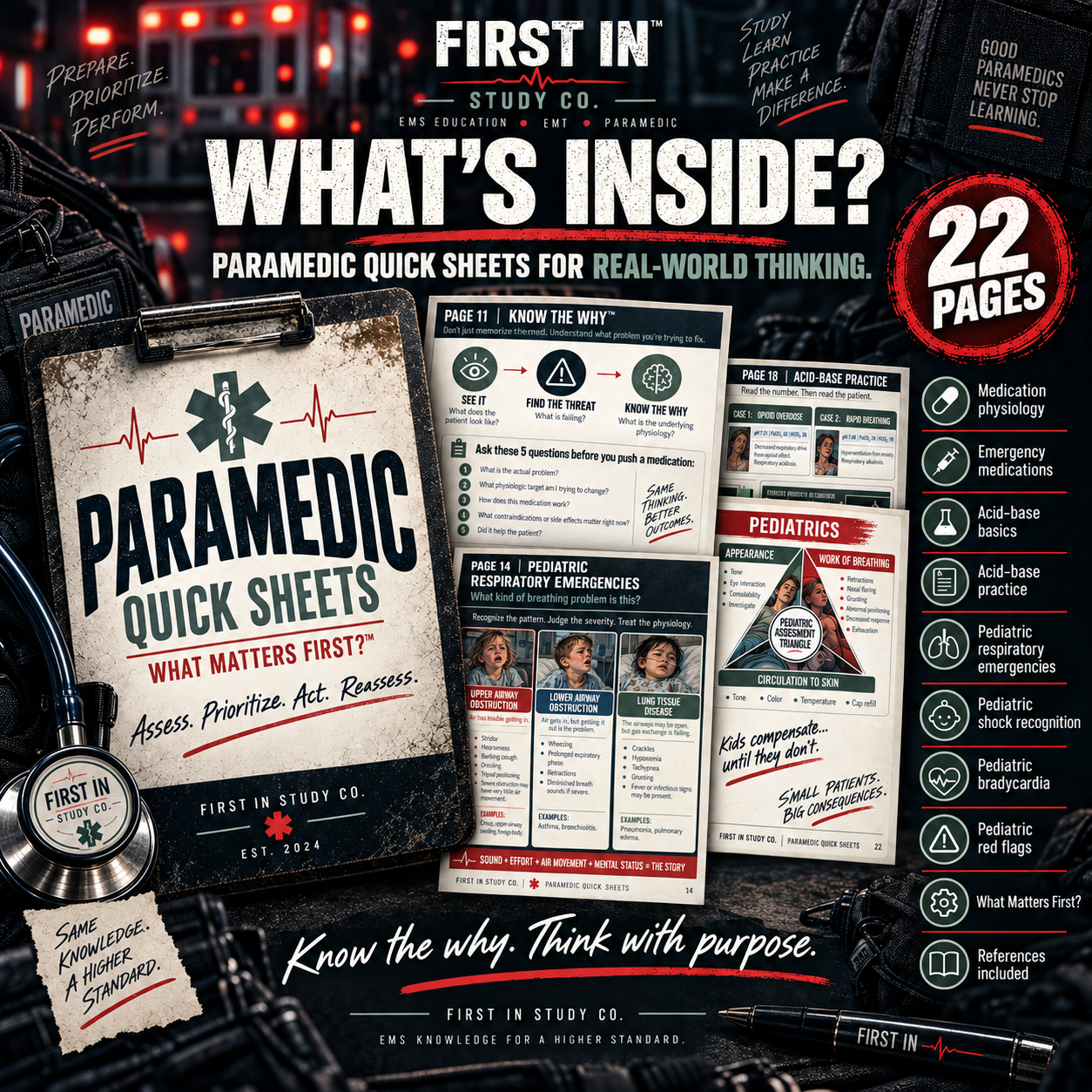
This 22-page visual study system was built for paramedic students who learn better through:
- clear breakdowns
- visual explanations
- real-world patient examples
- clinical reasoning
- pattern recognition
- understanding the physiology behind the answer
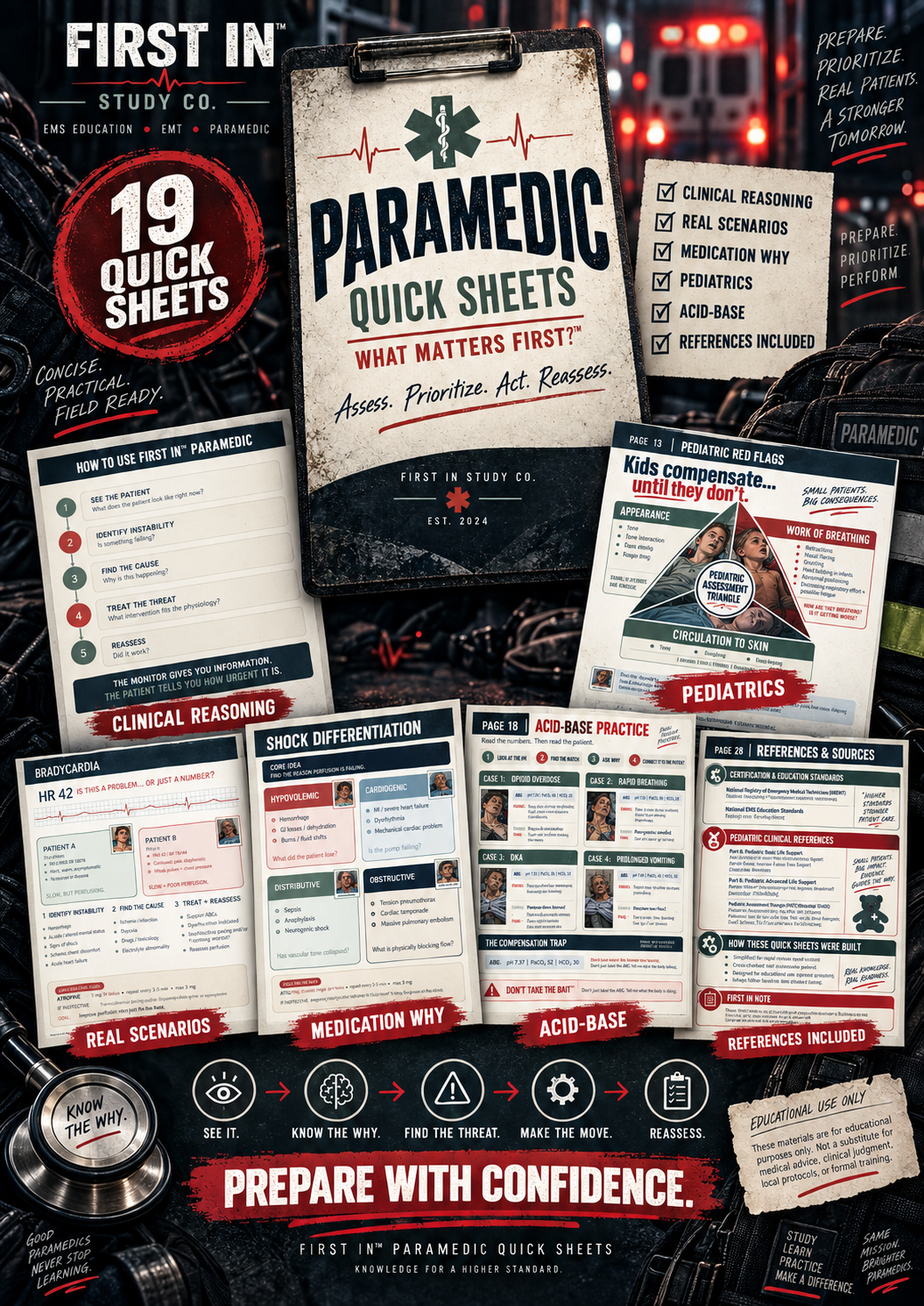
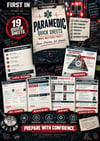
Inside, you’ll review:
- Stable vs unstable patients
- Bradycardia
- Tachycardia
- Cardioversion vs defibrillation
- 12-lead ECG basics
- STEMI recognition
- Airway decision-making
- Shock differentiation
- Know the Why™ medication framework
- Emergency medication physiology
- Pediatric red flags
- Pediatric respiratory emergencies
- Pediatric shock recognition
- Pediatric bradycardia and deterioration
- Acid-base basics
- Acid-base practice
- What Matters First?™ clinical-priority framework
- References and source notes
The First In approach
SEE THE PATIENT.
FIND THE THREAT.
KNOW THE WHY.
MAKE THE MOVE.
REASSESS.
This is not another giant stack of notes to memorize.
It is designed to help you turn information into clinical reasoning.
Great for:
- Paramedic students
- Exam review
- Class reinforcement
- Clinical preparation
- Scenario practice
- Quick review before labs or ride time
- Visual learners
- Students who understand better when they know the why
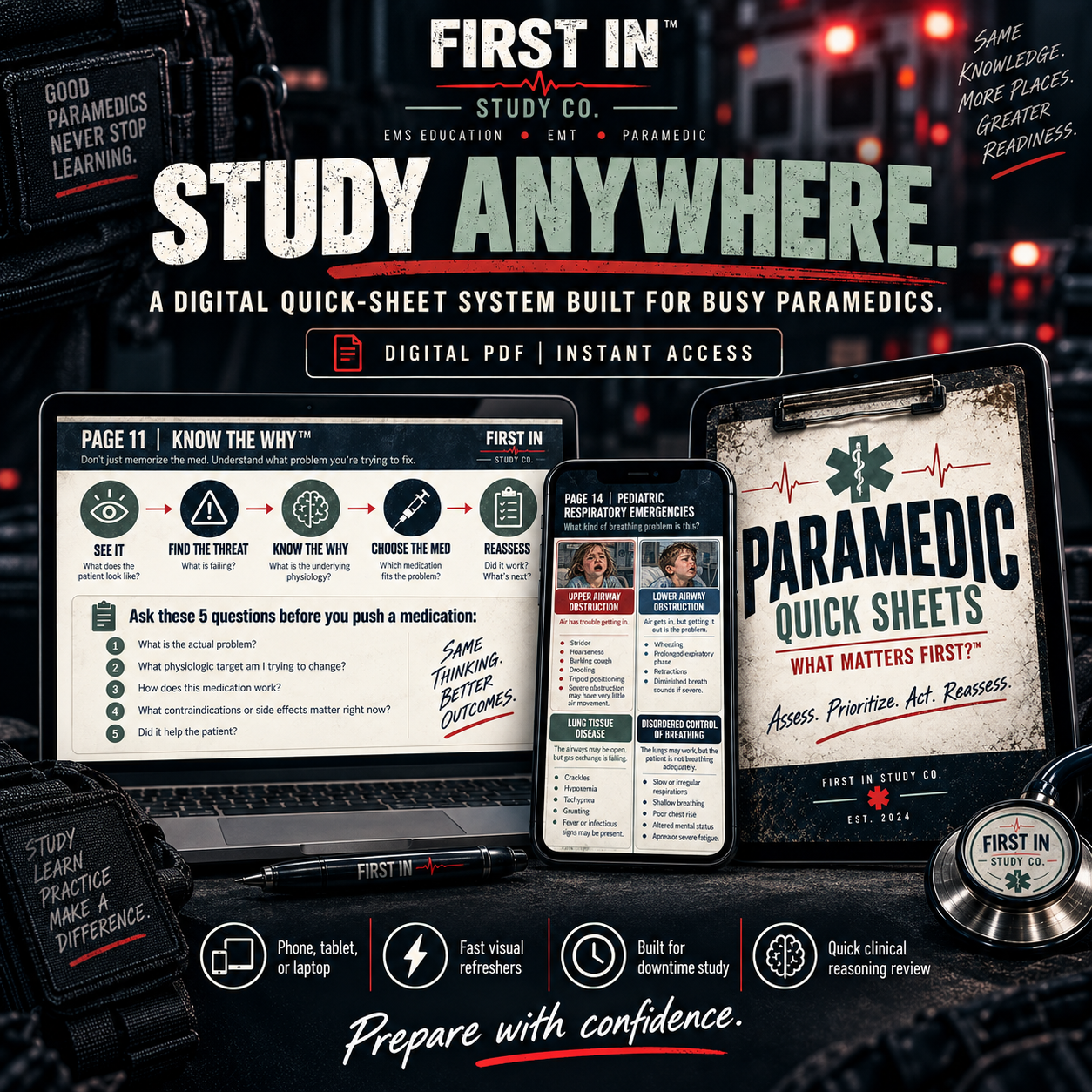
Digital PDF | Instant access | 22 pages
FIRST IN™ is an independent educational study resource and is not affiliated with, endorsed by, or approved by the National Registry of Emergency Medical Technicians, the American Heart Association, the American Academy of Pediatrics, or any state EMS agency. This resource does not guarantee examination performance, certification, or licensure. Always follow current course materials, local protocols, scope of practice, medical direction, and applicable state requirements.