


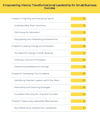
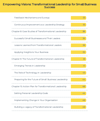
Empowering Visions: Transformational Leadership for Small Business Success
The ebook is a guide on transformational leadership specifically tailored for small business success, emphasizing the importance of vision, trust, motivation, and adaptability in leadership practices.
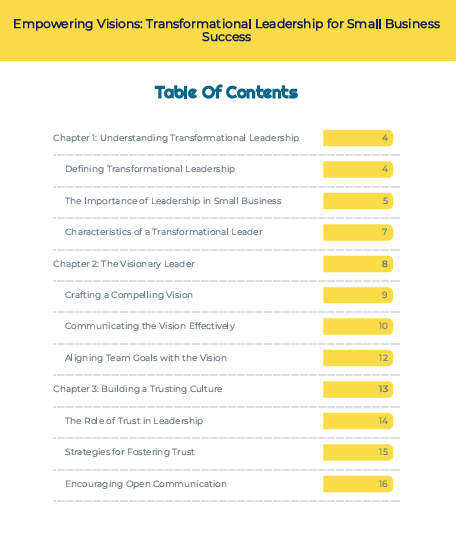
Defining Transformational Leadership
Transformational leadership is an inspiring approach that focuses on significant change and improvement within individuals and organizations. It emphasizes innovation, motivation, and personal development, particularly in small businesses where strong leadership can have a profound impact.
The Importance of Leadership in Small Business
Effective leadership is crucial for the success of small businesses, serving as the backbone of operations. Strong leadership aligns employee efforts towards common goals, fostering a collaborative atmosphere that enhances innovation and resilience.
Characteristics of a Transformational Leader
Transformational leaders possess key traits that distinguish them from traditional leaders, including the ability to inspire, communicate effectively, and demonstrate empathy. These characteristics are vital for fostering a positive workplace culture and driving organizational success.
Crafting a Compelling Vision
A compelling vision serves as a guiding light for small businesses, articulating core values and inspiring employees. It is essential for fostering innovation and collaboration within the organization.
Communicating the Vision Effectively
Effective communication of a vision is essential for inspiring and guiding teams towards common goals. Clear articulation fosters motivation and collaboration among employees.
Aligning Team Goals with the Vision
Aligning team goals with the overarching vision is crucial for fostering a cohesive working environment. This alignment enhances motivation and drives collective effort towards shared outcomes.
The Role of Trust in Leadership
Trust is a fundamental element of effective leadership, particularly in small businesses. Cultivating trust creates an environment where employees feel valued and motivated.
Strategies for Fostering Trust
Building trust within a small business is essential for creating a cohesive and motivated team. Leaders should prioritize open communication and consistency in their actions.
Encouraging Open Communication
Encouraging open communication is fundamental for fostering a culture of trust and collaboration. It enhances engagement and drives better decision-making within the organization.
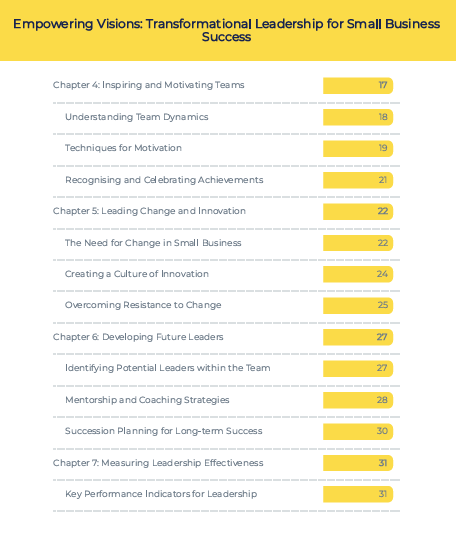
Understanding Team Dynamics
Understanding team dynamics is essential for fostering a productive work environment in small businesses. Leaders must recognize the unique strengths and perspectives of each team member.
Techniques for Motivation
Motivation is a cornerstone of effective leadership, encompassing a sense of purpose and personal growth. Leaders must recognize that motivation goes beyond monetary incentives.
Recognising and Celebrating Achievements
Recognizing and celebrating achievements is vital for boosting morale and productivity in small businesses. Acknowledgment fosters an environment where employees feel valued.
Creating a Culture of Innovation
Creating a culture of innovation is essential for fostering growth and competitiveness in small businesses. Leaders must prioritize an environment where creative ideas can flourish.
Overcoming Resistance to Change
Resistance to change is common in small businesses, often stemming from fear of the unknown. Leaders must engage in open communication to manage this resistance effectively.
Identifying Potential Leaders Within Teams
Identifying potential leaders within a team is crucial for fostering a culture of transformational leadership. It requires keen observation and understanding of individual strengths.
Mentorship and Coaching Strategies
Mentorship and coaching are essential for developing transformational leadership within small businesses. They create supportive environments for aspiring leaders to thrive.
Succession Planning for Long-term Success
Succession planning is crucial for the longevity of small businesses, ensuring sustainability through leadership transitions. It involves identifying and developing potential leaders within the organization.
Key Performance Indicators for Leadership
KPIs are essential metrics that define a leader's success in achieving organizational goals. They foster accountability and transparency while motivating teams towards a shared vision.
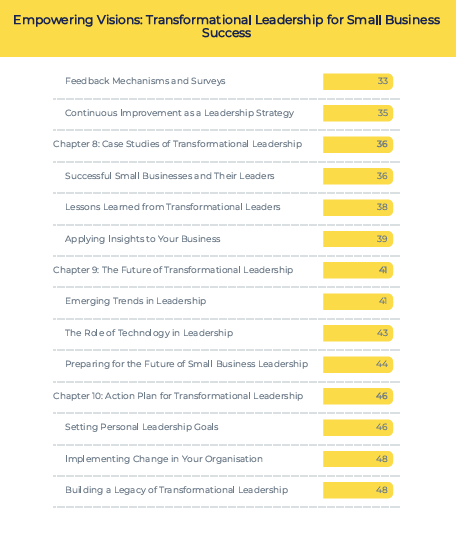
Importance of Feedback Mechanisms and Surveys
Feedback mechanisms and surveys are crucial for fostering continuous improvement within organizations. They provide valuable insights that inform strategic planning and enhance communication.
Continuous Improvement as a Leadership Strategy
Continuous improvement focuses on fostering an environment of innovation and efficiency. It empowers employees and enhances adaptability in response to market demands.
Characteristics of Successful Small Business Leaders
Successful small business leaders inspire their teams and cultivate environments that foster innovation and resilience. They leverage their industry insights to navigate challenges effectively.
Lessons Learned from Transformational Leaders
Transformational leaders inspire remarkable changes within their organizations through vision, communication, and emotional intelligence. They embrace change and foster a culture of continuous learning.
Applying Insights to Enhance Business Success
Applying insights from data and experience is crucial for small business success. Transformational leadership empowers informed decision-making that aligns with the business vision.
Emerging Trends in Leadership for Small Businesses
Emerging trends in leadership emphasize adaptability, emotional intelligence, and purpose-driven approaches. Leaders must navigate complexities while inspiring their teams to embrace change.
The Role of Technology in Modern Leadership
Technology significantly shapes effective leadership practices by enhancing communication and streamlining operations. Leaders must embrace digital tools to foster innovation and collaboration.
Preparing for Future Small Business Leadership
Preparing for the future requires small business leaders to embrace innovation, data-driven decision-making, and community engagement. Transformational leadership is essential for navigating challenges and ensuring relevance.
Setting Personal Leadership Goals for Growth
Setting personal leadership goals is crucial for aspiring leaders to define their vision and align actions with values. This process serves as a roadmap for personal and professional development.