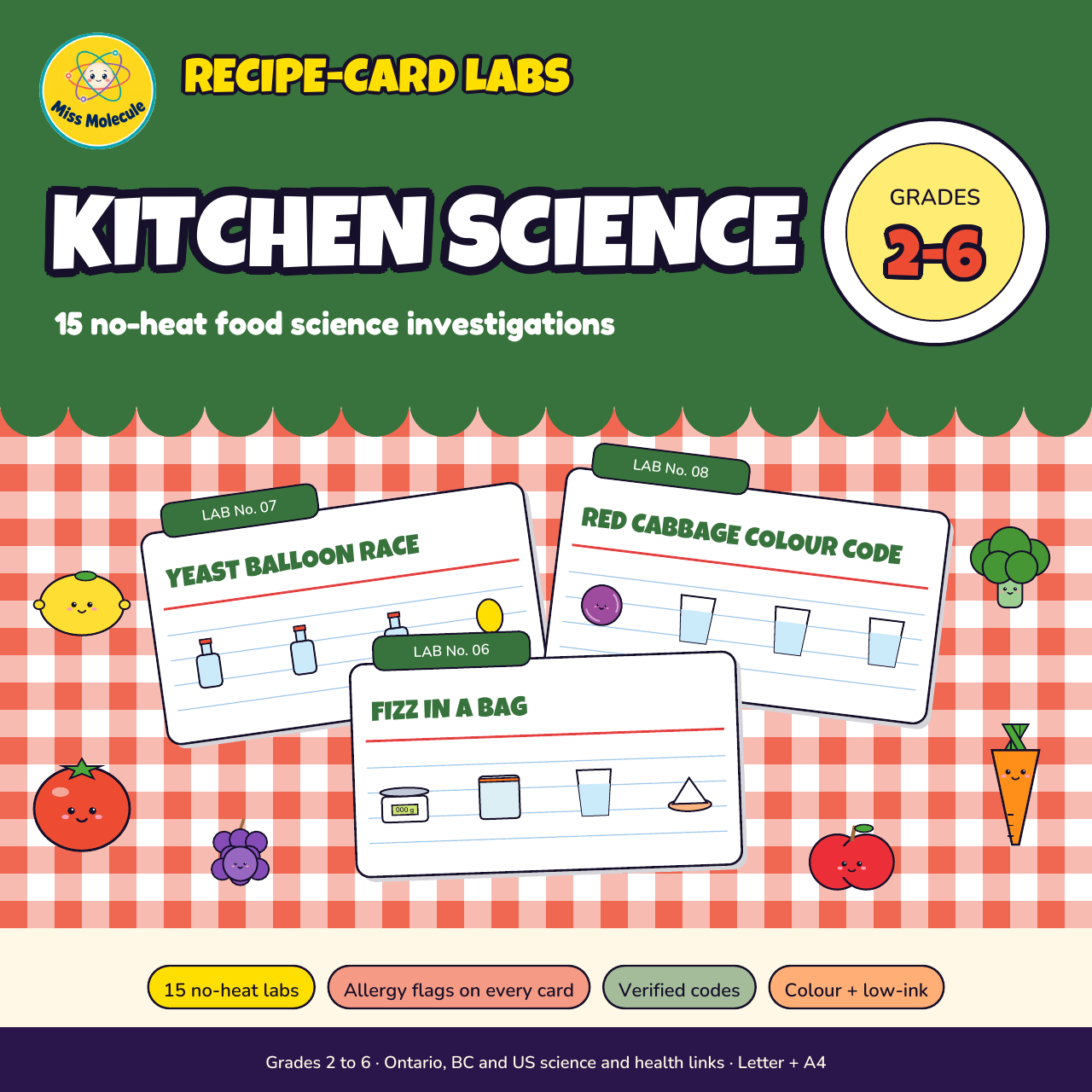
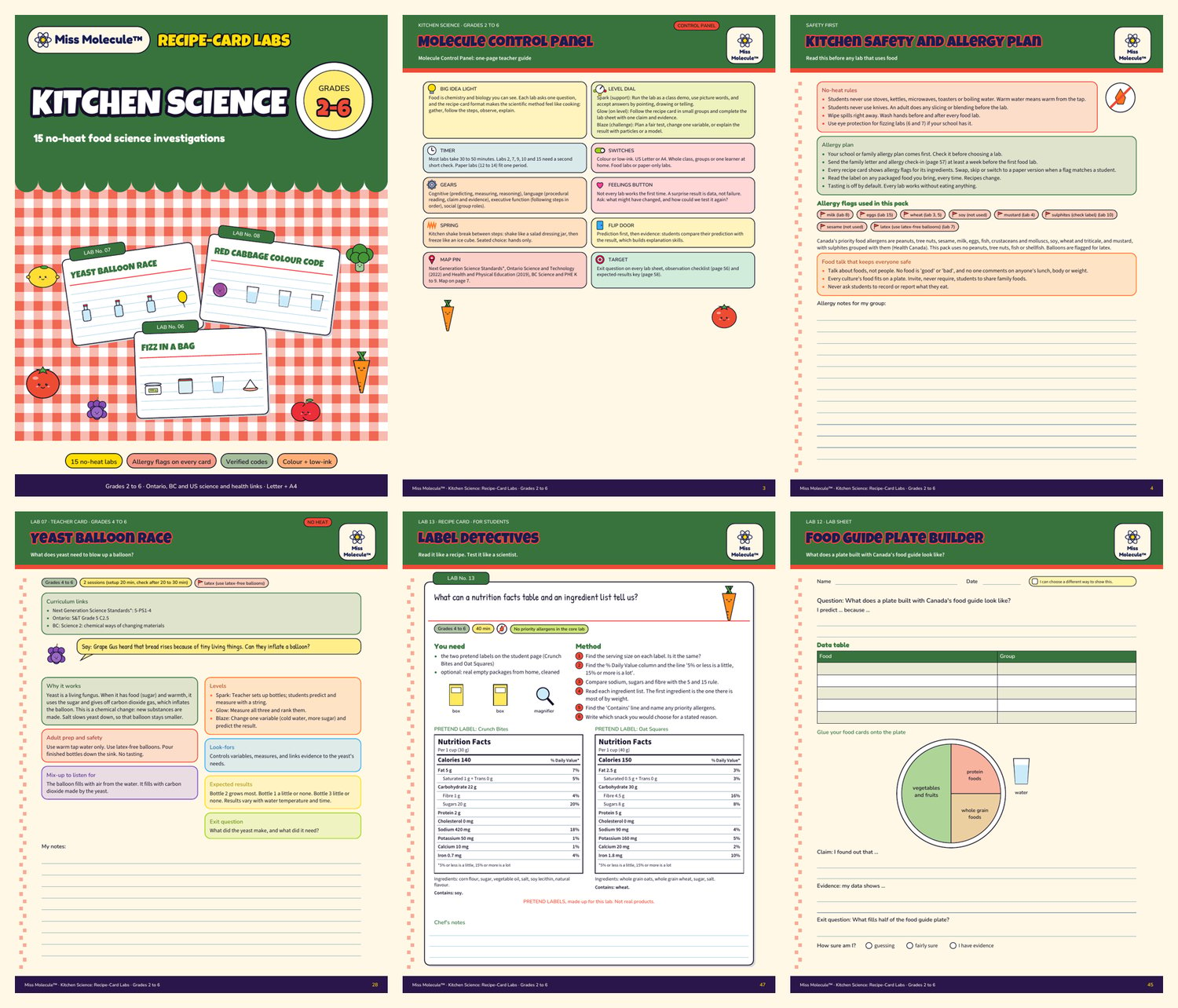
Kitchen Science: Recipe-Card Labs (Grades 2 to 6)
A good recipe and a good experiment have the same bones: what you need, steps in order, and a result you can check. Kitchen Science turns that into 15 hands-on labs. Students dissolve, freeze, fizz, separate and test, then read nutrition labels and take apart food packaging, all with no stove, no knives and no tasting required.
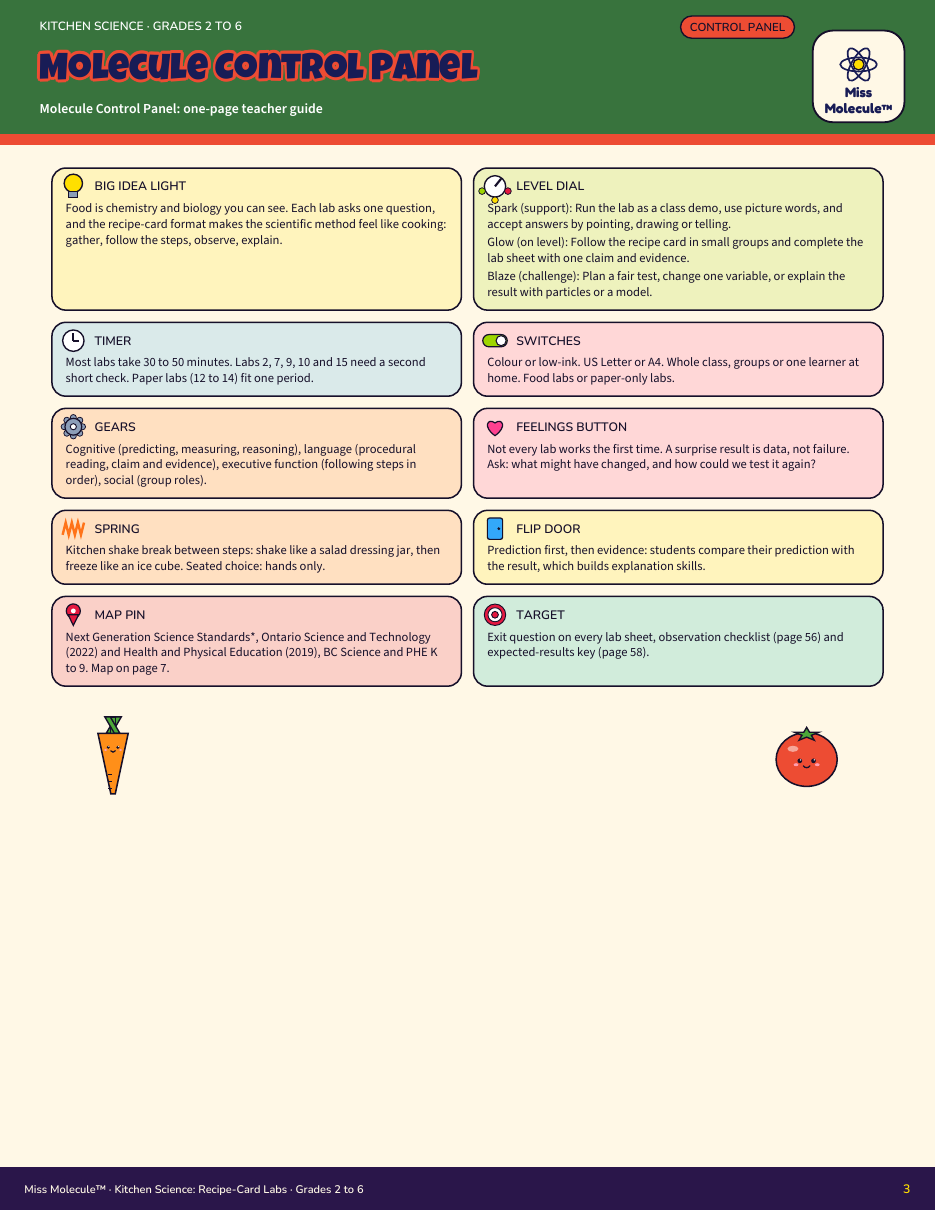
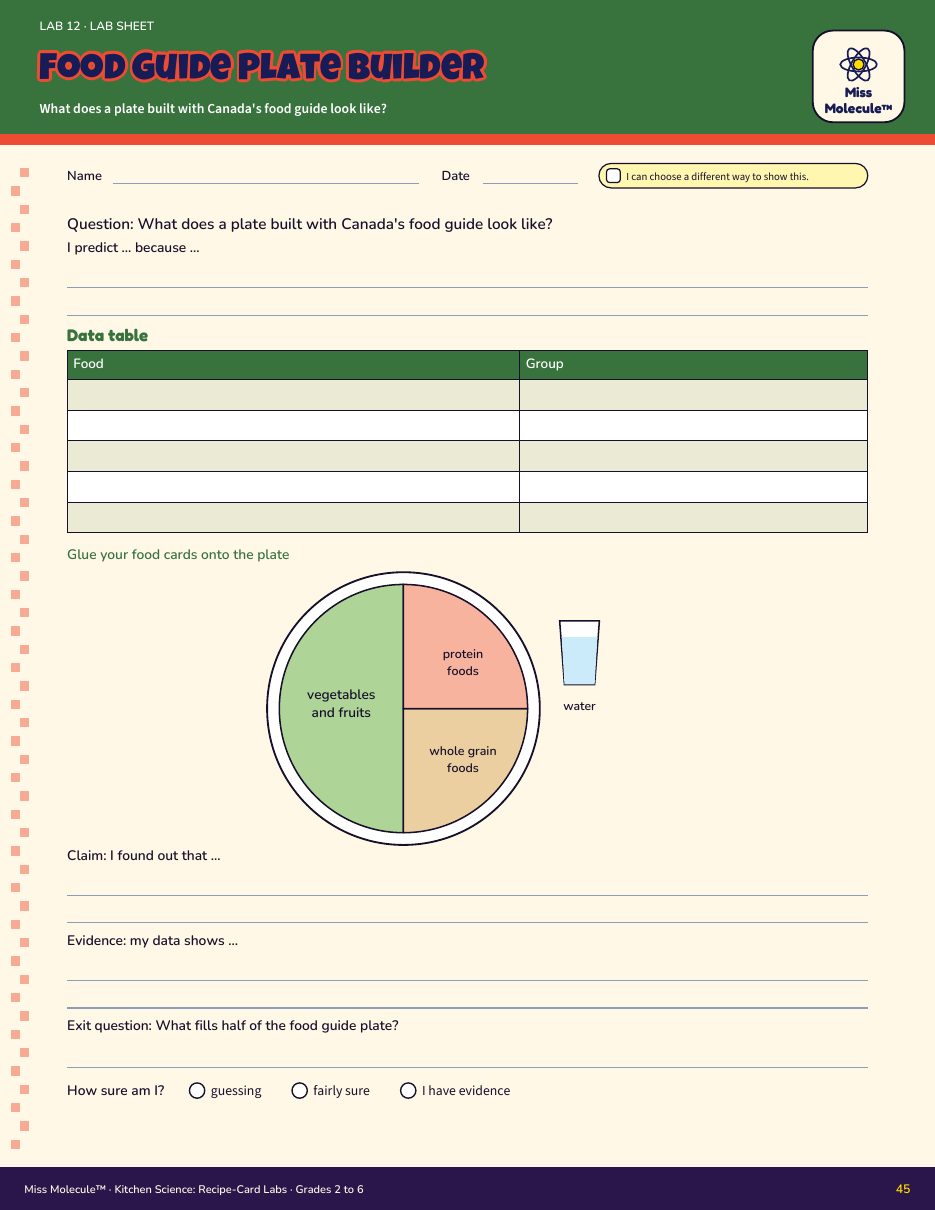
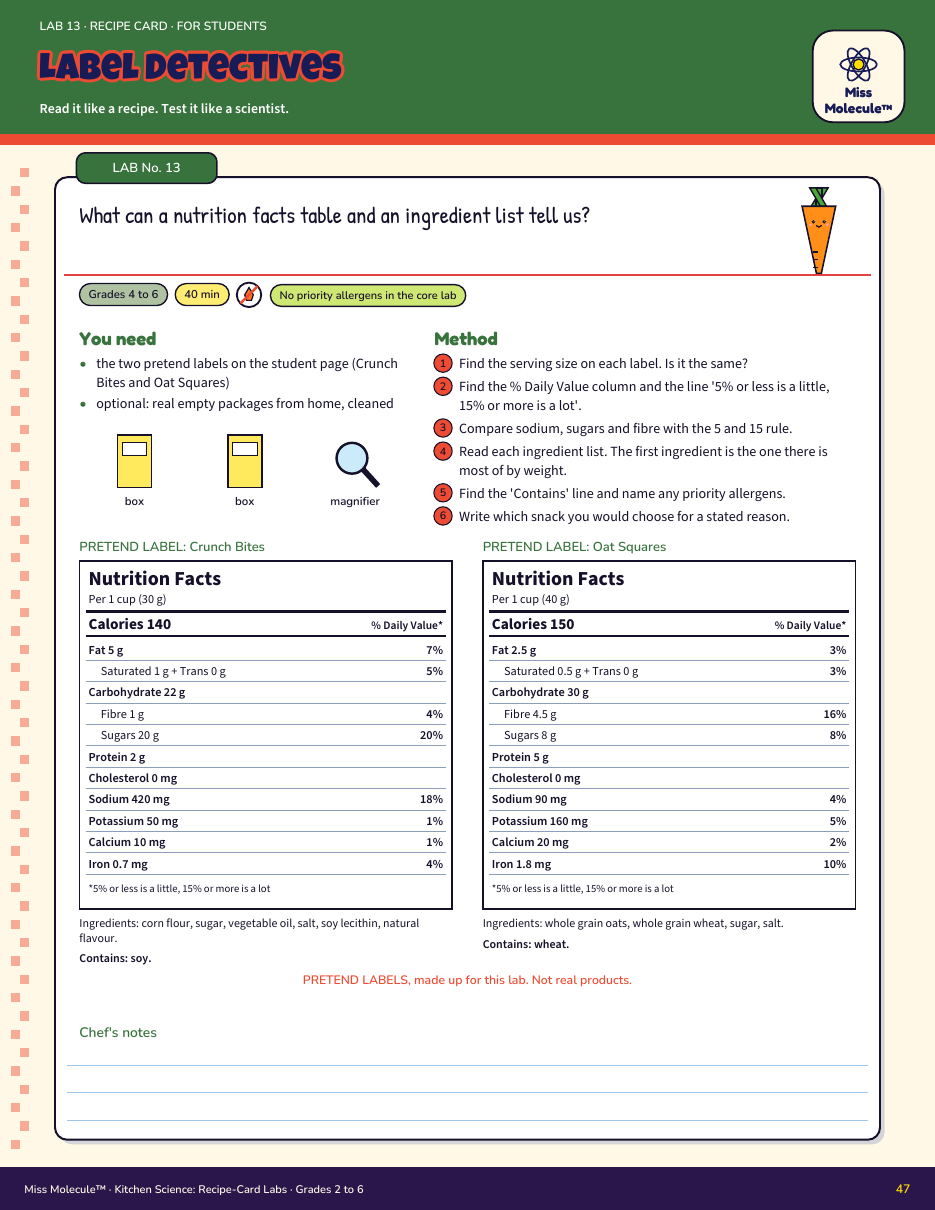
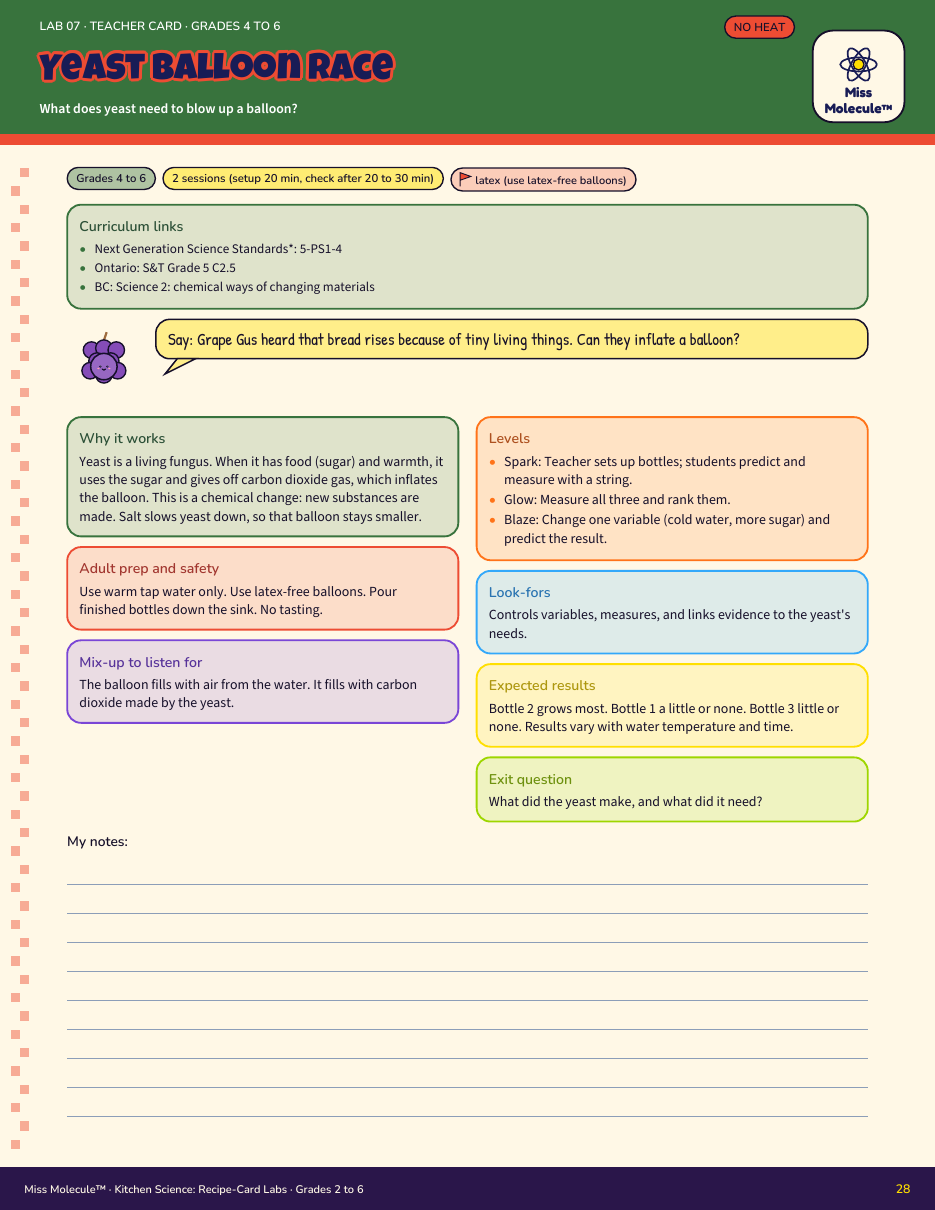
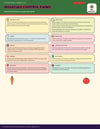
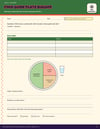
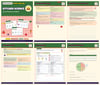
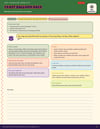
Every lab has three pages. The teacher card gives the curriculum links, a read-aloud hook from a fruit or vegetable character, why it works, adult prep and safety, Spark, Glow and Blaze levels, the mix-up to listen for, look-fors, expected results and an exit question. The student recipe card has the question, allergy flags, an ingredient list with setup pictures and six numbered steps. The lab sheet has a prediction, a data table, a drawing space, claim and evidence, and a confidence check.
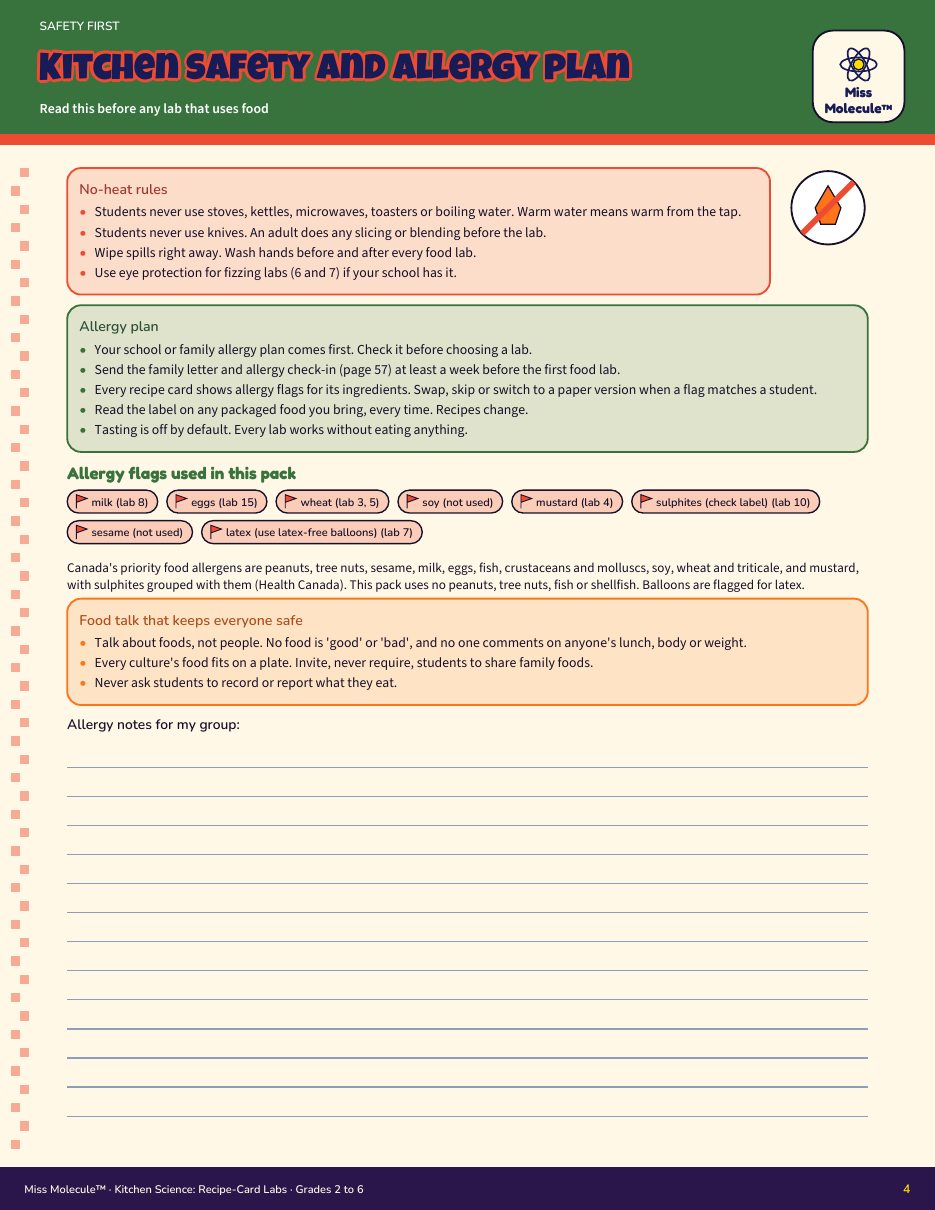
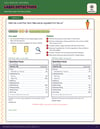
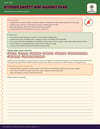
Safety is built in: a kitchen safety and allergy plan, a pantry list with allergy flags, and a family letter with an allergy check-in. Food talk stays neutral: no good or bad foods, and no talk about bodies or weight. Three labs (food guide plate, label detectives, package persuaders) use paper only.
For schools and boards: each lab names its Ontario (Science and Technology 2022, Health and Physical Education 2019), BC (Science, Physical and Health Education) and Next Generation Science Standards* links, the official wording is printed in the pack, and honest gaps are listed. Colour and low-ink files in US Letter and A4.
For homeschool families: one lab a week makes a 15-week kitchen science term with grocery-store supplies.
© 2026 Miss Molecule. All rights reserved. Miss Molecule™. Licensed for one classroom or one household. No resale, sharing, shared sites or AI training.