



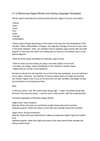

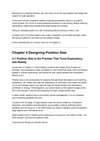

TRADING SYSTEM ARCHITECTURE
How to Build a Verifiable Edge From Scratch
The right structure builds success.
Get a system with an edge.
This is the blueprint.
First, Let Me Say This. If You Are Not Serious About Doing the Work, Do Not Buy This.
This is not something that will change your trading simply because you read it.
It is not an easy way to make money.
And it is not a way to copy my strategy.
It is a blueprint for turning your own strategy into one complete, repeatable system with an edge.
Actually doing what is written here takes time.
In some cases, it may take hundreds of hours.
You will have to face your own strategy and keep doing the work with your own hands.
If you are not willing to do that, close this page.
Buying this will probably change nothing for you.
But maybe you are done searching for another strategy.
Maybe you are tired of repeating the same problems year after year.
Maybe you want to turn the knowledge you have built and your ability to observe the market into one complete system.
And maybe you are genuinely prepared to do the work required to get there.
If that is you, the rest of this page is for you.
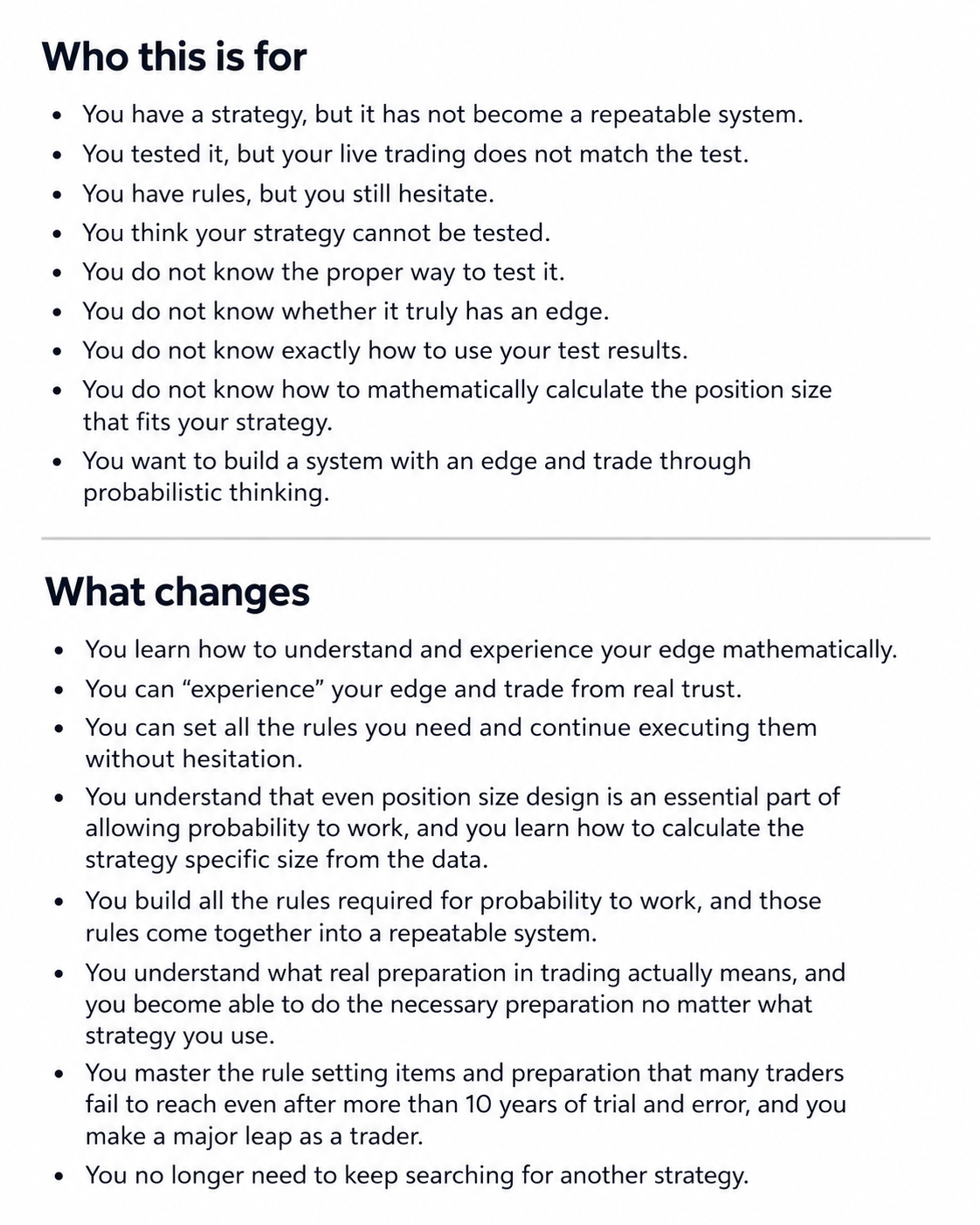
This is designed to guide serious traders through the entire process of professional-level preparation by the shortest route possible.
Before You Can "Stay Consistent," There Is Something You Absolutely Need
"Stay consistent."
"Understand that trading is a probability game."
"Do not let emotions control you."
I have said these things many times.
And they are all true.
But they depend on one condition.
The system you consistently repeat must actually have an edge.
What happens if that system has negative expectancy?
No matter how precisely you follow the rules, your capital will decline.
No matter how well you control your emotions, emotional control cannot create an edge that does not exist.
No matter how probabilistically you think, if the system underneath it has never been completed, there is nothing for probability to work through.
So first, build a system with an edge.
Everything starts there.
Once you have completed the right preparation, you will no longer need to control your emotions at all, and trading becomes the truly simple job of "wait and click."
Many traders have tested and practiced extensively and still have not reached that state.
Of course they have not.
What most traders think of as preparation is nothing like professional-level preparation.
The Preparation You Know Is Not Professional-Level Preparation
Turn your strategy into one complete system you can apply the same way, again and again.
Then test that system thoroughly with your own hands, seeing wins, losses, winning streaks, losing streaks, variance, and drawdowns firsthand.
Beyond all of them, confirm through your own numbers that the edge remains.
And prepare until you, the person who will actually use that system, no longer have any reason to doubt it.
A lot of people will read that and think, "I already did that."
That is exactly the problem.
For a long time, I also believed, "I have rules. I tested them. I have prepared enough."
And yet my system was still incomplete.
You can only define what you know exists.
The hardest problem is not a rule you already know is vague.
It is the gap where you do not even realize a rule is needed.
How do you find something you do not know exists?
How do you define it?
How do you test it?
You cannot.
That is why saying, "I made my own rules and tested them my own way," is not enough.
TRADING SYSTEM ARCHITECTURE does not simply tell you why testing matters or why practice matters.
It contains the complete process for turning your strategy into one complete system, including undefined gaps that are extremely difficult to discover on your own.
It shows how to take that system through the proper sequence until it becomes something you can ultimately trust and repeat.
The entire process is here.
If the advice is "test your strategy," you already know that.
If the advice is "make your rules clear," you already know that too.
You probably already know that you should think in probabilities.
Knowing those sentences is not the problem.
The question is whether you know how to build one complete structure that includes the parts you still do not even know are missing.
That is what separates ordinary preparation from professional-level preparation.
The knowledge you have accumulated and your ability to observe the market have not been wasted.
You do not need to throw them away and start again from zero.
What you need is to turn them into one complete system.
I want it in the hands of people who understand what that means.
Gaps remain that you do not even know exist.
That is why someone can spend years testing and years preparing and still remain stuck in the same place.
If you understand how significant that fact is, TRADING SYSTEM ARCHITECTURE may become a major turning point in your trading life.
What Is Inside
Chapter 1: The Foundation of Probabilistic Thinking
Before building a system, you must stop playing the wrong game.
- Turn vague market views into observable and testable conditions
- Expectancy, variance, distribution, and sample size
- Define an edge through the combination of win rate and risk-reward ratio
- The three requirements every rule must satisfy
Chapter 2: Rule Design
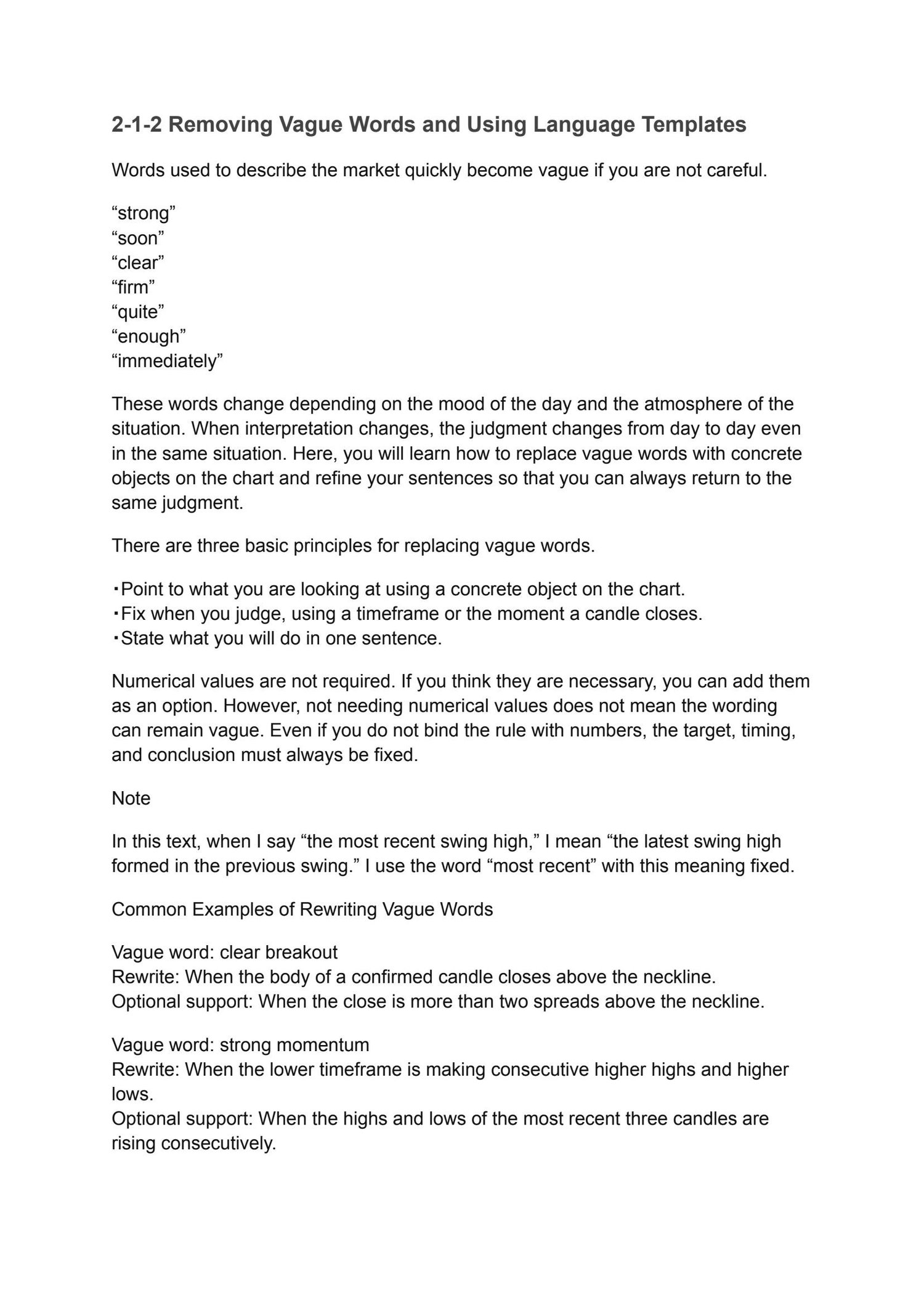
Your view of the market changes with your mood.
Your rules must not.
- Convert discretionary judgment into rules you can execute the same way every day without relying on mood, hope, or hindsight
- Break the decisions that make up your strategy into parts and turn each one into a rule with no ambiguity
- Eliminate the undefined gaps that are hard to notice on your own, along with vague language
- Criteria for stopping uncontrolled complexity
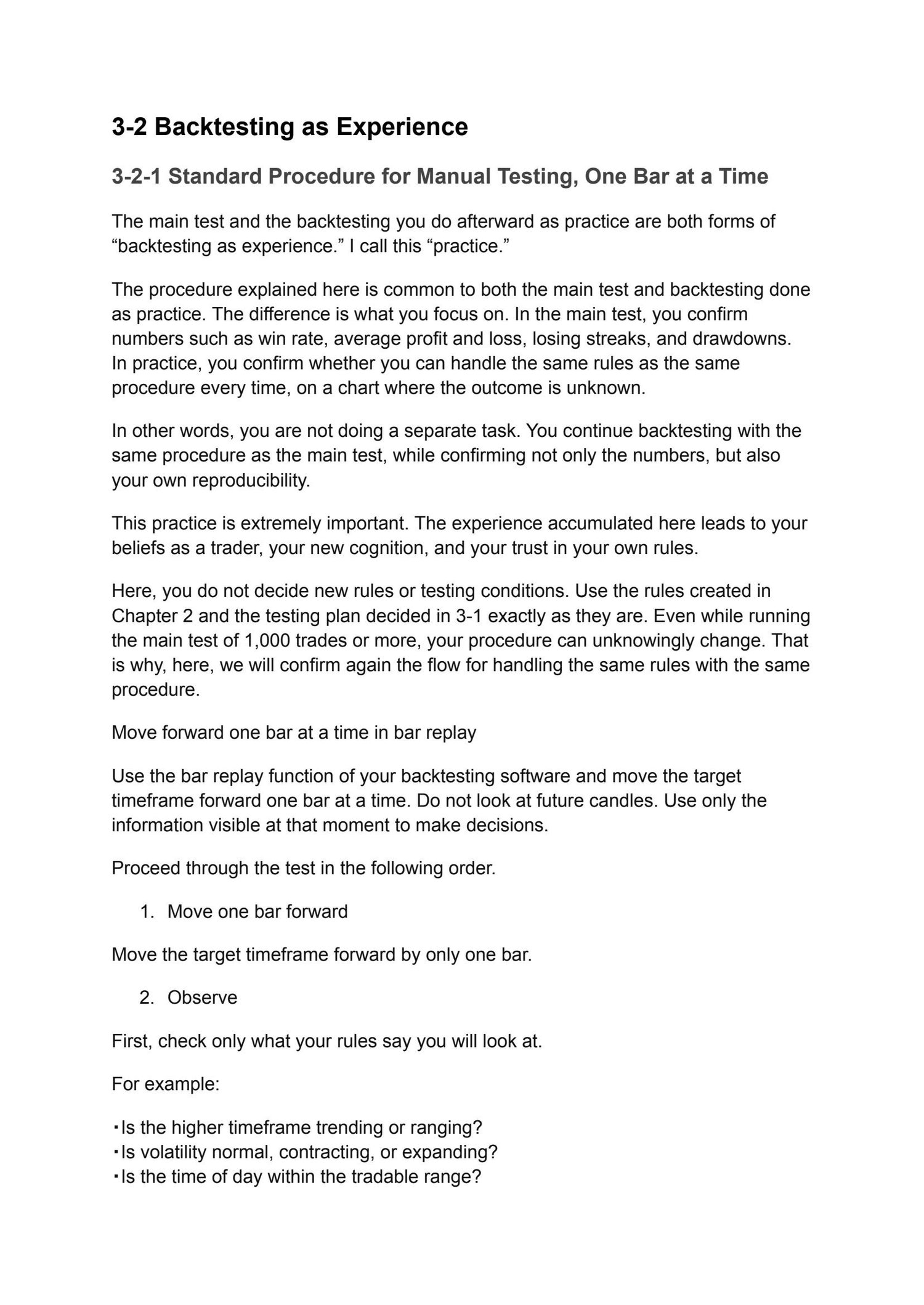
Chapter 3: Testing
If you have not tested it, it is not a system.
It is a guess.
- Prove with numbers whether an edge exists
- Quantify variance, losing streaks, and drawdowns before risking real money
- Learn what normal looks like for your system
- A standardized testing procedure and phased testing design
- Measure expectancy, profit factor, and maximum drawdown
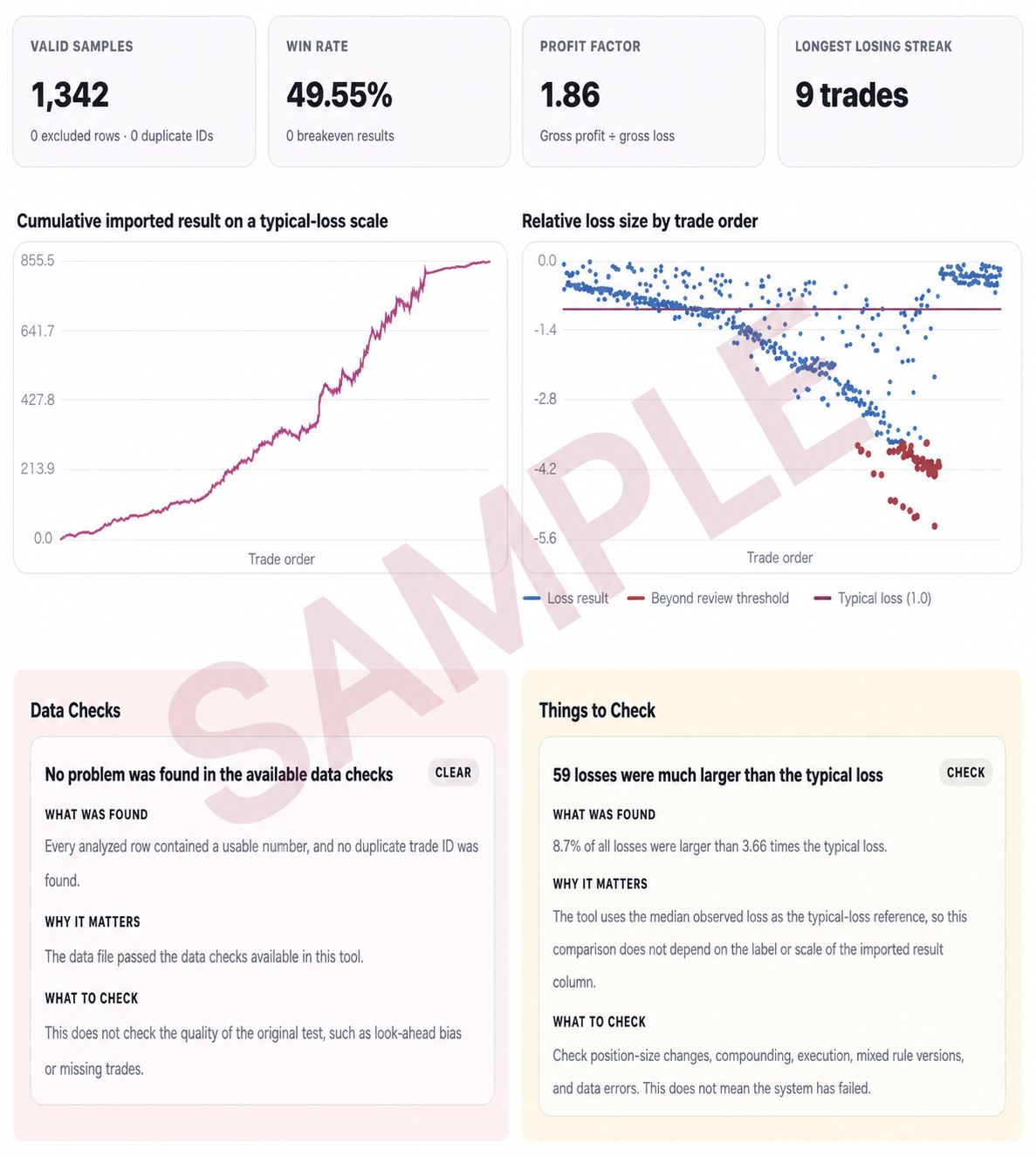
The data you produce here can be used directly in the included tool's analysis.
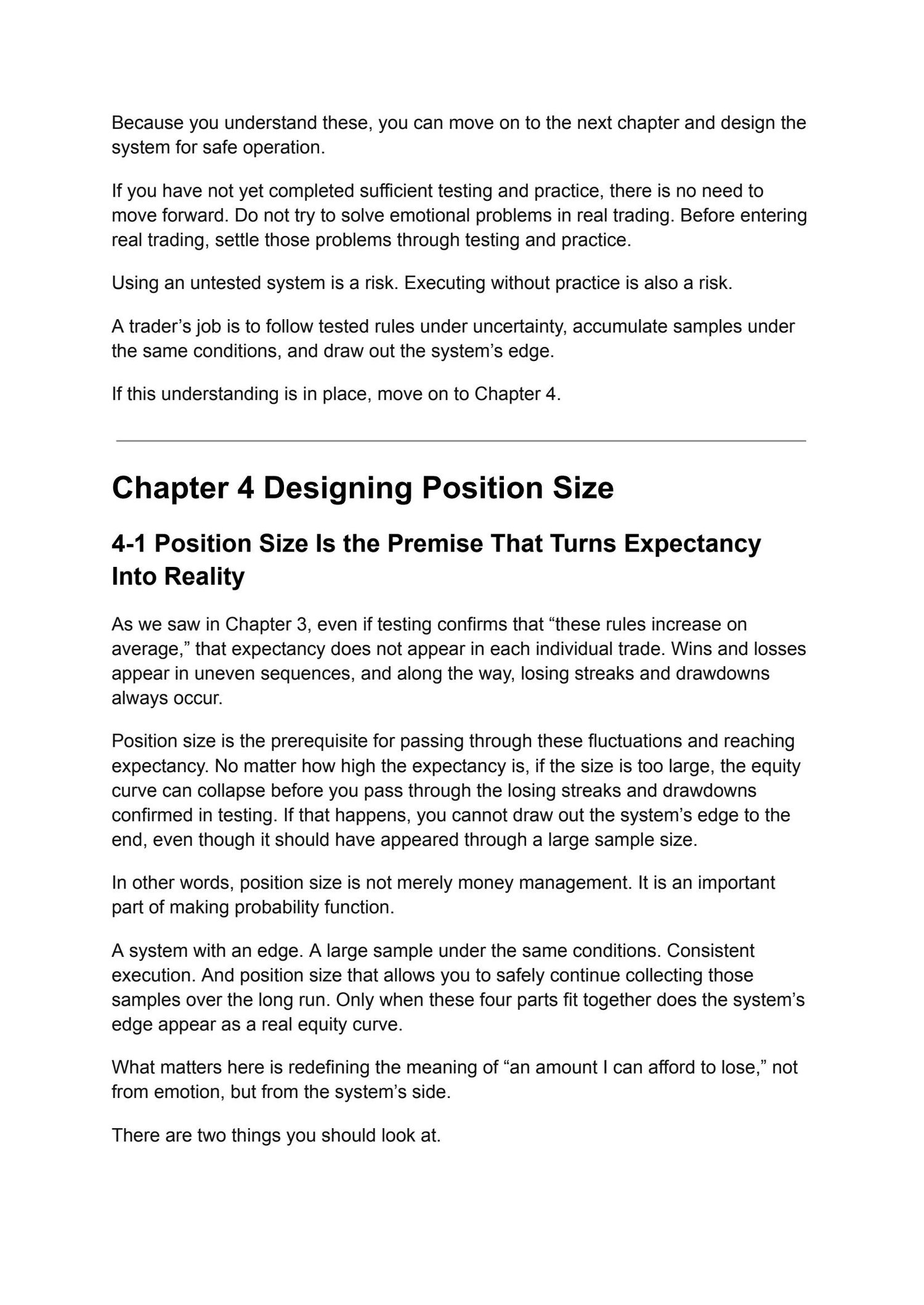
Chapter 4: Position Sizing
Even the best system in the world is worthless if your position size destroys your account before its edge can appear as profit.
But the answer is not to follow a 1% or 2% rule you read somewhere.
Every system produces a different distribution of returns and a different degree of variance.
Taking all of that into account, I made it possible to derive the "size that lets probability work" for that specific system through a formula.
- Convert the volatility observed during testing into position size
- Position sizing from the longest losing streak and from maximum drawdown
- Survive in the market until the edge appears as profit
All formulas are provided.
And the included tool performs those calculations automatically.
Every chapter ends with a completion check to confirm both your understanding and your readiness to execute.
Ready-to-use templates and workflows are included as well.
Every concept comes with a concrete procedure.
Fill-in templates, step-by-step workflows, concrete examples of how to put things into words, and completion criteria.
You will not be left wondering, "I understand the concept. But what do I actually do?"
This is not a collection of hints.
It is the complete process for building a system with an edge.
Nothing is missing from beginning to end.
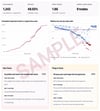
Included Tool: System Analysis Lab
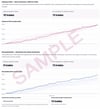
Beyond the blueprint, I have also built a dedicated tool called System Analysis Lab to help you understand your own test data at a deeper level.
This is not simply a calculator for win rate and profit factor.
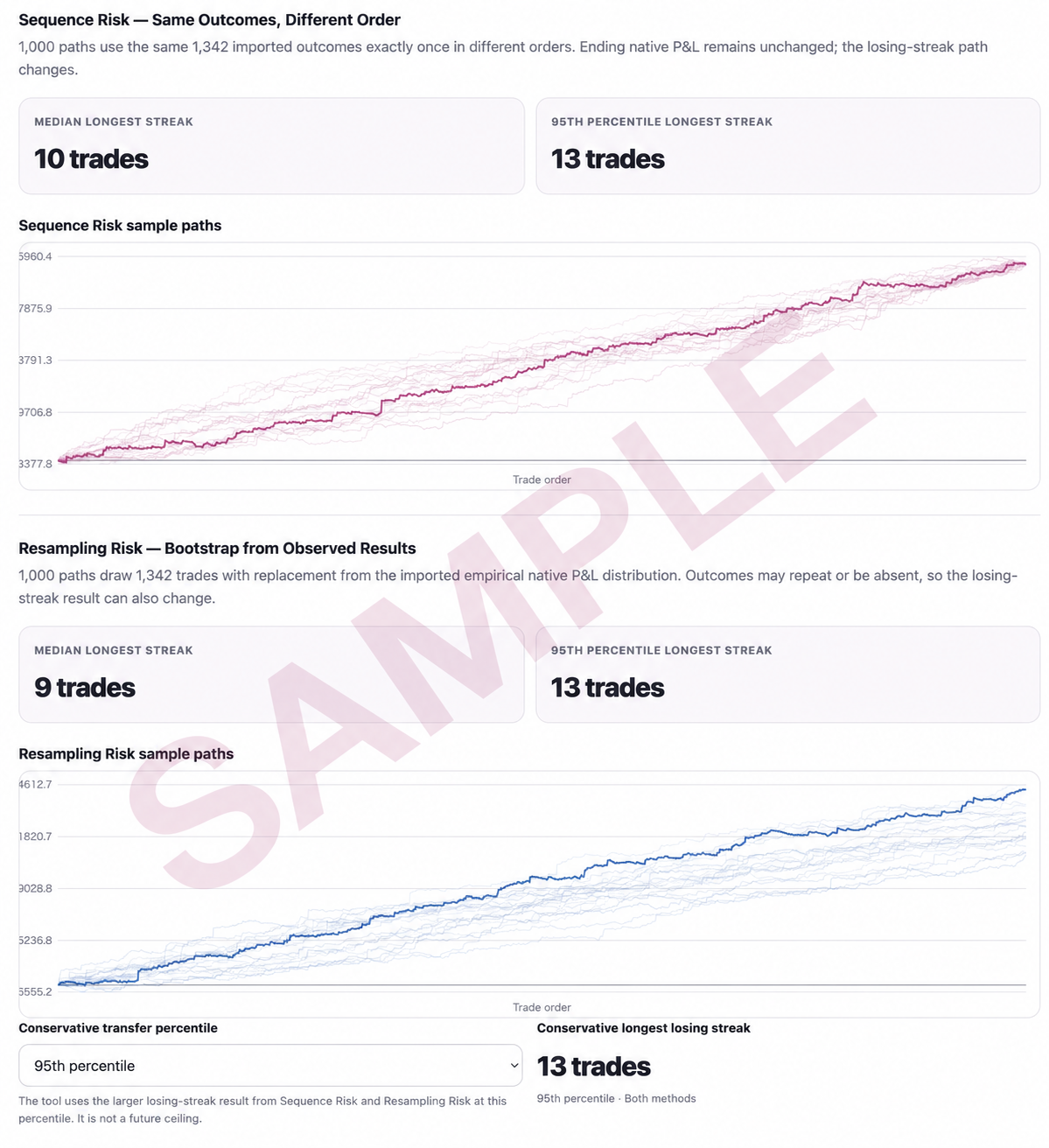
It analyzes P&L distribution, variance, losing streaks, and drawdowns, and its Monte Carlo simulations use two different methods to generate 1,000 paths each.
You can select a percentile depending on how conservatively you want to evaluate the results, and you can carry those results through to position sizing.
This is not a tool designed to replace testing.
Nor is it designed to manufacture convenient answers from insufficient data.
It is an analytical environment for traders who have completed the necessary preparation and now need to understand their own numbers more deeply before moving into live trading.
These are not generic features found in countless tools online.
I tuned System Analysis Lab specifically for practical use in my own trading.
If I am going to send you into live trading, the tool must be built for actual use there.
Every part of it was built for your system.
I want you to make full use of it.
This Is Not Something You Simply Read
Do not assume that simply understanding what is written here will change anything.
This is not something designed to give you more knowledge.
It is a blueprint for turning the strategy you already have into one complete system.
Across eighteen years of trading, I have spent most of my time on preparation.
And it took me nearly ten years to arrive at this structure.
I walked that road without a map.
I did not know what was missing.
I thought I was already doing enough, yet I could not understand why the system was still incomplete.
I took detour after detour.
You do not need to repeat those years from the beginning.
TRADING SYSTEM ARCHITECTURE brings together the full picture of professional-level preparation that took me years to discover in one blueprint.
Do Not Buy This If
You want a quick way to make money.
You want a strategy you can copy.
You want signals or alerts.
You believe reading alone will change your trading.
You are not willing to face your own strategy and actually do the work.
You want to try something briefly and move on to the next method the moment it does not work.
This is not for you.
There is no shortcut here.
Actually doing what is written requires real time and real effort.
In some cases, it may take hundreds of hours.
If you are not fully committed, do not buy it.
I am not trying to sell this to as many people as possible.
I want it in the hands of people who are genuinely serious about completing their own system.
For Those Who Truly Want to End This Journey
Imagine this.
Your strategy has become one complete system.
It has been tested across a large sample size, and you can confirm through your own numbers that an edge exists.
You understand what those numbers actually mean.
And by testing and practicing it with your own hands, you have built trust in that system.
You no longer need to search for answers after the market opens.
You do not need another strategy.
You do not need someone else's opinion.
You do not need to somehow turn the trade in front of you into a win.
Wait.
When the conditions are met, click.
Then wait again.
That is it.
It took me a long time to reach that state.
Now I have turned the road that led there into one blueprint.
If you still want to keep searching for an easier answer, do not buy this.
But if you are ready to stop searching and complete your own strategy as one system with an edge, start here.
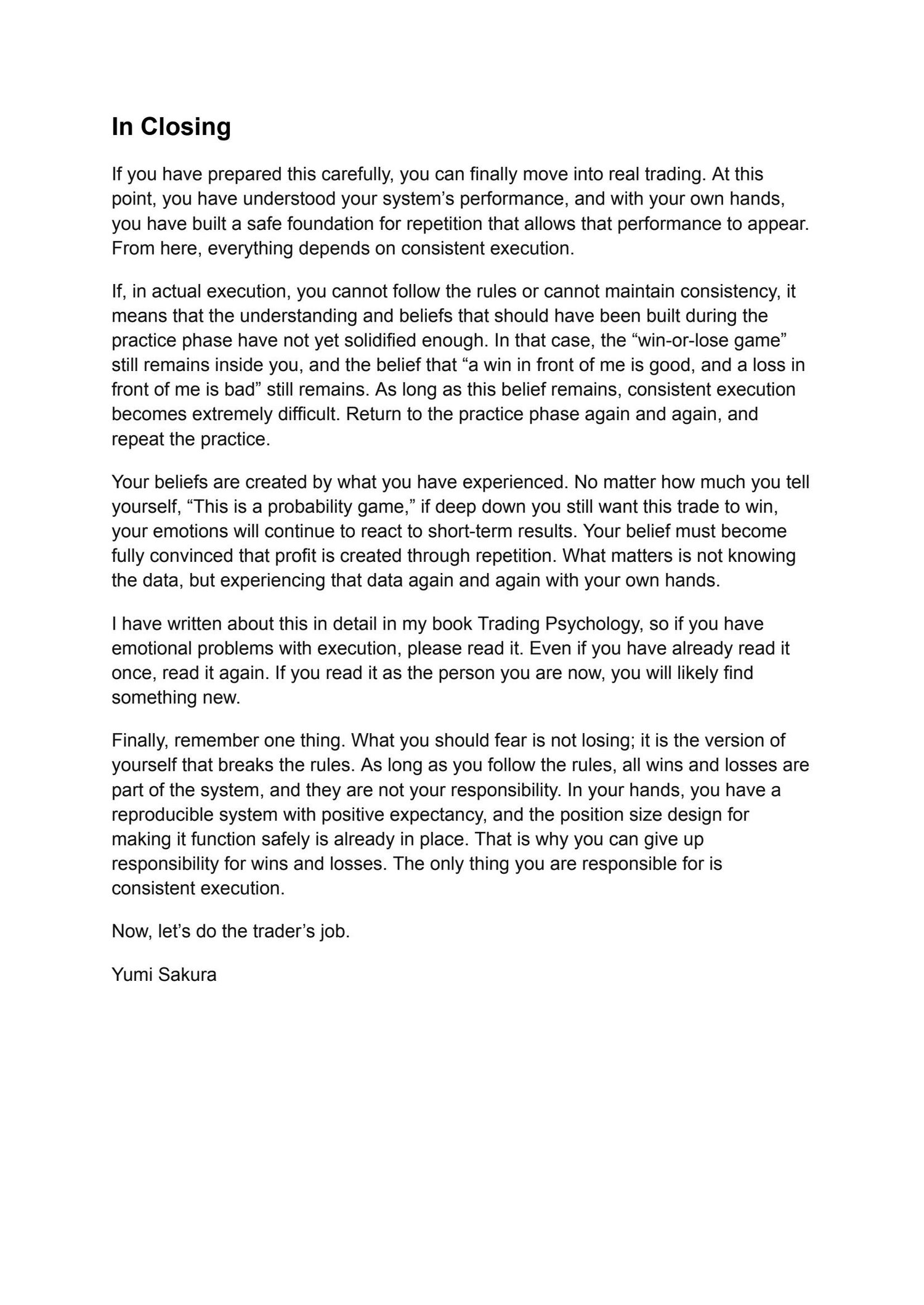
TRADING SYSTEM ARCHITECTURE
Get a system with an edge.
What you should fear is not losing the next trade.