

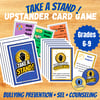

Take A Stand: Upstander Card Grab Game
TAKE A STAND! — The Upstander Card Grab Game
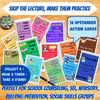
Looking for a fun, interactive bullying prevention activity that gets middle school students talking about what it actually means to be an upstander? Skip the lecture. Skip the worksheet. Make students practice the choices.
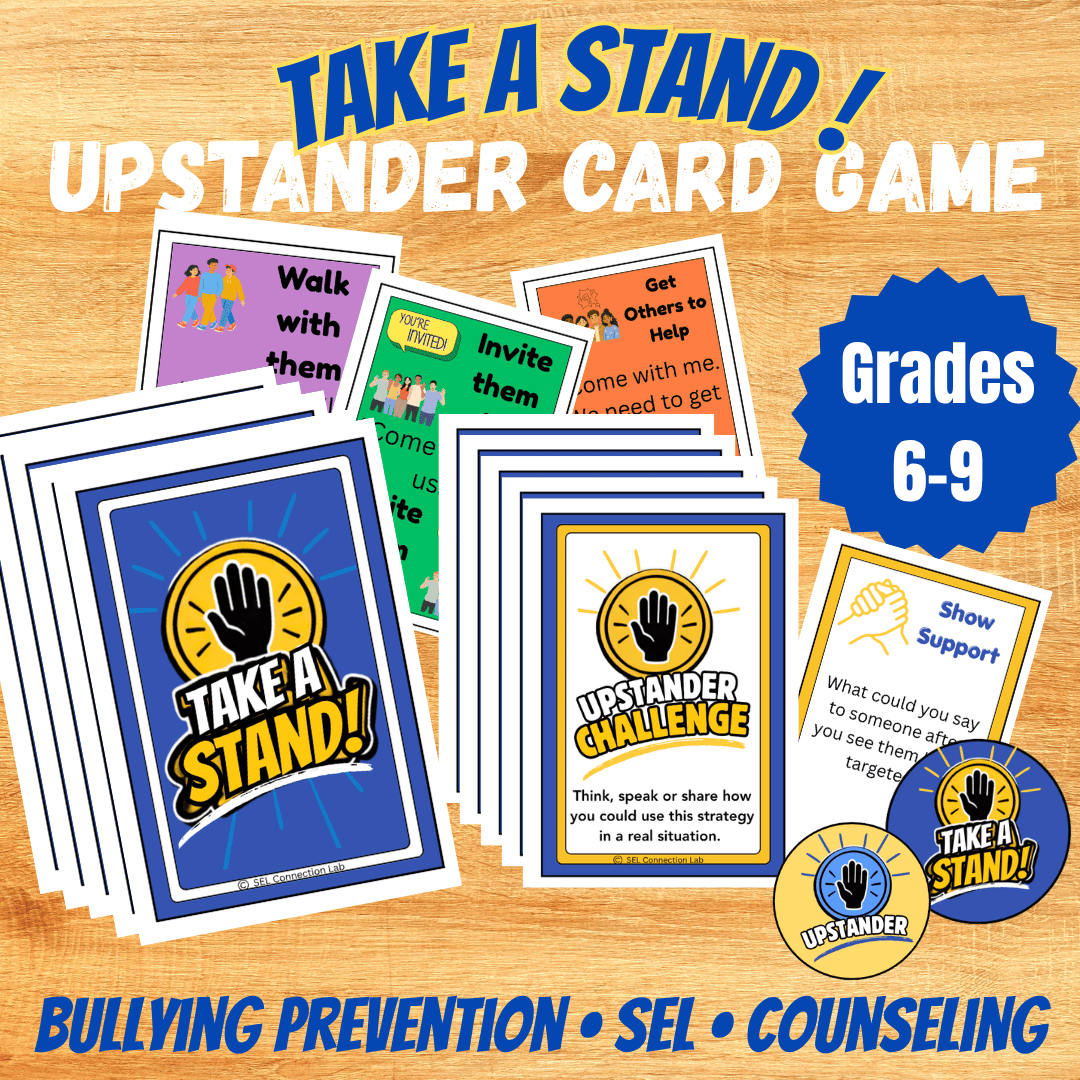
Take a Stand! is a fast paced, competitive upstander card game designed for middle school students to practice safe ways to respond when they see someone being bullied, excluded, targeted, or treated unfairly. Students race to collect four matching Upstander Action Cards, grab a Stand Token, and complete a quick Stand Up Challenge.
It’s part card game, part SEL activity, and part bullying prevention discussion designed to keep students engaged while building practical social emotional skills.
WHAT IS TAKE A STAND?
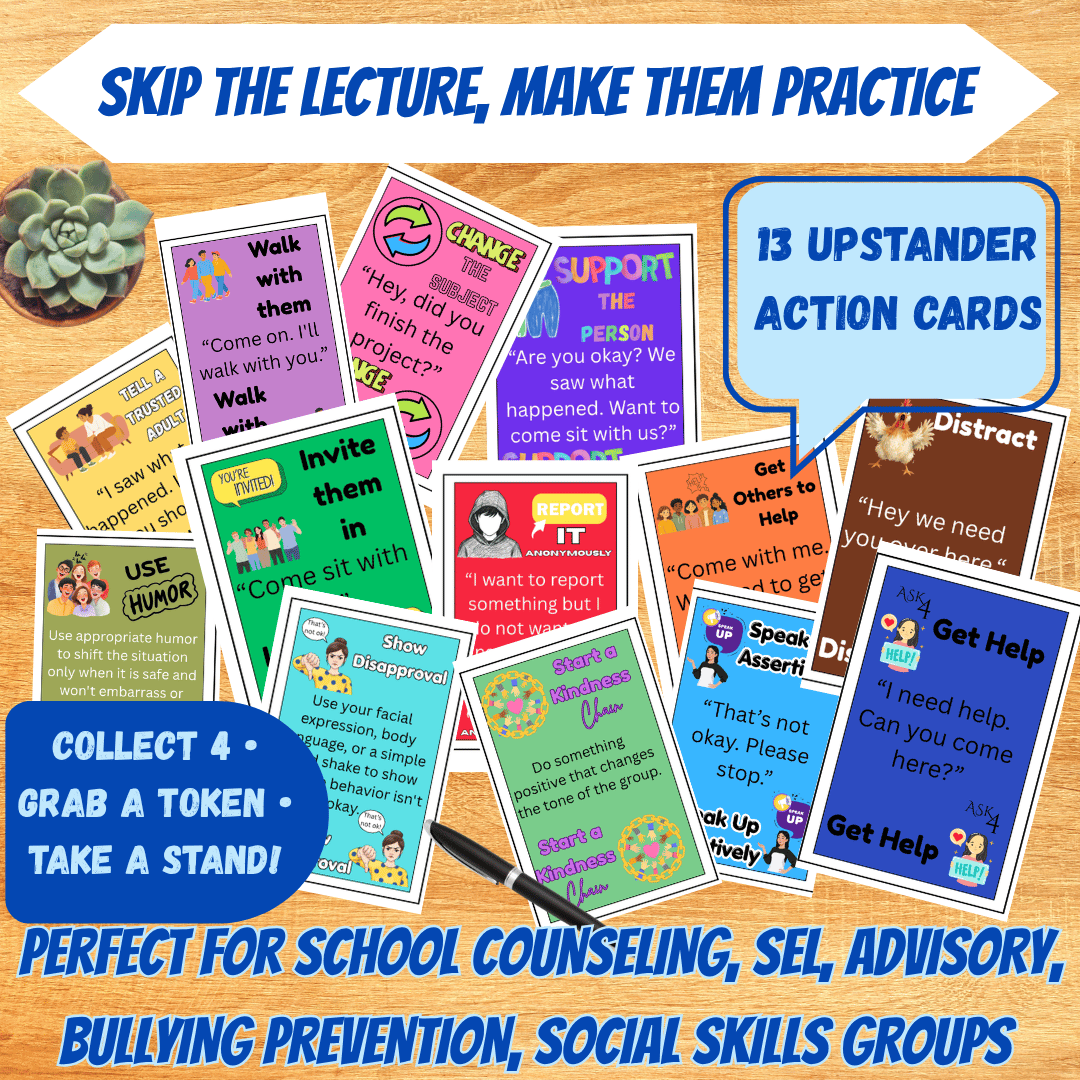
Students learn that being an upstander doesn't always mean confronting someone directly. Throughout the game, students are introduced to 13 different upstander actions, including:
✔ Speak Up Assertively
✔ Tell a Trusted Adult
✔ Support the Person Being Targeted
✔ Get Others to Help
✔ Use Humor Carefully
✔ Change the Subject
✔ Invite Someone In
✔ Show Disapproval
✔ Report Anonymously
✔ Distract
✔ Start a Kindness Chain
✔ Get Help
✔ Walk With the Person
Students then discuss when a strategy might be helpful, when another strategy might be safer, and what they could actually say or do in a real situation.
HOW THE GAME WORKS
- Students sit in a circle and receive 4 Action Cards.
- Players draw, choose a card to keep, and pass a card to the left.
- Students race to collect 4 matching Take a Stand Action Cards.
- The first player to collect four of a kind shouts “TAKE A STAND!”
- Everyone races to grab a Stand Token.
- One player will be left without a token.
- That player completes a quick Stand Up Challenge.
- Start another round and play again!
The fast paced card passing and Stand Token grab keeps students watching, thinking, and participating throughout the game.
BUILDS REAL UPSTANDER SKILLS
Use the discussion prompts to move beyond simply knowing the definition of an upstander. Students explore questions such as:
• What could you say in this situation?
• Which strategy might help?
• When should you involve a trusted adult?
• What could you do if speaking up directly isn't safe?
• How could you support someone without making the situation worse?
• Which upstander strategy would you feel most comfortable using?
IMPORTANT SEL MESSAGE
Being an upstander doesn't mean putting yourself in danger. It means choosing a safe way to help. The game encourages students to recognize that different situations may call for different responses and that getting help from a trusted adult is an important upstander action.
WHY TEACHERS & COUNSELORS WILL LOVE IT
✔ Interactive and competitive
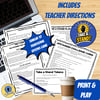
✔ Minimal prep - Print and Go
✔ No lecture required
✔ Gets students talking and participating
✔ Reinforces bullying prevention skills
✔ Builds empathy and perspective taking
✔ Practices safe bystander and upstander choices
✔ Encourages communication and decision making
✔ Perfect for small groups or whole-class activities
✔ Great for school counseling and SEL lessons
✔ Easy to replay with multiple rounds
✔ Designed with middle school students in mind
PERFECT FOR
Grades 5–8
• School Counseling
• SEL Lessons
• Bullying Prevention
• Upstander Lessons
• Advisory Lessons
• Social Skills Groups
• Character Education
• Community Building
• Small Group Counseling
• Homeroom
• Health Classes
• Anti Bullying Week
• Kindness Week
• Classroom Discussions
WHAT'S INCLUDED: A PDf with
✔ 52 Take a Stand Cards: 13 unique Upstander Actions- 4 cards of each action
✔ Stand Tokens
✔ Upstander Challenge Cards
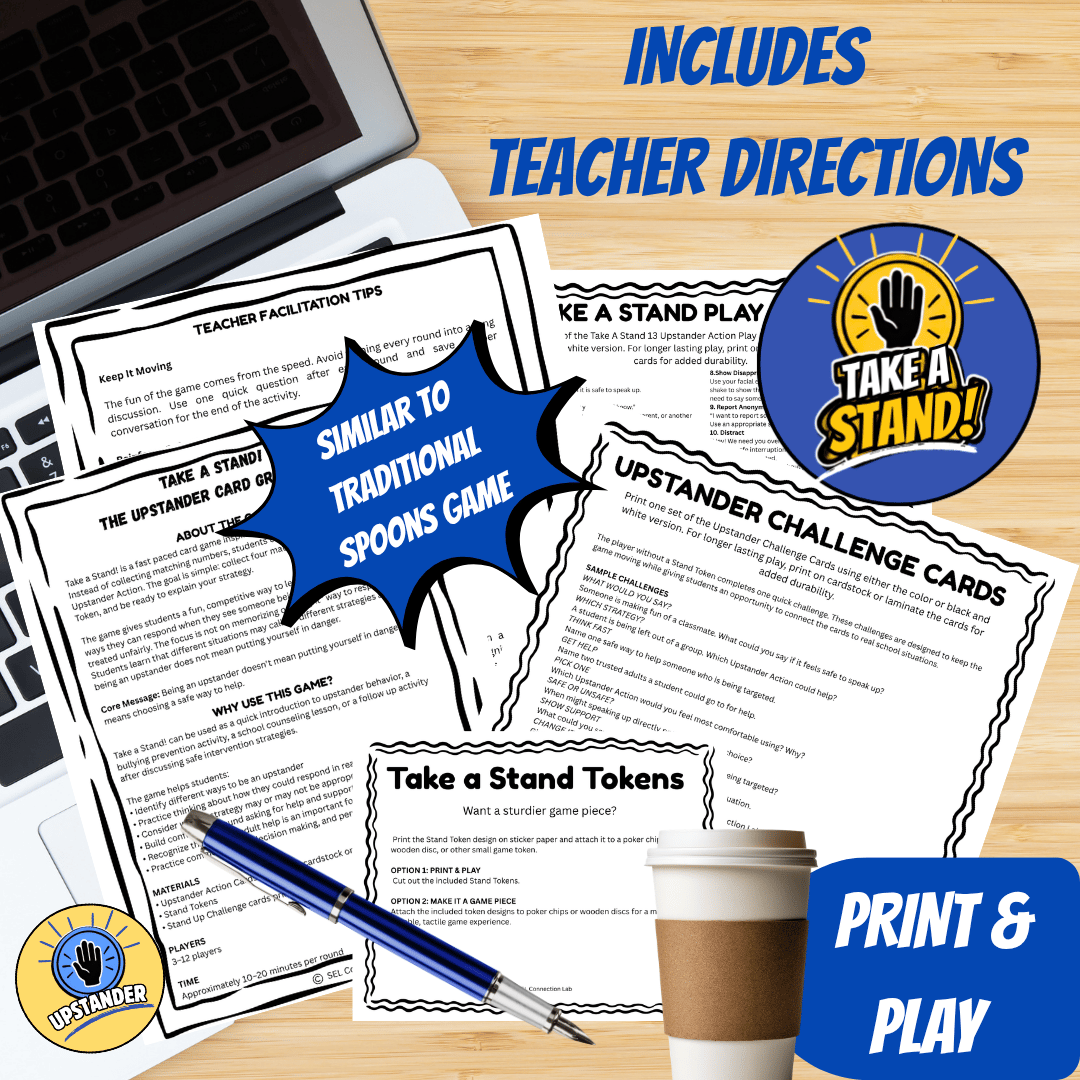
✔ Teacher game directions
✔ Counselor/Teacher Use Page
✔ Reflection questions
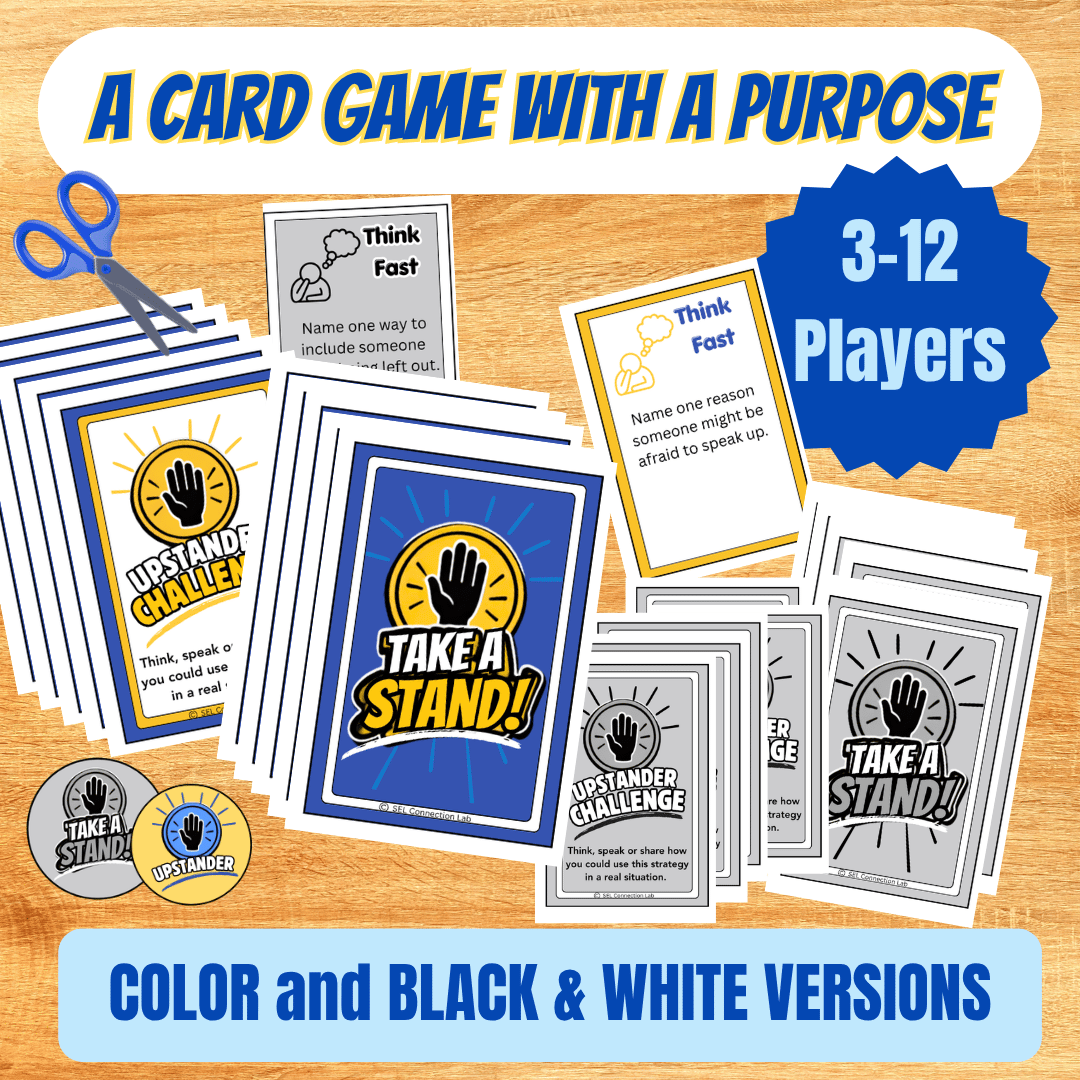
✔ Color and Black and White Versions
Players: 3–12
Time: Approximately 10–20 minutes per round
Whether you're looking for a bullying prevention game, upstander activity, SEL card game, school counseling resource, or interactive middle school advisory activity, Take a Stand! gives students a chance to practice the skills instead of simply hearing about them.