

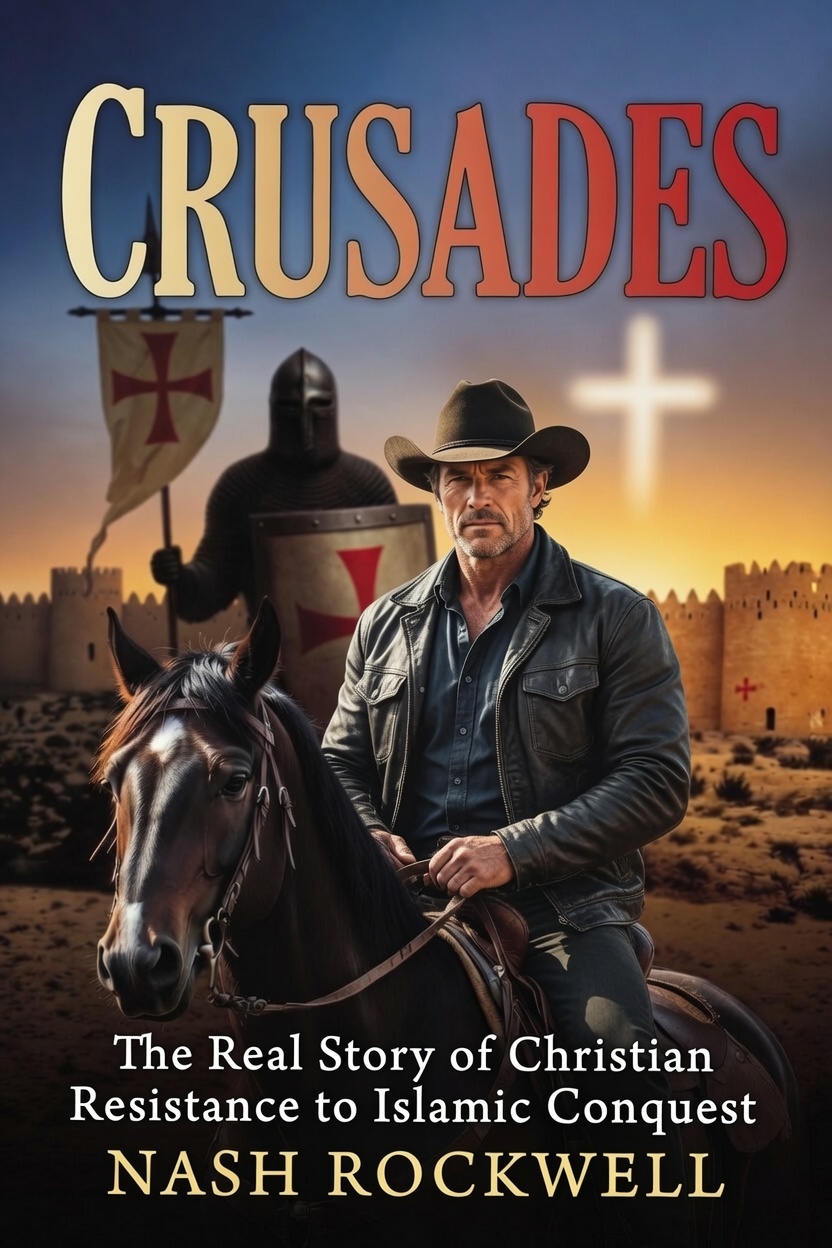
CRUSADES
They weren’t the villains. They were the counterpunch.
For four hundred years after Muhammad’s death in 632, Islamic armies exploded out of Arabia in a blitzkrieg of conquest. Jerusalem fell in 637–638. Syria, Palestine, Egypt, North Africa, Spain—two-thirds of the Christian world swallowed. Ancient heartlands of the faith were conquered, churches converted or destroyed, pilgrims harassed or massacred, and survivors reduced to dhimmi status under jihad’s relentless advance.
By 1095, the Seljuk Turks had shattered the Byzantines at Manzikert, seized Anatolia, and made the road to Jerusalem a gauntlet of slaughter and extortion. Emperor Alexios begged the West for aid. Pope Urban II answered with “Deus Vult!”—and thousands of knights took the cross.
Nash Rockwell cuts through the classroom lies: The Crusades were not unprovoked Western aggression or greedy imperialism. They were a desperate, flawed, late response to centuries of Islamic expansion—a medieval counteroffensive to defend fellow Christians and reclaim sacred sites. From the First Crusade’s improbable march to Jerusalem, the kingdoms of Outremer, Saladin and Richard the Lionheart, to the long decline and myths versus the bloody record, this is the raw, unsparing story.
Atrocities happened on all sides in an era of total war. But context is everything. The Crusades bought breathing room for a fractured Europe and preserved Western civilization’s chance to endure.
Four centuries of conquest met four centuries late resistance. History didn’t start in 1095.