
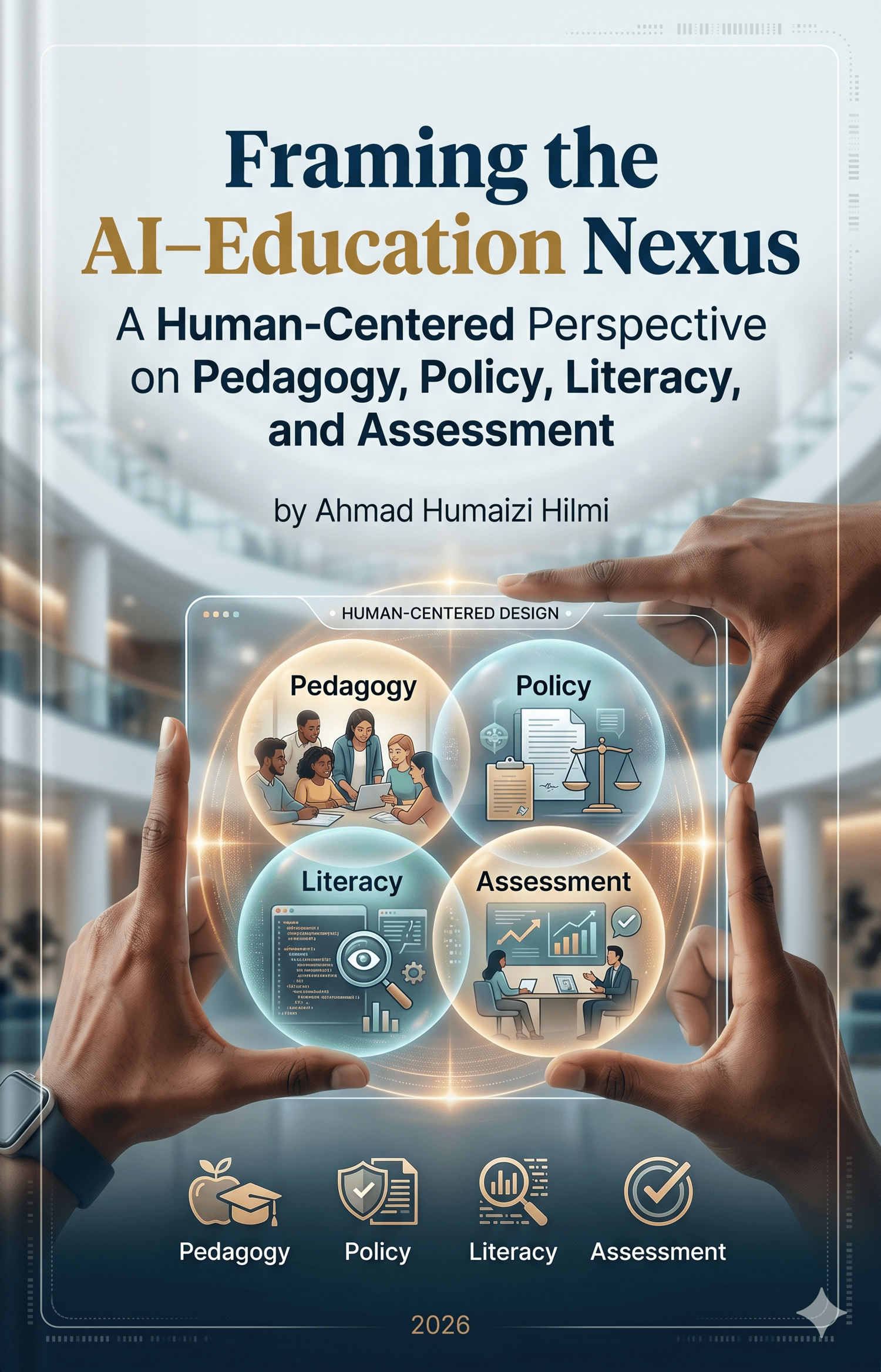
Framing the AI–Education Nexus: A Human-Centered Perspective on Pedagogy, Policy, Literacy, and Assessment
This review synthesises recent empirical and conceptual work on integrating artificial intelligence into higher education, with the dual aims of clarifying what constitutes AI literacy and identifying design, policy and research priorities. It treats AI literacy as a situated, multidimensional capability that includes technical promptcraft, pedagogical design competence (AI‑TPACK), ethical evaluation and institutional affordances. Evidence indicates that practice‑centred professional development—micro‑credentials, scaffolded classroom tasks, coaching cycles and communities of practice—tends to increase teacher readiness, but infrastructural limits, time constraints and uneven institutional support constrain sustained transfer. Randomized and quasi‑experimental studies report modest to robust gains in cognitive performance, engagement and self‑regulated learning when AI serves as a scaffold, adaptive sequencer or digital teacher, provided instructors mediate use and verify outputs. Generative AI raises novel integrity risks and policy fragmentation; values‑led governance, assessment redesign that foregrounds process visibility, and transparent explainability measures are recommended remedies. Framing perspectives on role allocation, personalized adaptive systems and human‑centred explainability (for example PEARL) clarify design priorities and trade‑offs. Persistent gaps include measurement heterogeneity, scarce longitudinal and comparative evidence, and limited cross‑disciplinary replication, pointing to an agenda for standardized metrics and longitudinal evaluation of PD, assessment formats and governance interventions.