
**FREE** Things I Can Control / Things I Can’t Control – Well-being Worksheet & Poster
Things I Can Control / Things I Can’t Control – Well-being Worksheet & Poster
Helping children understand the difference between what they can control and what they cannot control is an important part of emotional development and resilience.
Children often feel overwhelmed, anxious, frustrated, or upset when situations feel unfair or unpredictable. This resource gently supports children in recognising that while some things in life are outside of their control, there are still many positive choices they can make.
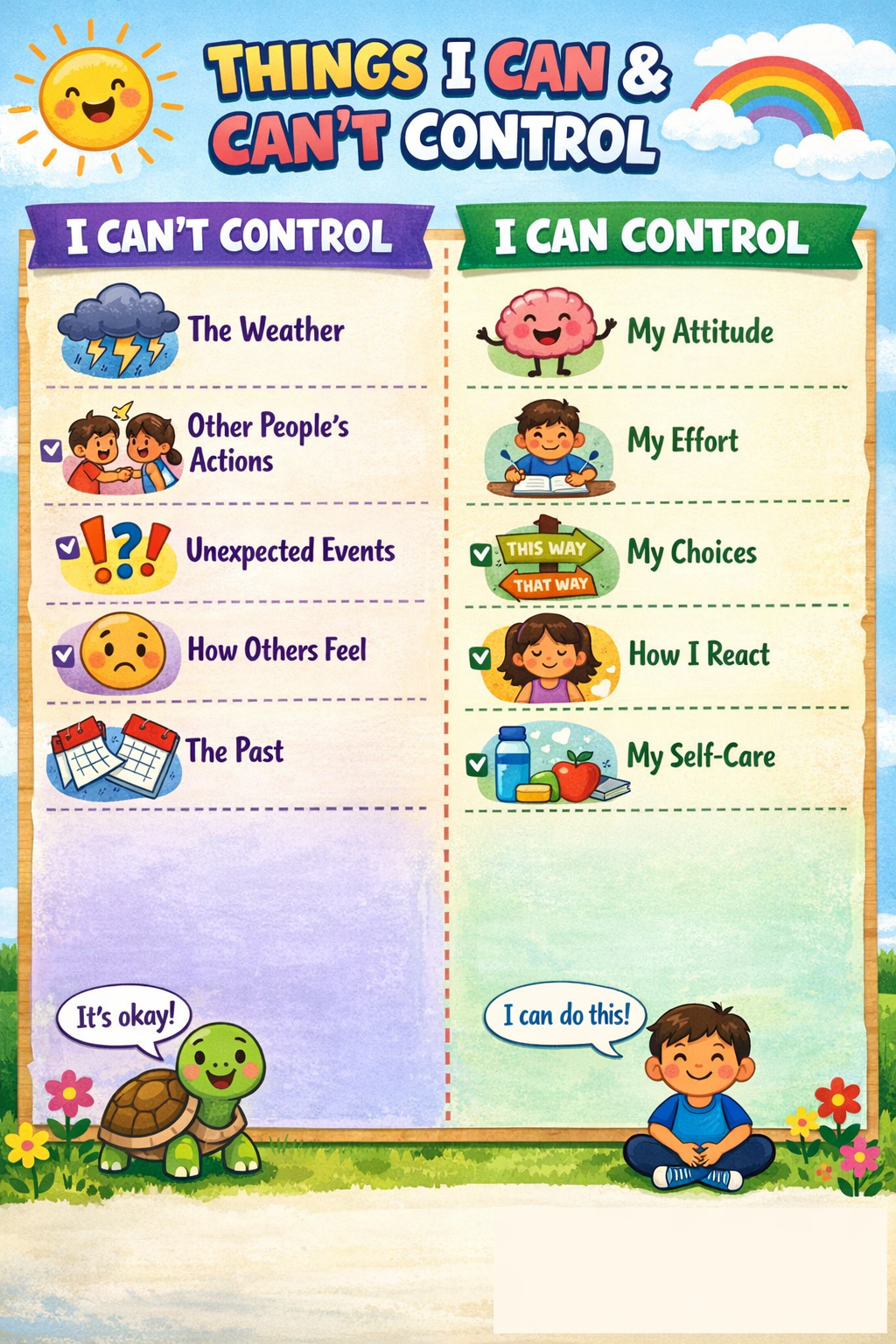
The “I Can Control / I Can’t Control” worksheet and poster encourages children to explore their thoughts and experiences in a safe and reflective way.
The “I Can’t Control” section helps children recognise that some things happen in life that are not their responsibility and cannot be changed. This might include other people’s behaviour, unexpected events, or things that have already happened. Understanding this can reduce feelings of guilt, worry, or frustration.
The “I Can Control” section focuses on empowering children. It helps them recognise the things they do have power over, such as their choices, their reactions, their effort, and how they care for themselves and others.
By separating these two ideas visually, children can begin to understand where their energy and focus is most helpful.
This resource can be used to:
- support emotional regulation
- develop resilience and problem-solving skills
- encourage self-reflection
- open conversations about feelings
- support well-being discussions at home or in school
Children can write, draw, or discuss their ideas, making the activity suitable for a wide range of ages and abilities.
This flexible resource works well in:
- schools and classrooms
- home education settings
- pastoral and well-being sessions
- counselling or support work
- youth groups and well-being groups
It can be used individually, in small groups, or as part of a wider emotional well-being programme.
The open-ended design allows children to create their own personal lists, helping them feel heard, understood, and more confident in navigating their emotions.