
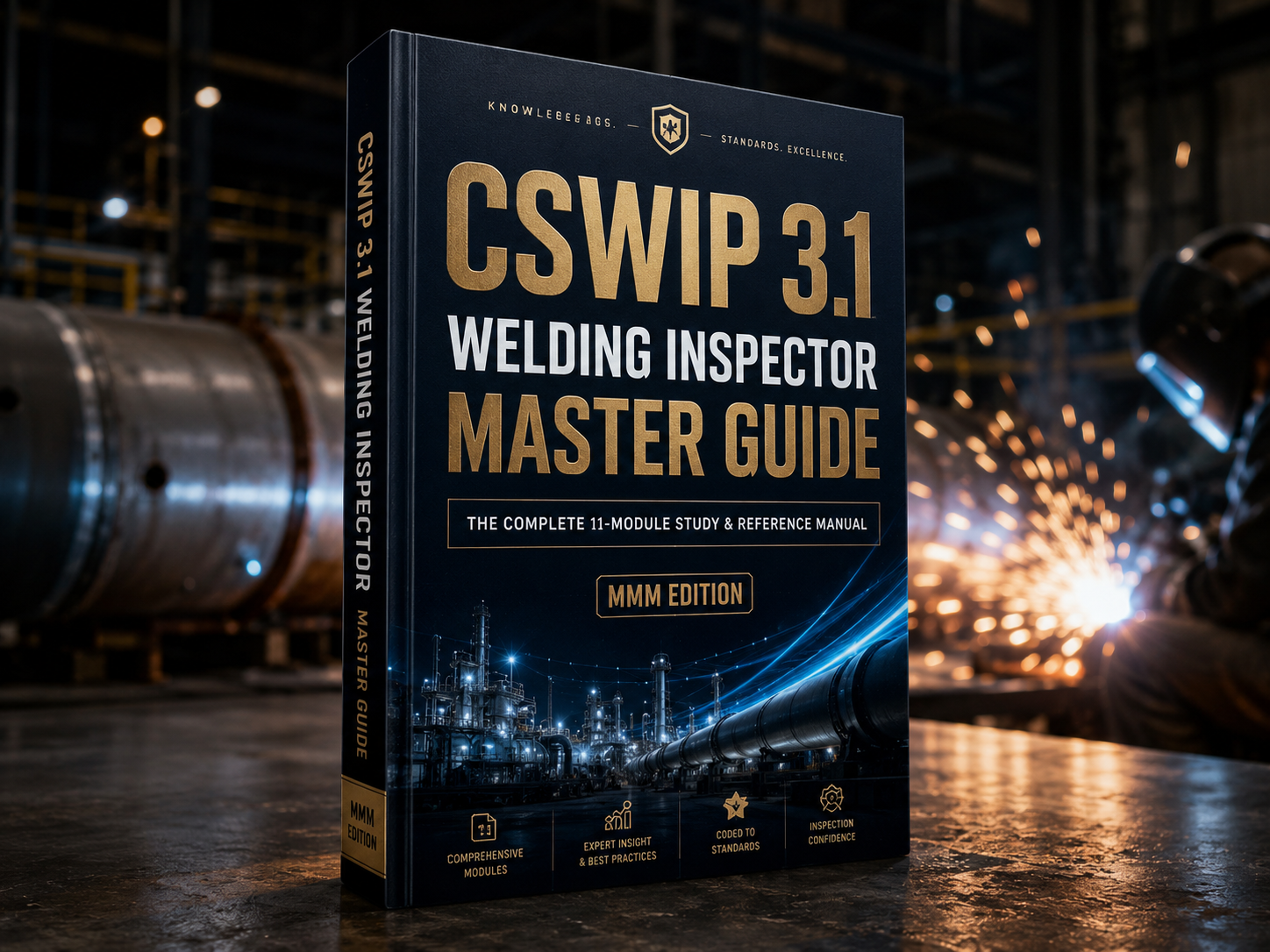
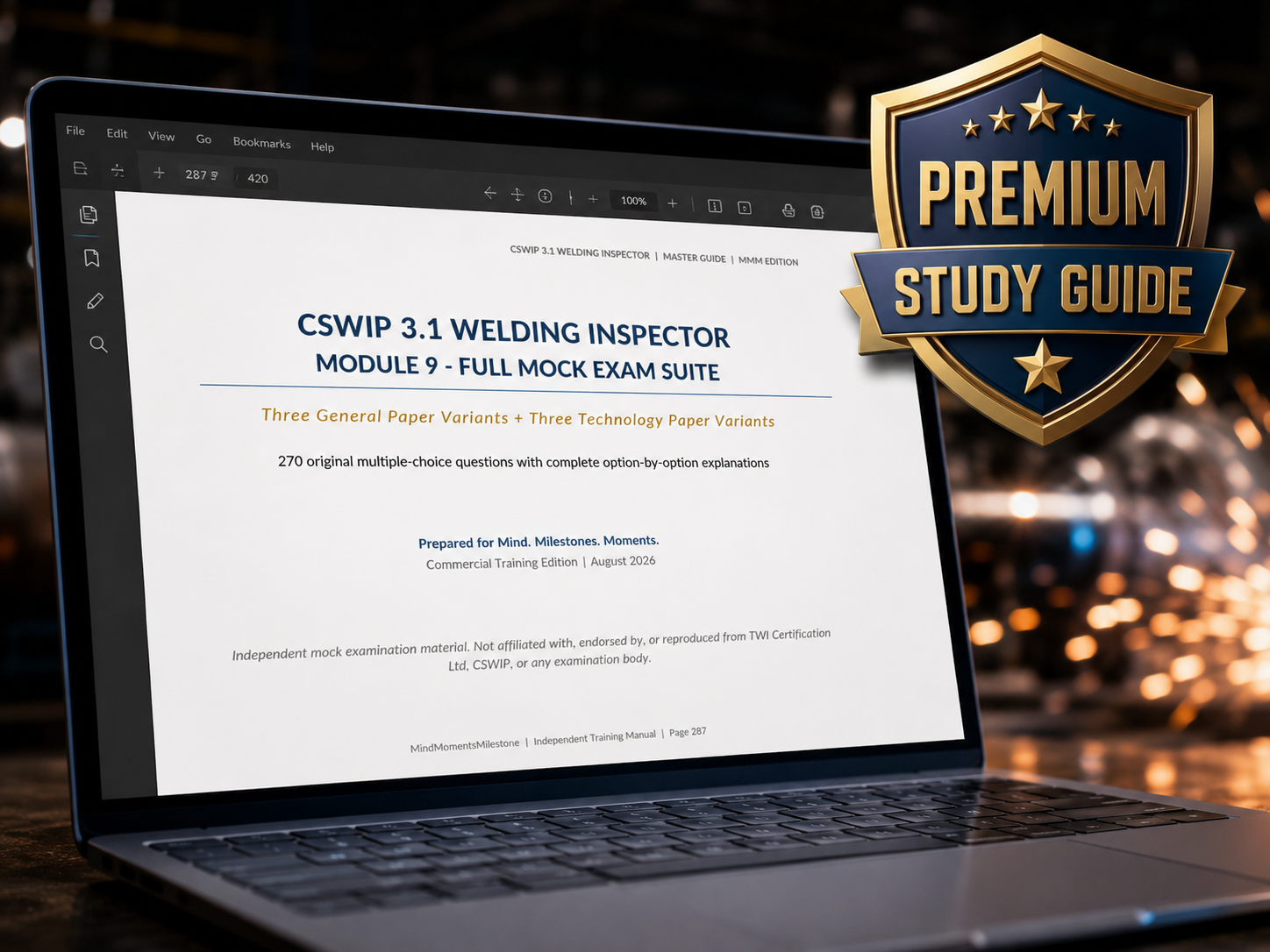
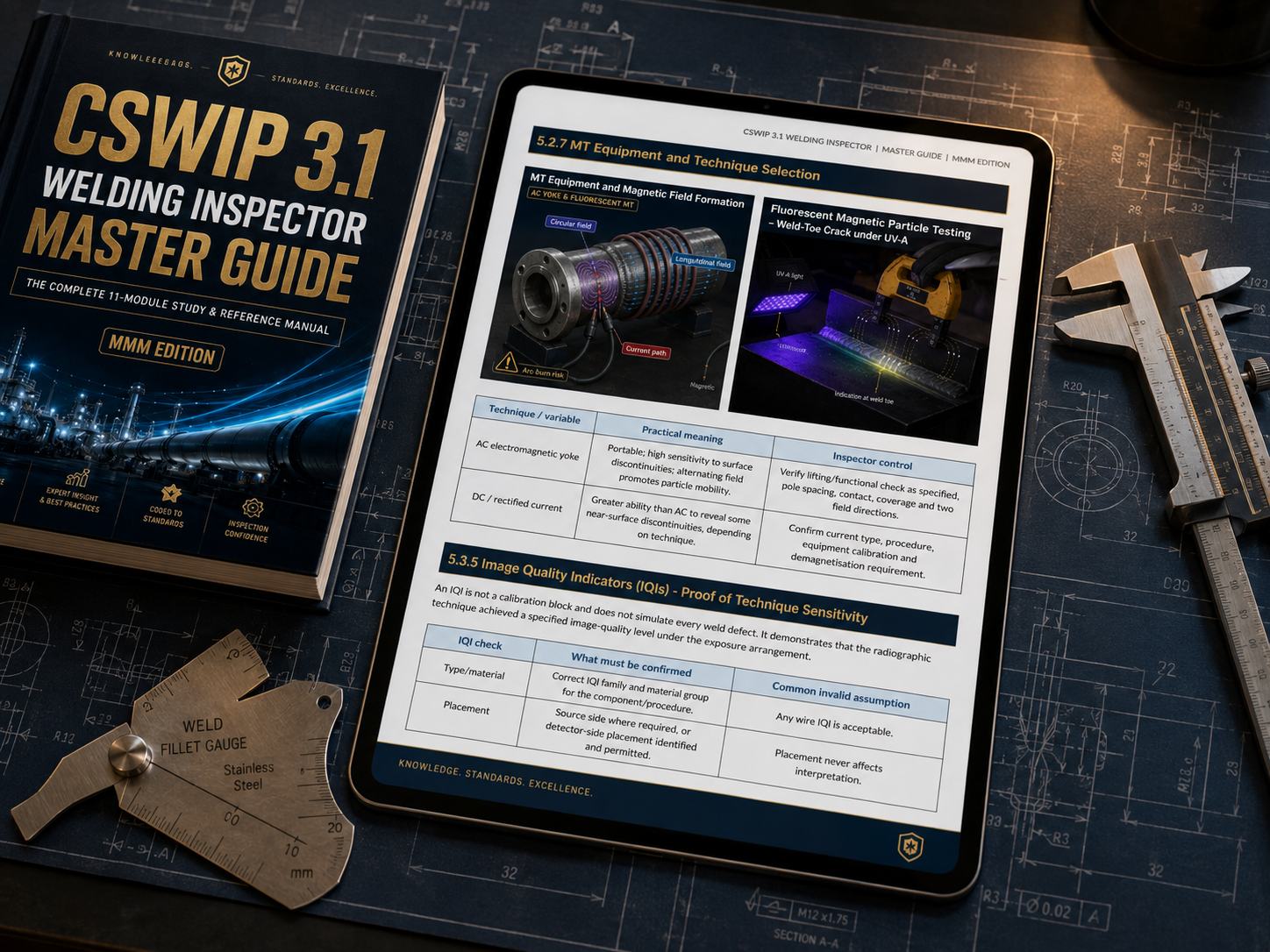
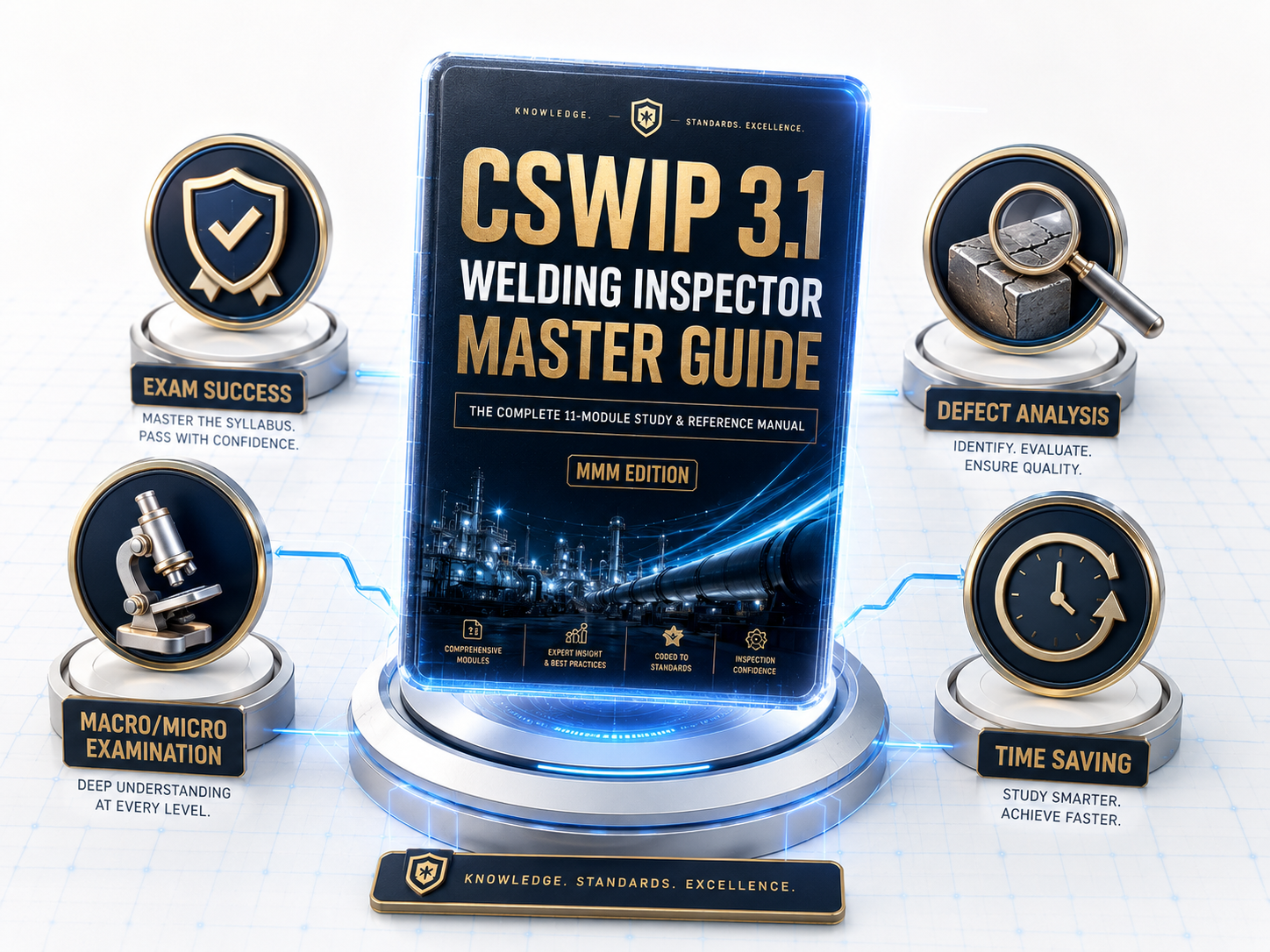
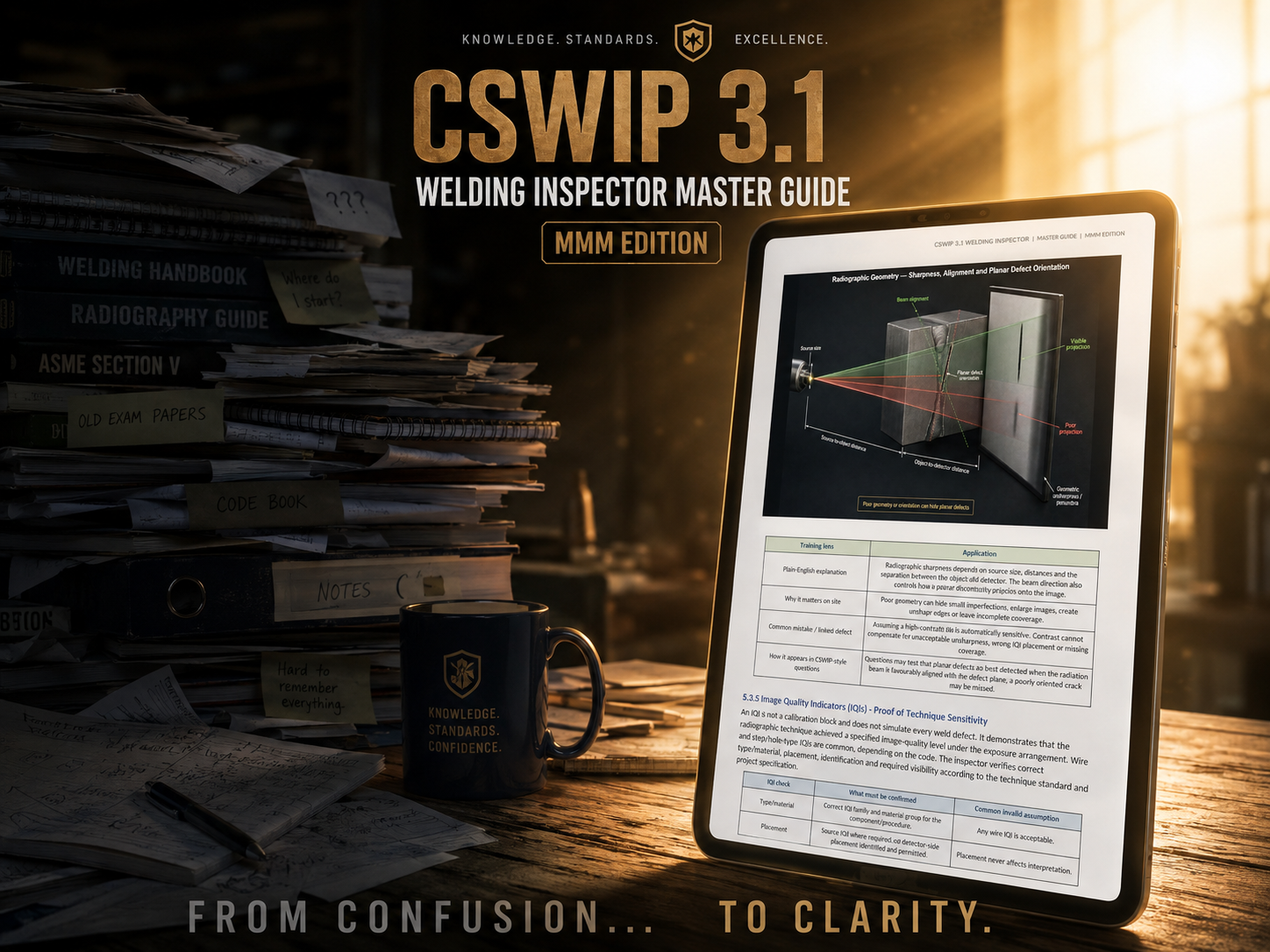
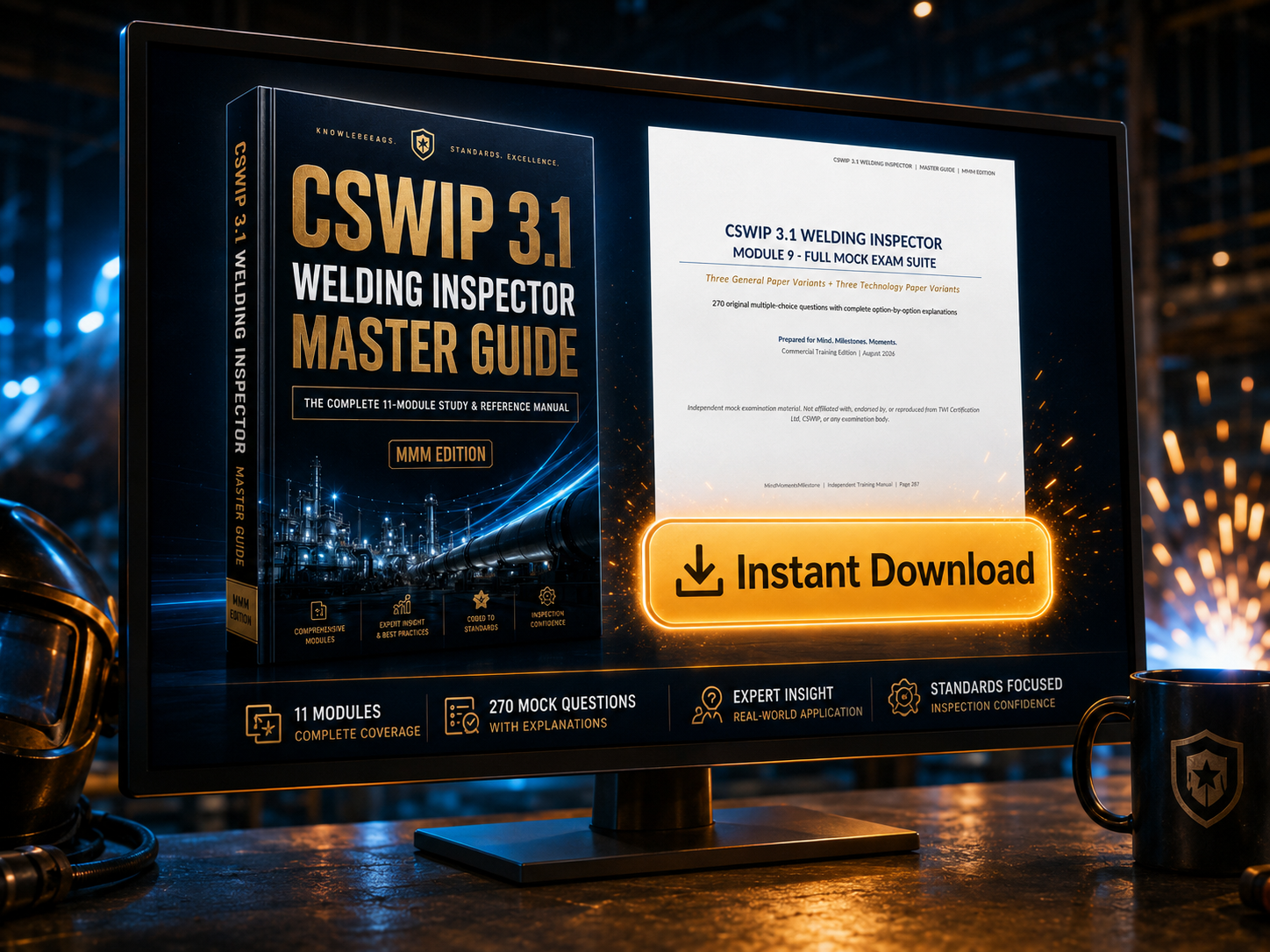



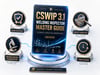

CSWIP 3.1 Welding Inspector Master Training & Inspection Guide — 2026 Edition | 375 Pages • 11 Modules • Practical Inspection • NDT • 270 Mock Questions
Prepare beyond memorisation. Learn to think, inspect, measure, document and report like a Welding Inspector.
The CSWIP 3.1 Welding Inspector Master Training & Inspection Guide — MMM Edition is a comprehensive 375-page professional learning system created for aspiring and practising Welding Inspectors who want structured preparation for CSWIP 3.1 while also developing practical inspection judgement that can be transferred to real fabrication environments.
This is not simply a collection of theory notes.
The guide progresses through 11 structured modules, beginning with CSWIP orientation and welding fundamentals before advancing into materials and metallurgy, documentation and codes, weld defects, NDT, destructive testing, plate and pipe practical inspection, mock examinations, and finally career development.
The learning philosophy throughout the guide is simple:
Understand the requirement → inspect the evidence → measure the condition → apply the governing criteria → make the decision → document it defensibly.
Rather than teaching candidates to memorise isolated answers, the material repeatedly connects exam knowledge with shop-floor inspection behaviour.
What You Get Inside
- 375 pages of structured CSWIP 3.1 training content
- 11 complete learning modules arranged from foundation to advanced practical application
- 2026 scheme-conscious content, aligned in the manual to CSWIP-WI-6-92, 18th Edition, July 2026
- Welding Fundamentals — arc behaviour, SMAW, GTAW, GMAW, FCAW, SAW, joints, weld terminology, welding positions and process selection
- Materials & Metallurgy — material identification, MTC chemistry, carbon equivalent, HAZ behaviour, preheat/interpass control, PWHT and hydrogen-assisted cracking
- Documentation & Codes — WPS, PQR/WPQR, welder qualification, welding symbols, drawing interpretation, code selection and ISO 5817 application logic
- Weld Defects Mastery — porosity, slag inclusion, lack of fusion, incomplete penetration, undercut, overlap, spatter, hot/cold/HAZ cracking, hardness issues and distortion — with emphasis on identification, cause, detection, significance and acceptance
- NDT Training covering VT, PT, MT, RT and UT principles, method selection, capabilities, limitations, report review and inspection judgement
- Destructive Testing & Macro Examination — tensile, bend, Charpy impact, hardness, macro/micro examination, specimen traceability and interpretation of test evidence
- Practical Plate Inspection Training — controlled inspection sequence, specimen orientation, datum control, gauge selection, defect mapping, measurement, acceptance decisions, reporting and timed practice
- Practical Pipe Inspection Training — clock-position reporting, root gap, root face, bevel angle, hi-lo/mismatch, ovality, alignment, full-circumference inspection and defensible reporting
- 270 original multiple-choice questions across multiple mock variants with complete option-by-option explanations, designed to expose weak reasoning instead of simply showing the correct answer
- Exam traps, Inspector's Notes, shop-floor scenarios, decision frameworks, worked examples and competency checklists throughout the guide
- Career & Beyond Toolkit including an ATS-safe Welding Inspector CV structure, application material, 40 realistic interview questions, interview frameworks, CSWIP 3.2 progression planning, experience/CPD logs and site-reporting tools
- First 90-Day Welding Inspector development framework, application tracker and professional-boundary controls to help translate learning into workplace behaviour.
Built for More Than the Exam:
A major strength of this guide is the way it separates detection from acceptance.
Finding an indication does not automatically make a weld rejectable. The inspector must establish the applicable drawing, specification, WPS/WPQR, code, acceptance criteria and objective evidence before making a disposition. The manual repeatedly reinforces this inspection discipline throughout theory, NDT and practical sections.
You will learn to ask the questions that matter on an actual fabrication floor:
What document governs this weld?
Is the correct WPS being used?
Does the PQR support it?
Is the welder qualified for the actual production condition?
Is material traceability intact?
What exactly is the observed imperfection?
Where is it located?
How large is it?
Which inspection method can reliably detect it?
Which acceptance criteria apply?
Should the weld be ACCEPTED, REJECTED, HELD or sent for further evaluation?
That distinction is what separates someone who has merely studied welding terminology from someone developing a genuine Welding Inspector mindset.
Current Examination Awareness:
The master guide explicitly identifies the current examination architecture used as its publishing basis:
Theory Part 1 — 80 MCQs / 120 minutes
Theory Part 2 — 40 MCQs / 90 minutes
Practical Part 1 — 8 specimens / 90 minutes
Minimum pass requirement — 70% in each part
It also clearly distinguishes certain plate, pipe, macro and legacy-format exercises used for skill-building practice from the current official examination architecture.
That distinction matters because preparation material should help candidates train effectively without presenting outdated practice structures as the current official examination format.
Who Is This Guide For?:
This master guide is designed for CSWIP 3.1 candidates, QA/QC Engineers, Welding Inspectors, Fabrication Inspectors, Mechanical Engineers, Welding Supervisors, QC Inspectors, NDT professionals moving toward welding inspection, and engineers working in oil & gas, pipelines, pressure equipment, structural fabrication, shipbuilding, power and heavy manufacturing.
Beginners can use the modules sequentially to build their foundation.
Experienced inspectors can use individual sections as a structured revision, practical-reference and examination-preparation resource.
The Outcome
By the end of the complete learning pathway, the objective is not simply to recognise words such as undercut, porosity, WPS, PQR or UT.
The objective is to develop the ability to:
Read the requirement.
Understand the welding process.
Recognise the metallurgical risk.
Verify the documentation.
Inspect systematically.
Measure accurately.
Interpret indications correctly.
Apply controlled acceptance criteria.
Write objective reports.
Defend the inspection decision.
That is the competence this guide is built around.
MindMomentsMilestone — MMM Edition
Created as a professional independent learning resource for engineers and inspectors who want to move from exam preparation to practical welding-inspection competence.
One Guide. 11 Modules. 375 Pages. 270 Mock Questions. Theory + Documentation + NDT + Practical Inspection + Career Toolkit.
Study with structure. Practise with purpose. Inspect with evidence.
Important: This is an independent commercial educational publication. It is not an official TWI/CSWIP publication, is not affiliated with or endorsed by TWI Certification Ltd./CSWIP, and does not reproduce confidential examination material. For examinations and live fabrication, always verify the latest official certification scheme, applicable project specifications, approved procedures and contractually invoked code/standard editions.