
Mini Bundle - Placement & Construction Defects
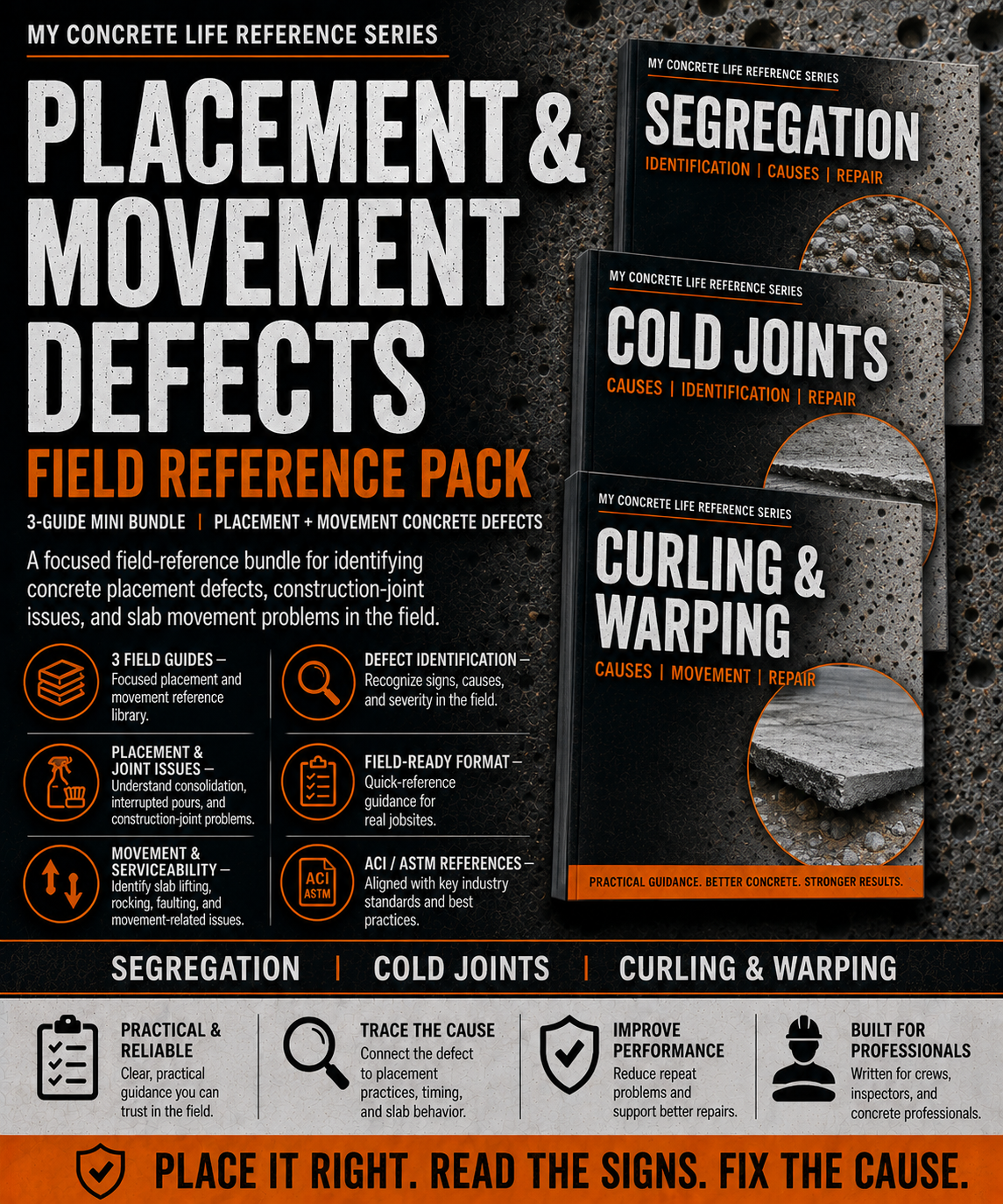
Concrete Placement & Movement Defects Field Reference Pack
Identify placement problems, construction joint issues, and slab movement before they turn into repair headaches.
The Concrete Placement & Movement Defects Field Reference Pack is a focused 3-guide mini bundle built for understanding concrete defects that often trace back to placement, consolidation, joint timing, slab behavior, curing conditions, and construction practices.
This pack brings together practical field references for segregation, cold joints, and curling/warping. These defects can affect appearance, durability, serviceability, load transfer, surface performance, and long-term repair planning. Some show up immediately after placement. Others develop over time as the slab dries, shrinks, moves, rocks, or separates at joints and edges.
This bundle is designed for concrete contractors, finishers, inspectors, QC technicians, ready-mix producers, repair crews, engineers, and field personnel who need a clear way to recognize the defect, understand the likely cause, document the condition, and choose the correct next step.
What’s Included
This mini bundle includes 3 focused concrete defect guides:
- Segregation Guide
- Cold Joints — Concrete Defect Field Reference
- Curling & Warping — Concrete Defect Field Reference
Together, these guides cover defects related to concrete placement, discharge, consolidation, lift timing, interrupted pours, slab edge movement, joint behavior, moisture gradients, temperature differences, and drying shrinkage effects.
Built for Real Field Use
This bundle helps answer the questions that matter on site:
Is the concrete separated, rocky, sandy, paste-rich, or honeycombed?
Is there a visible seam between placements?
Did the concrete stiffen before the next lift or load was placed?
Are slab edges or corners lifting, rocking, faulting, or losing support?
Is this cosmetic, serviceability-related, durability-related, or structural enough to require further evaluation?
Each guide is written in practical field language and is organized to help users identify the defect, understand common causes, classify severity, document conditions, and decide what action should come next.
What This Pack Helps With
- Identifying segregation, rock pockets, sandy streaks, paste-rich zones, and poor consolidation
- Understanding how improper discharge, over-vibration, harsh mixes, re-tempering, or poor handling can lead to non-uniform concrete
- Recognizing cold joints and construction seams caused by delayed placement, interrupted pours, poor bonding, or loss of plasticity
- Understanding when a cold joint is mainly visual and when it may affect bond, water tightness, durability, or load transfer
- Identifying curling, warping, lifted slab edges, rocking panels, joint faulting, and slab movement
- Understanding how moisture gradients, temperature gradients, shrinkage, joint spacing, curing, and subgrade support affect slab behavior
- Supporting better inspection notes, photos, measurements, and repair decisions
- Helping crews prevent repeat placement and finishing problems on future pours
Best For
- Concrete contractors
- Flatwork crews
- Finishers
- Placement crews
- Ready-mix producers
- QC / QA technicians
- Concrete inspectors
- Repair contractors
- Engineers and engineering support staff
- Facility maintenance teams
- Anyone responsible for evaluating concrete placement quality and slab performance
Why This Bundle Matters
Placement and movement defects are often misunderstood because they can look like simple surface issues at first. Segregation may appear as exposed stone, rough areas, or honeycomb, but the real concern can be weak, porous, non-uniform concrete. A cold joint may look like a line, but it can become a water path or bond issue if not properly handled. Curling and warping may start as lifted edges, but they can lead to rocking slabs, joint damage, faulting, and long-term serviceability problems.
The Concrete Placement & Movement Defects Field Reference Pack helps users slow down, identify the actual defect, understand what caused it, document it properly, and decide whether the right response is monitoring, repair, removal, testing, or professional evaluation.
Practical Value
This pack is ideal for field crews and concrete professionals who want a focused reference set for defects tied to how concrete is placed, finished, consolidated, jointed, cured, and supported. It is especially useful for slabs, pavements, floors, formed work, walls, construction joints, and repair investigations.
Use it for jobsite troubleshooting, crew training, inspection support, customer explanations, report writing, repair planning, and field reference.
Important Note
These guides are educational and informational field references. They do not replace ASTM standards, ACI documents, project specifications, manufacturer recommendations, laboratory testing, engineering judgment, or qualified professional evaluation. Final repair decisions should be based on the actual condition, depth, extent, structure type, exposure, project requirements, and applicable standards.
Place it right. Read the signs. Fix the cause.