

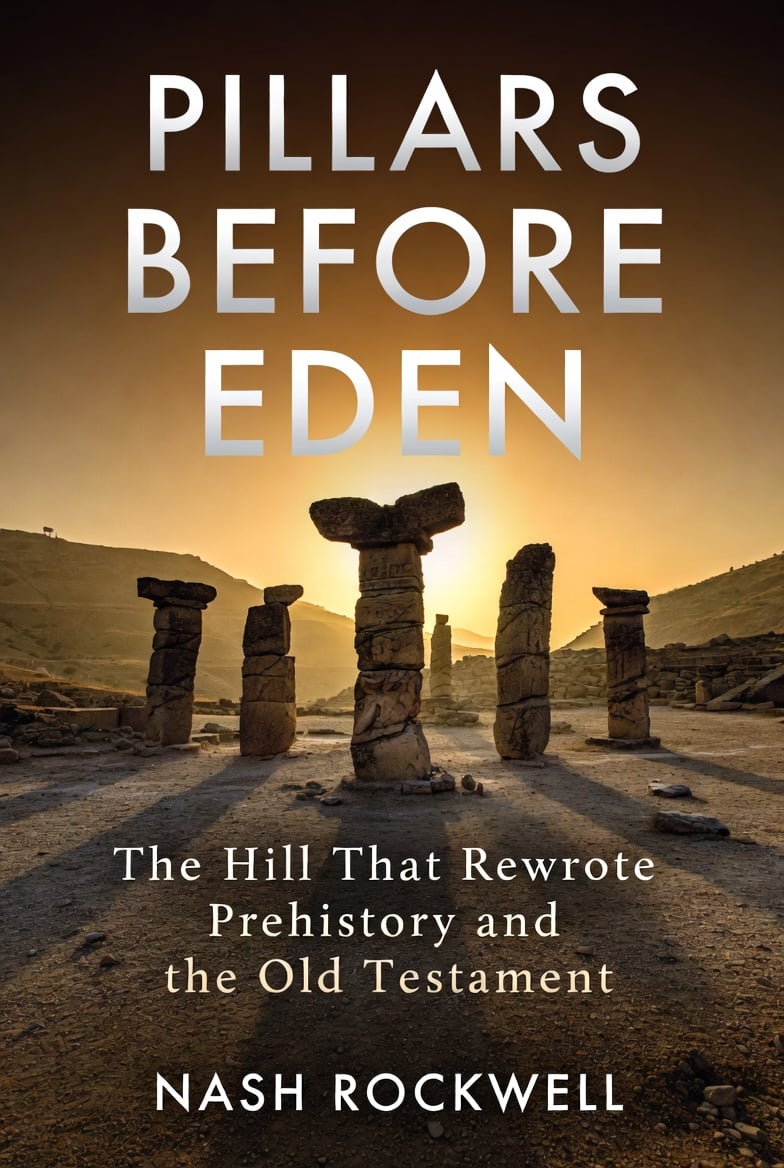
Pillars Before Eden
The temple that broke the timeline.
Eleven thousand five hundred years ago—right at the end of the Ice Age—hunter-gatherers in southeastern Turkey built something impossible: a massive ritual complex of twenty-ton T-shaped pillars carved with lions, foxes, scorpions, and snakes, arranged in perfect circles. No farms. No pottery. No villages. Just monumental architecture and symbolic sophistication that textbooks said shouldn’t exist for another 5,000+ years.
Göbekli Tepe didn’t follow agriculture. It preceded it. Temple first—then everything else. Klaus Schmidt’s discovery flipped the entire “Neolithic Revolution” script on its head, and the more they dig, the weirder it gets.
This hill sits in the exact region the Old Testament places the dawn of civilization: near the headwaters of the Tigris and Euphrates, the neighborhood of Eden, and Abraham’s Haran. The carvings and ritual patterns echo Genesis in ways that make both secular skeptics and rigid literalists squirm.
Nash Rockwell cuts through the academic priesthood with primary evidence, excavation reports, and unapologetic questions: What if this wasn’t an anomaly? What if it’s a memory? What if the stones preserve something older than the approved story?
For anyone who’s ever suspected the official timeline of human history was too neat, too linear, and too convenient—this is your receipts. The hill shouldn’t exist. But it does. And once you see what’s actually there, you can’t unsee it.
Civilization didn’t start with farming. It started with something far older.