
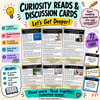
Curiosity Reads & Discussion Cards | A2–B2 Reading Comprehension + Speaking
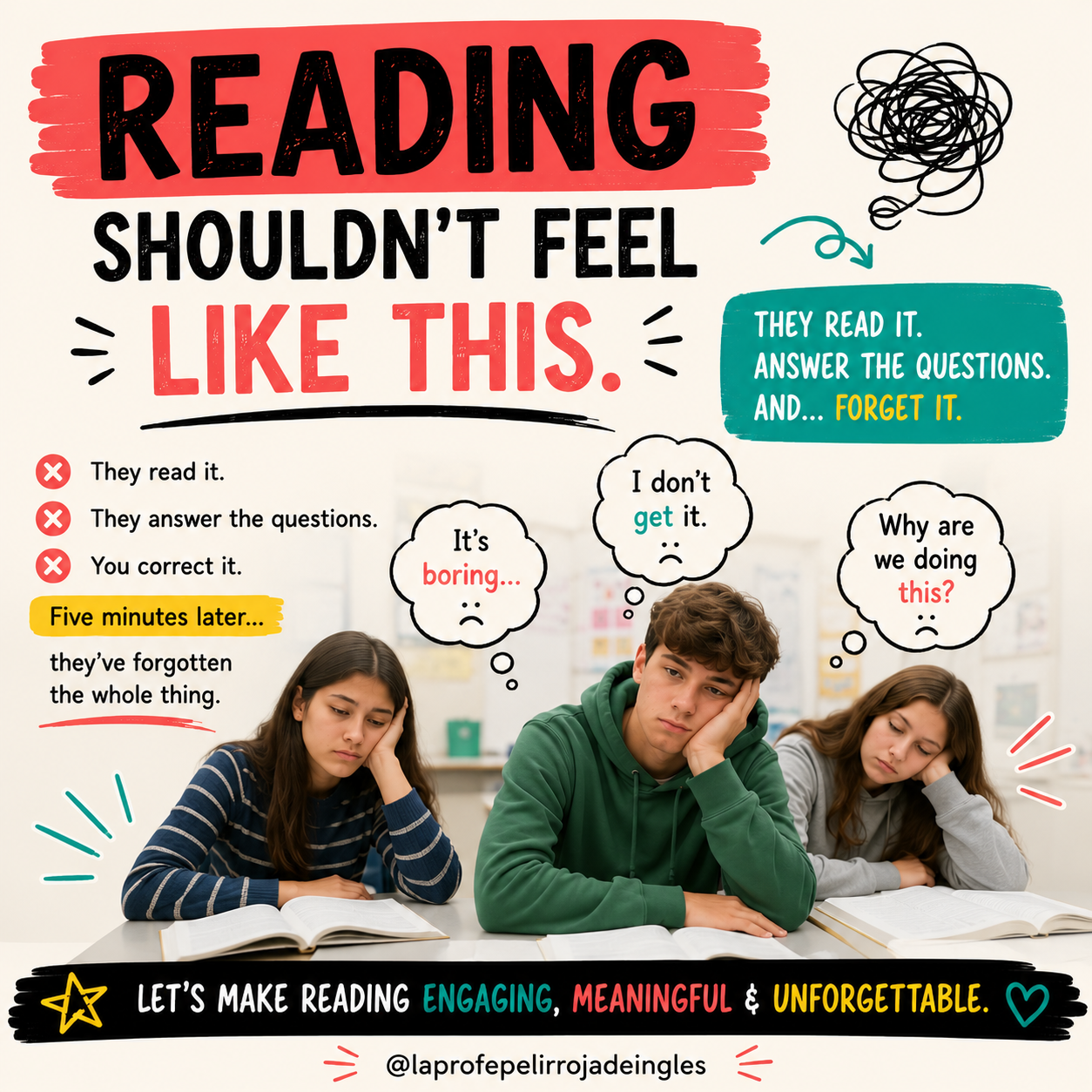
They read the text.
They answer the questions.
You correct them.
And five minutes later… they’ve forgotten the whole thing. 😩
Reading comprehension shouldn’t just be about finding the right answer in a text.
Students need opportunities to talk about what they’ve read, justify their ideas, make connections, question information and actually THINK about it.
That’s exactly what Curiosity Reads & Discussion Cards was created for.
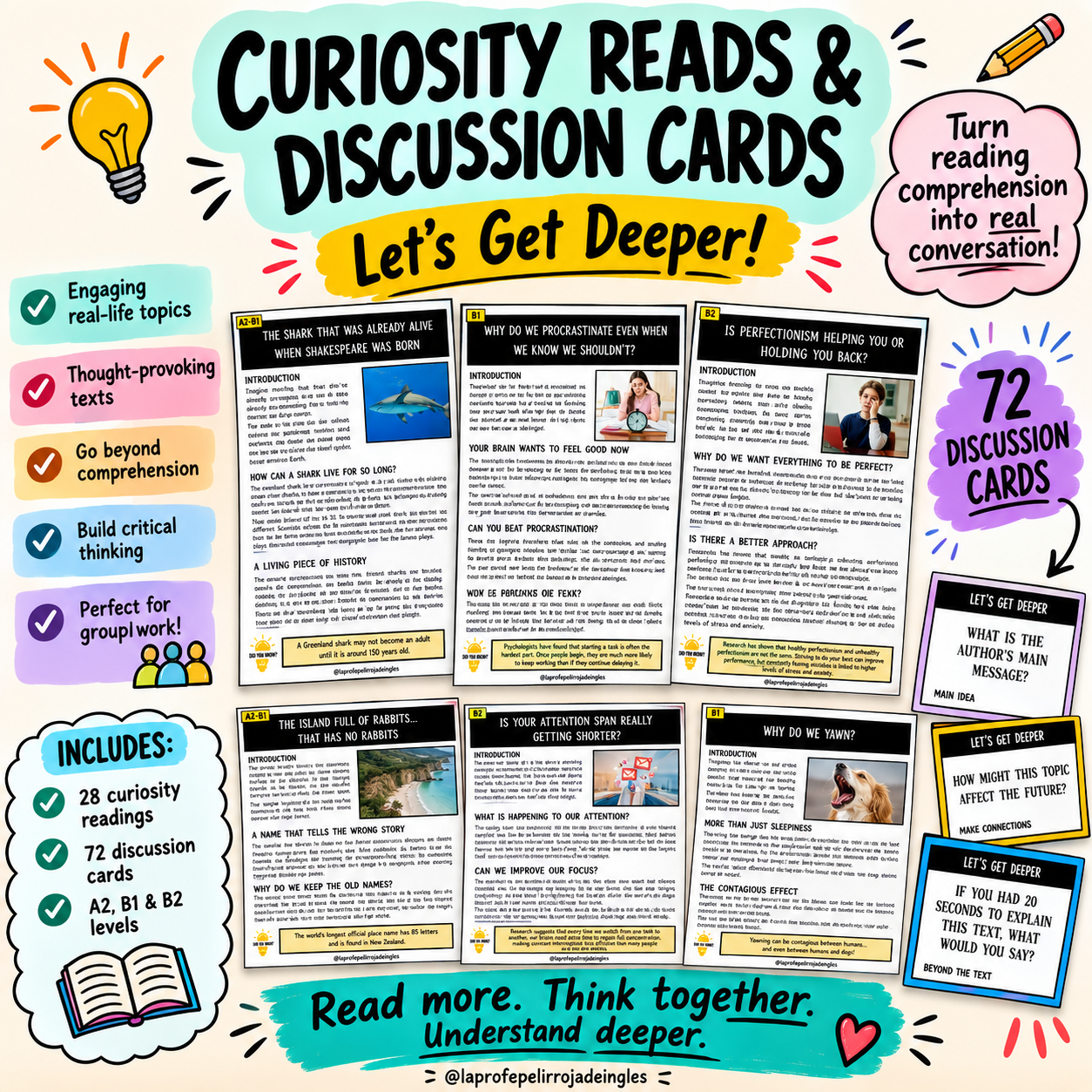
Inside this resource, you’ll find 28 engaging readings for teenagers, divided into A2, B1 and B2 levels, with topics designed to make students genuinely curious and give them something worth talking about.
But the reading is only the beginning. 👀
After reading the text in groups, students place the 72 Discussion Cards on the table. They pick them up one by one and use them to explore the text together.
Instead of simply answering another worksheet, they’ll be asked to:
✨ identify and explain key ideas
✨ find and discuss evidence
✨ justify their answers
✨ make connections
✨ share opinions
✨ think beyond the text
✨ listen and respond to their classmates
The result?
Reading comprehension becomes a collaborative reading + speaking + critical-thinking activity where students have to actually engage with what they’ve read.
WHAT’S INCLUDED
📖 28 Curiosity Readings
Three differentiated levels: A2, B1 & B2
💬 72 reusable Discussion Cards
Use the same cards with different readings again and again.
🧠 Questions designed to move students beyond basic comprehension and into discussion, reasoning, connections and critical thinking.
HOW TO USE IT
- Put students into small groups.
- Give each group a Curiosity Reading appropriate for their level.
- Place the Discussion Cards face down on the table.
- Students read and discuss the text together.
- They take turns picking up cards and answering the questions as a group.
- Encourage them to justify, disagree, add ideas and refer back to the text.
Perfect for ESL/EFL secondary classrooms, reading lessons, speaking practice, early finishers, literacy work, critical-thinking activities or those lessons when you want students to do much more than simply answer the questions.
Less “read, answer, correct.”
More “read, think, talk, connect.” 🧠💬