
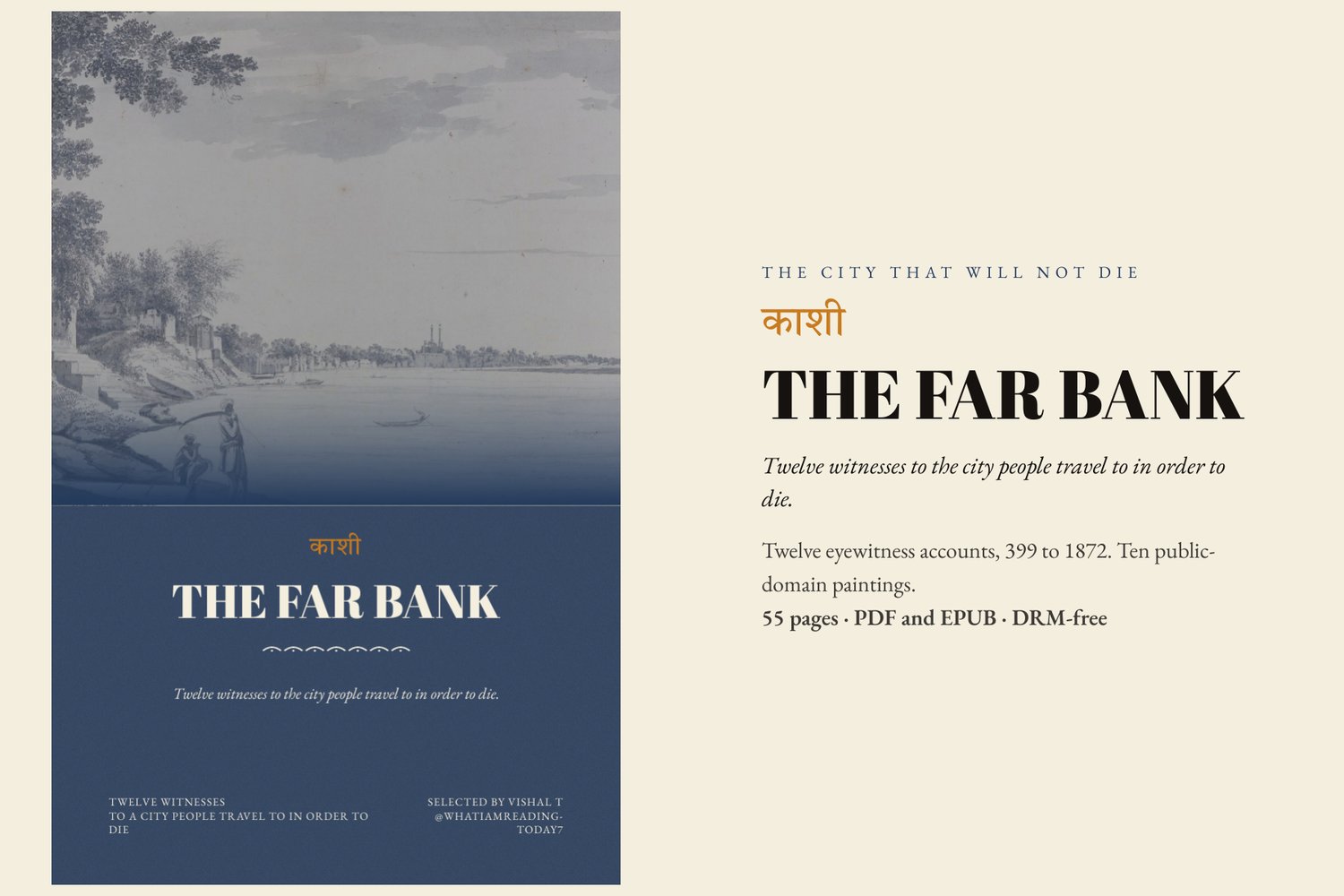



The Far Bank — Twelve Witnesses to Banaras, 399 to 1872 (PDF + EPUB)
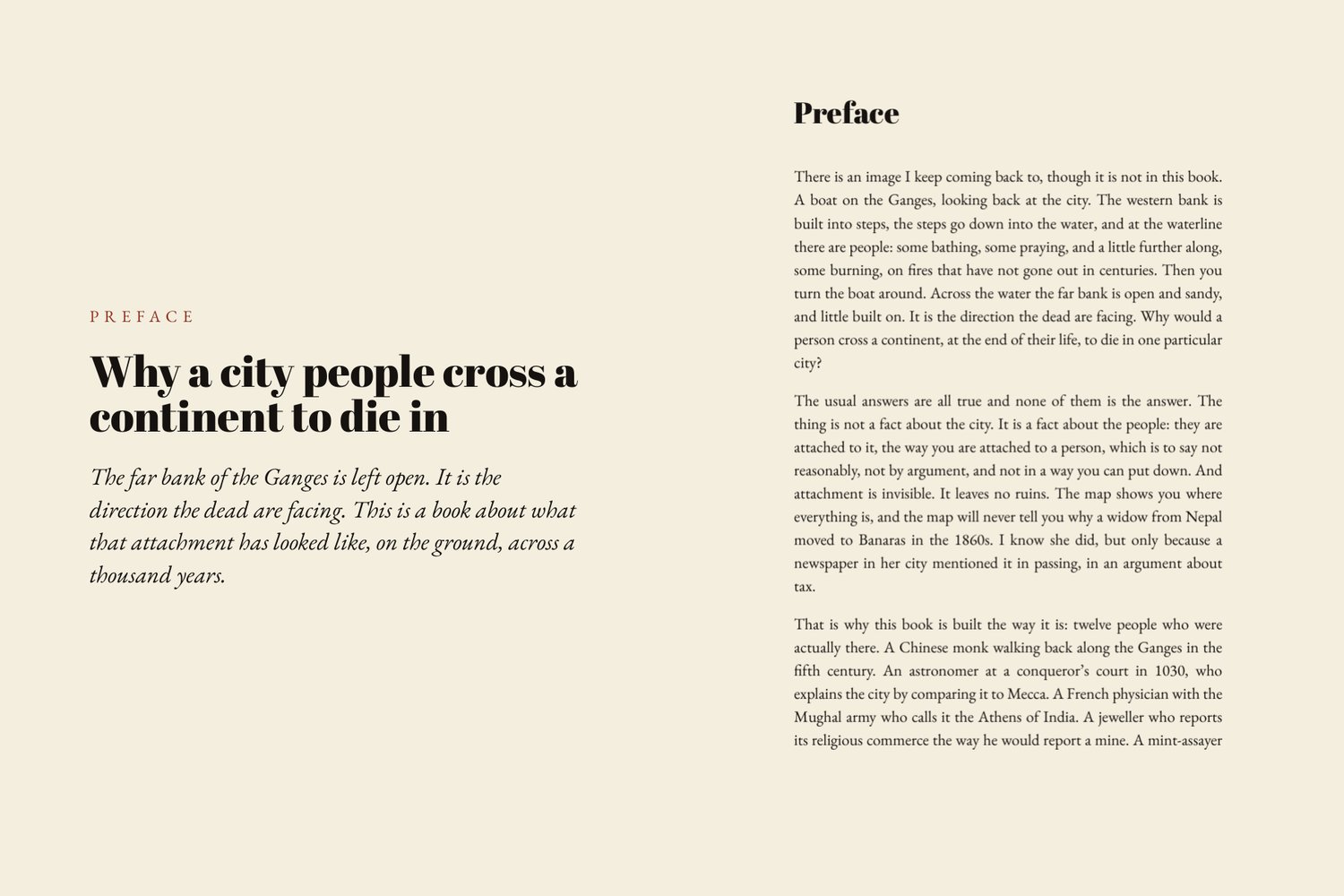
Across the river from Benares, the far bank is left open. It is the direction the dead are
facing.
There is a city in northern India that people cross a continent to reach, at the end of
their lives, in order to die in it. It sits on the west bank of the Ganges, at the point
where, unusually, the river turns north and runs along it for a few miles before turning
east again. The western bank rises into a crescent of steps. Opposite the dense ghats a
broad sandy floodplain has stayed far less built-up, and the city has faced it for
centuries.
Nobody can fully say why. So this book does not explain. It puts twelve people who were
actually there in a row, across a thousand years, and lets each say what he saw.
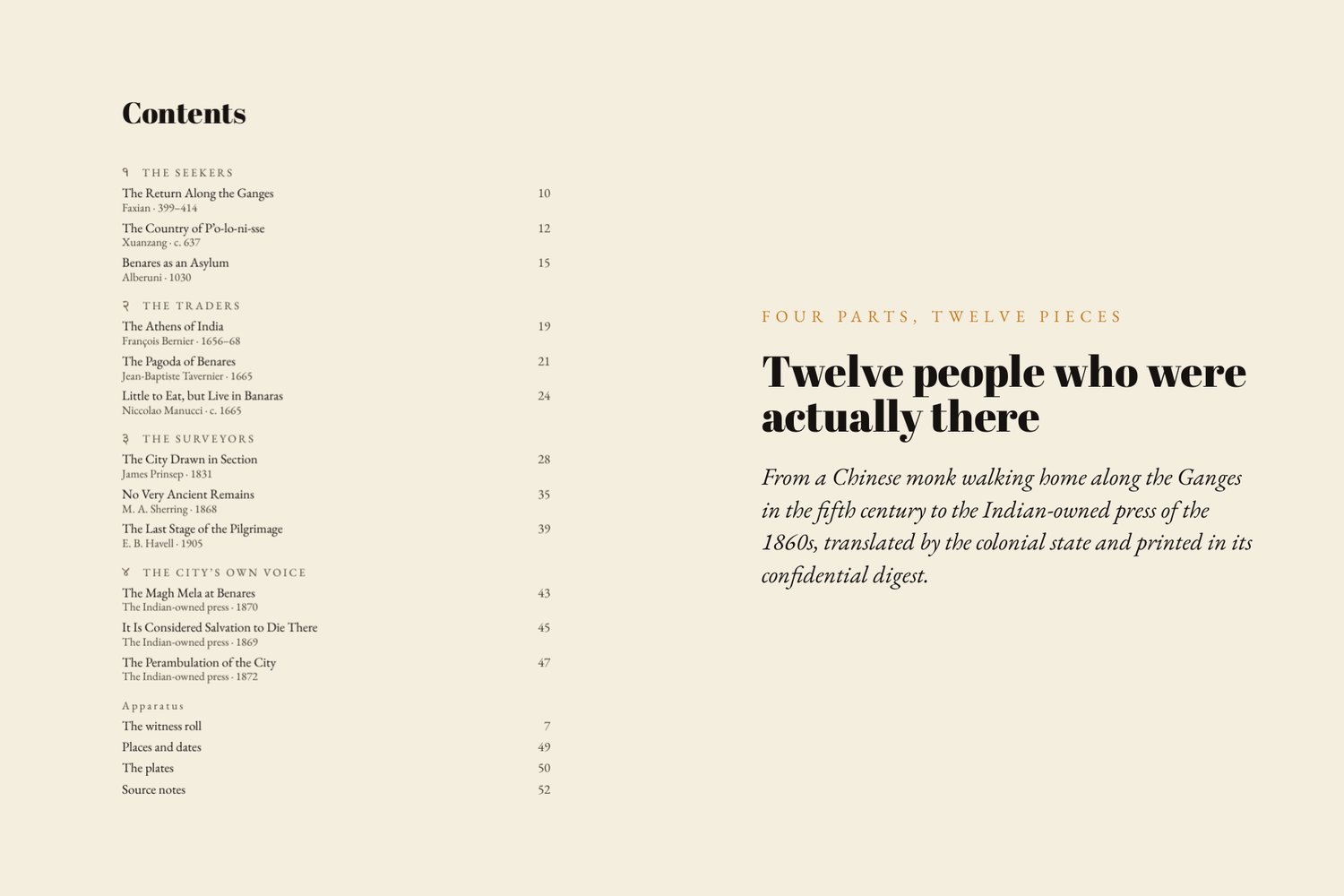
The twelve
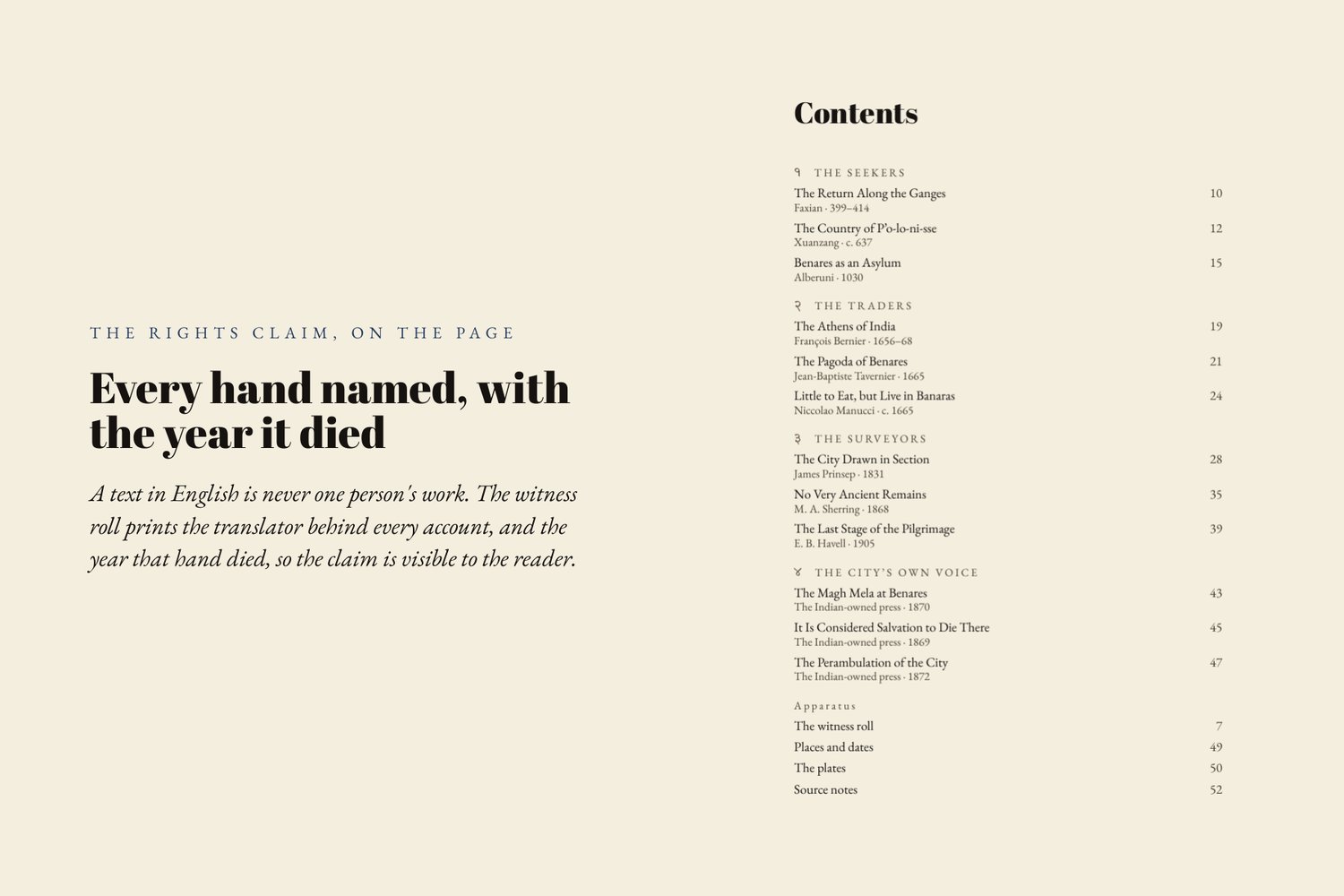
The seekers. Faxian, a Chinese monk walking home from India in the fifth century, who
reaches Varanasi and records the Buddha's Deer Park. Xuanzang, who left China against the
emperor's order and stayed abroad sixteen years. Alberuni, a Khwarezmian astronomer at
Mahmud of Ghazni's court, who explains the city to his Arabic readers in 1030 by comparing
it to Mecca: the anchorites wander to it and stay there for ever, as the dwellers of the
Ka'ba stay for ever in Mecca.
The traders. François Bernier, a French physician nearly twelve years in India with the
Mughal court, who calls Benares the general school of the Hindus and the Athens of India.
Jean-Baptiste Tavernier, a jeweller on a diamond-buying journey, who describes the sealed
pots of Ganges water carried three hundred leagues to be sold. Niccolao Manucci, a Venetian
who ran away to India as a teenager, who records the proverb the whole country used of the
place: little to eat, but live in Banaras.
The surveyors. James Prinsep, assay-master at the Benares mint, who draws the ghats in
elevation and section and sets down the city's account of itself from the Kashi Khanda.
M. A. Sherring, a missionary who wrote the city's history and found its oldest stones built
into the bridges that replaced them. E. B. Havell, an art historian who follows the
panch-kosi pilgrimage to its last stage at the burning ground of Manikarnika.
The city's own voice. Three pieces from the Indian-owned press of the 1860s and 70s,
which survive because the colonial government translated the vernacular newspapers every
week into a confidential digest, to watch what the Indian press was saying about politics.
What it preserved by accident is the city describing itself: the Magh Mela counted as
revenue, a Nepalese widow who moved to Banaras because it is considered salvation to die
there, and a new pilgrim road the pilgrims refuse to walk.
Why this edition names the translator?
A text in English is never one person's work. Every account here reaches you through a
second hand, and sometimes a third: Legge, Beal, Sachau, Brock, Ball, Irvine, and the
anonymous translators of the colonial digest. So each piece carries, on its opener, the
hand that made the English and the year that hand died, and the back of the book prints a
witness roll with all of them, because the store sells from Amsterdam and the term that
governs is the life of the translator plus seventy years. The claim is on the page.
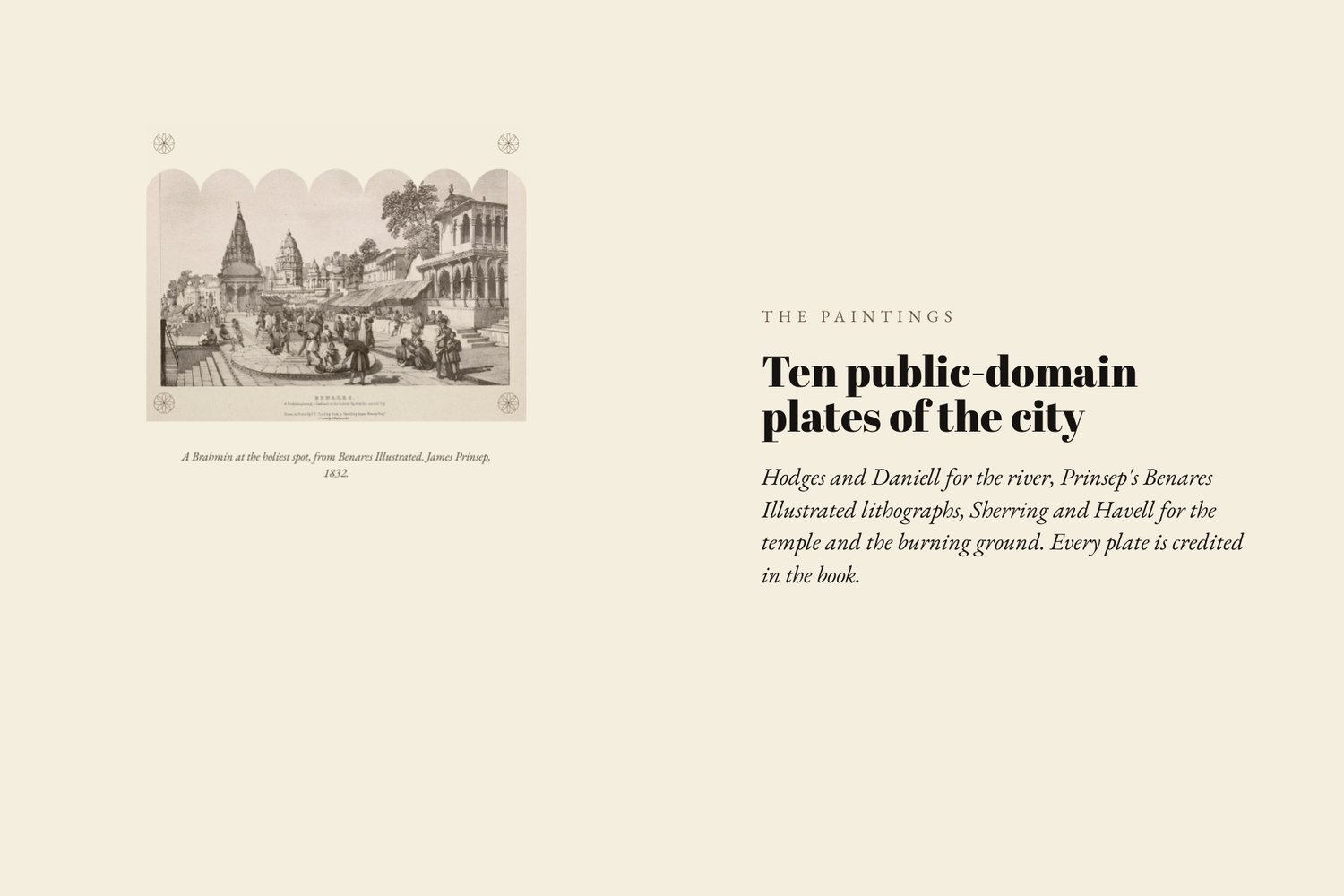
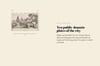
The paintings
Ten public-domain plates of the city: Hodges and Daniell for the river and the boats,
Prinsep's *Benares Illustrated* lithographs of 1832, Sherring's and Havell's engravings of
the temple and the burning ground, and a plan of Benares from Baedeker's 1914 *Indien*.
Every plate is credited in the book.
You receive:
- a 55-page designed PDF at 129 × 198 mm, for tablets, laptops and printing;
- a reflowable EPUB for Kobo, Apple Books and most e-readers; Kindle readers can use
Amazon's Send to Kindle;
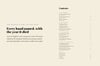
- twelve accounts, complete, each with its opener, its proposition and its source line;
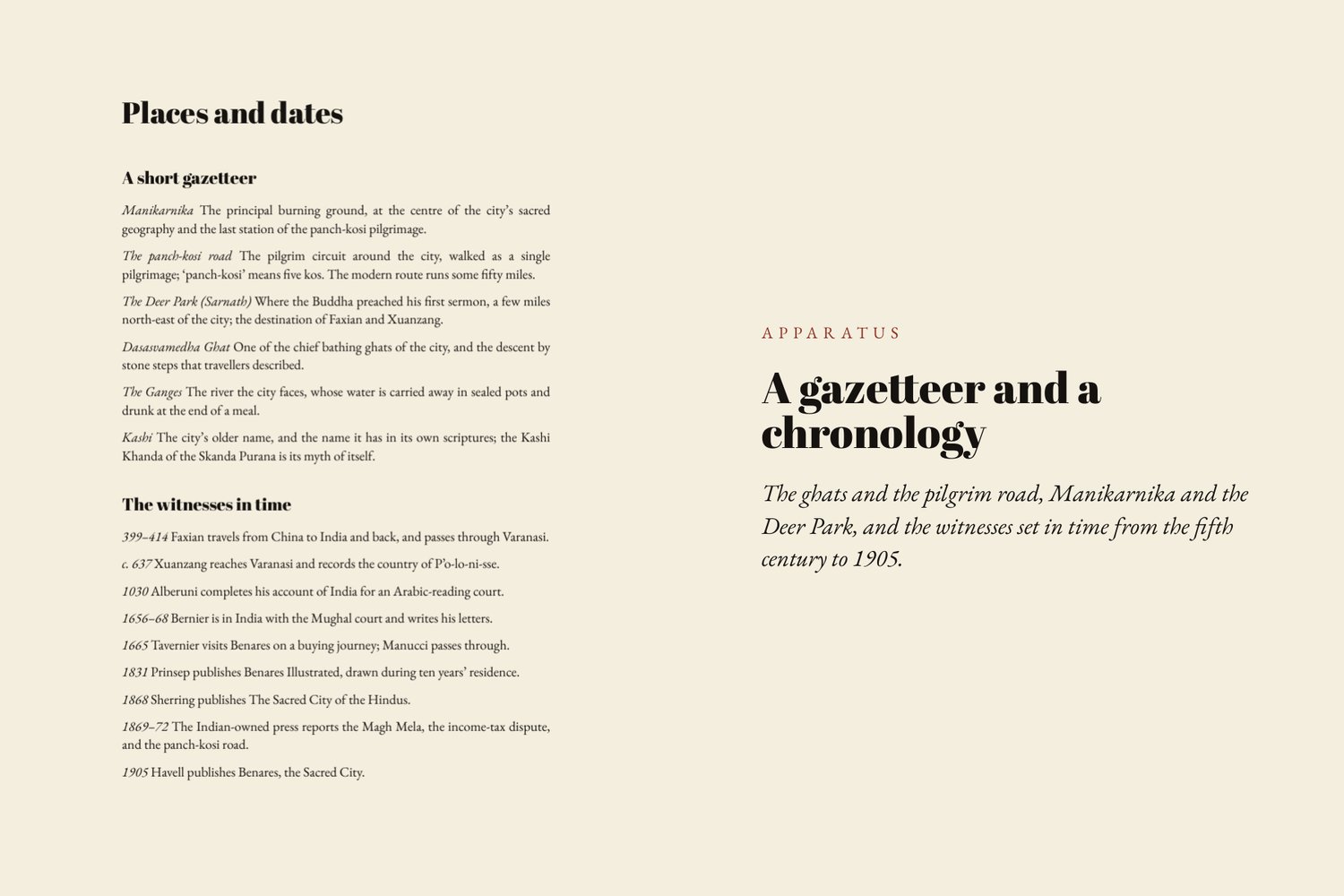
- a witness roll naming every translator and the year of death, a gazetteer of the ghats
and the pilgrim road, and a chronology from the fifth century to 1905;
- the source notes, recording every scanner repair made to the texts, with counts;
- DRM-free files that are yours to keep and move between devices.
Selected, restored and newly set by Vishal T · @whatiamreadingtoday7