






Open Interest Explained — Measured (PDF Guide)
Open interest appears on every derivatives dashboard with a confident caption attached. Rising open interest into a rally means conviction; falling means the move is hollow. You have never seen either claim counted, and this guide is honest about why counting it properly is hard.
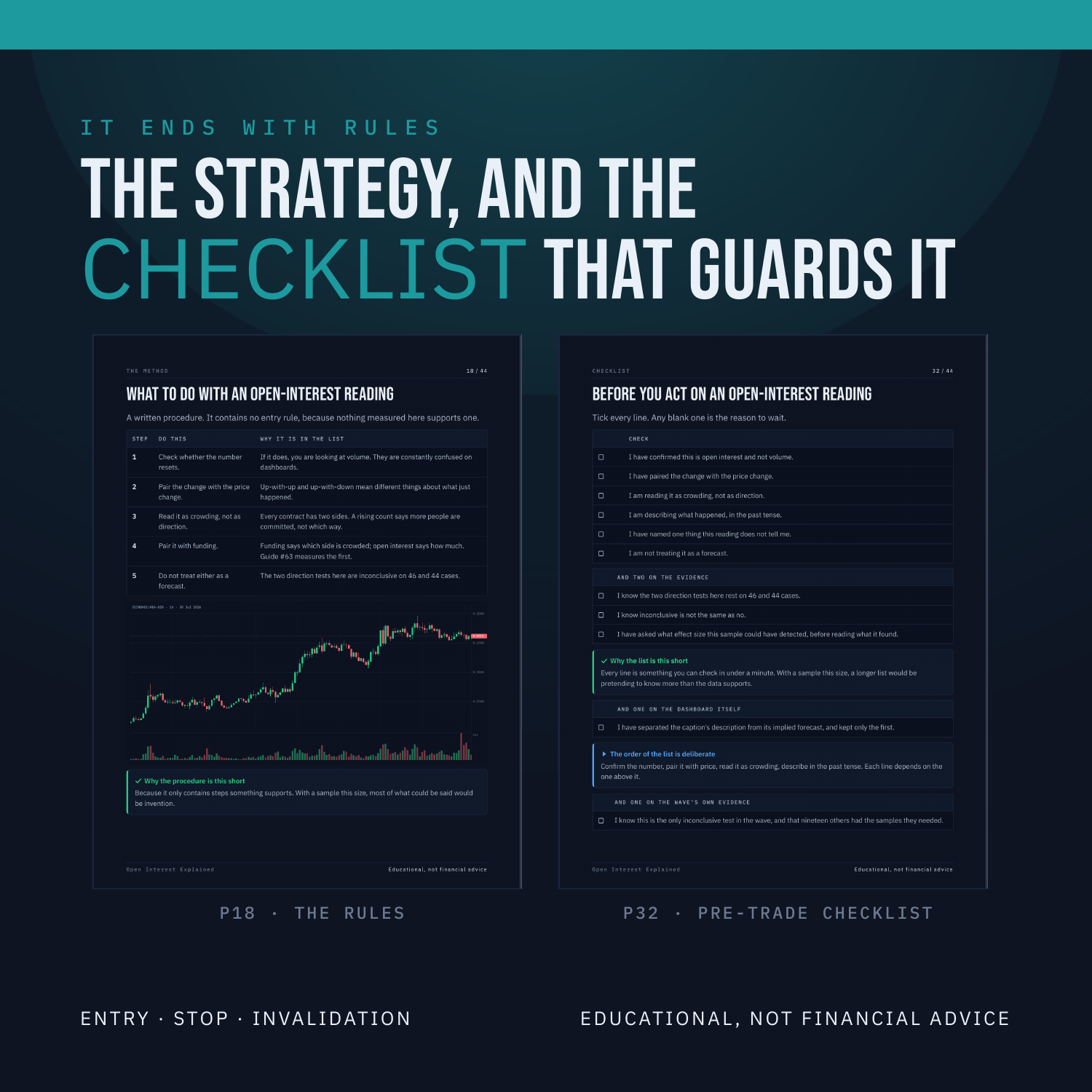
This guide explains exactly what open interest is, tests the two standard claims on the deepest free daily series available, and then does the thing almost nobody does: works out how large an effect that sample could have detected, and reports that the answer is larger than anything this wave has ever found. This is a 44-page PDF that teaches Open Interest from the first thing you see on the screen through to a written strategy with an entry, a stop and an explicit rule for when the trade is wrong.
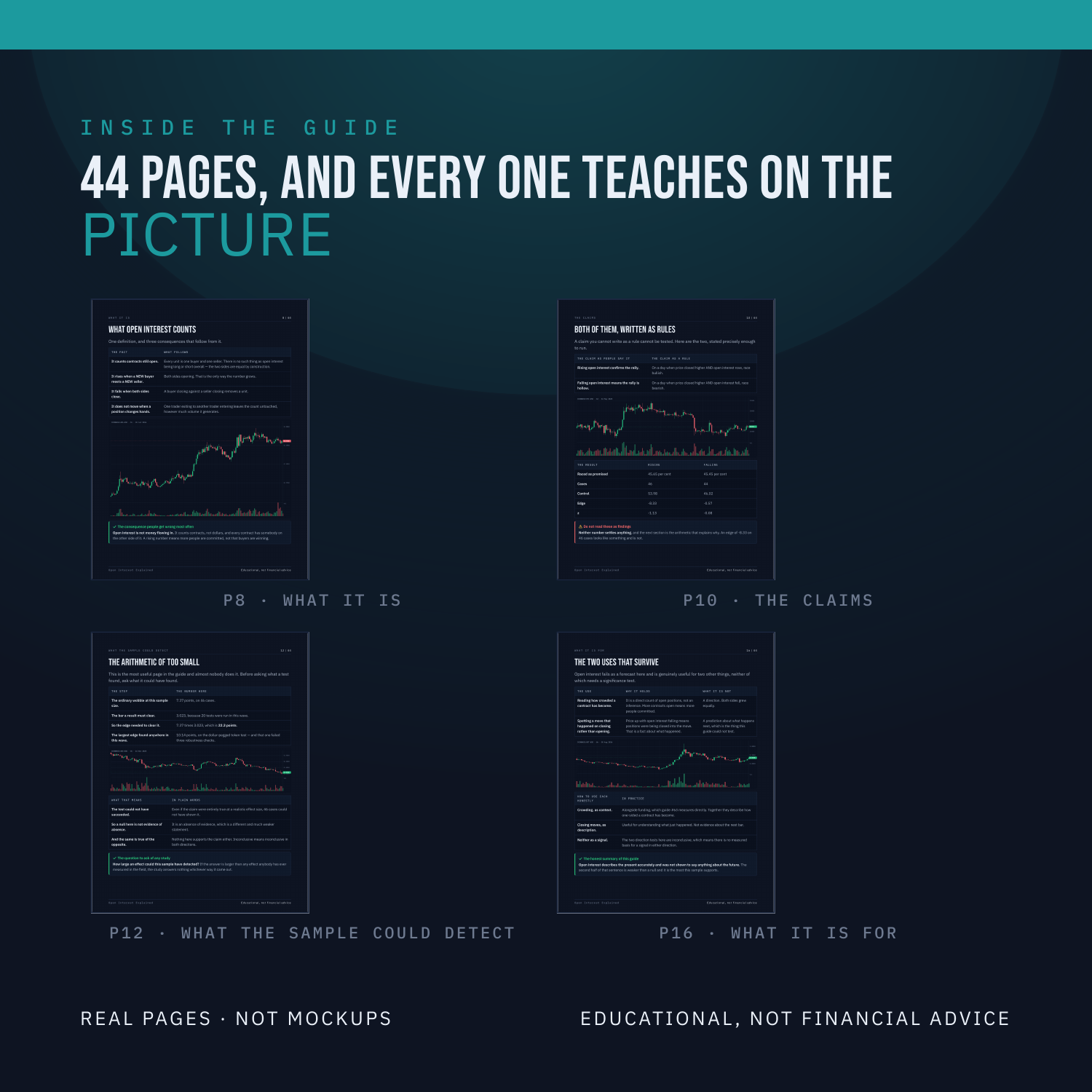
Nothing is taught underneath a chart. Every label sits on the candle, the line or the level it is describing, on real BTC, ETH, SOL and LINK charts. There are three quizzes on real charts, each followed by the same chart re-shown annotated with the reasoning, plus faded practice pages where the first steps are filled in and you finish the rest.
WHAT'S INSIDE
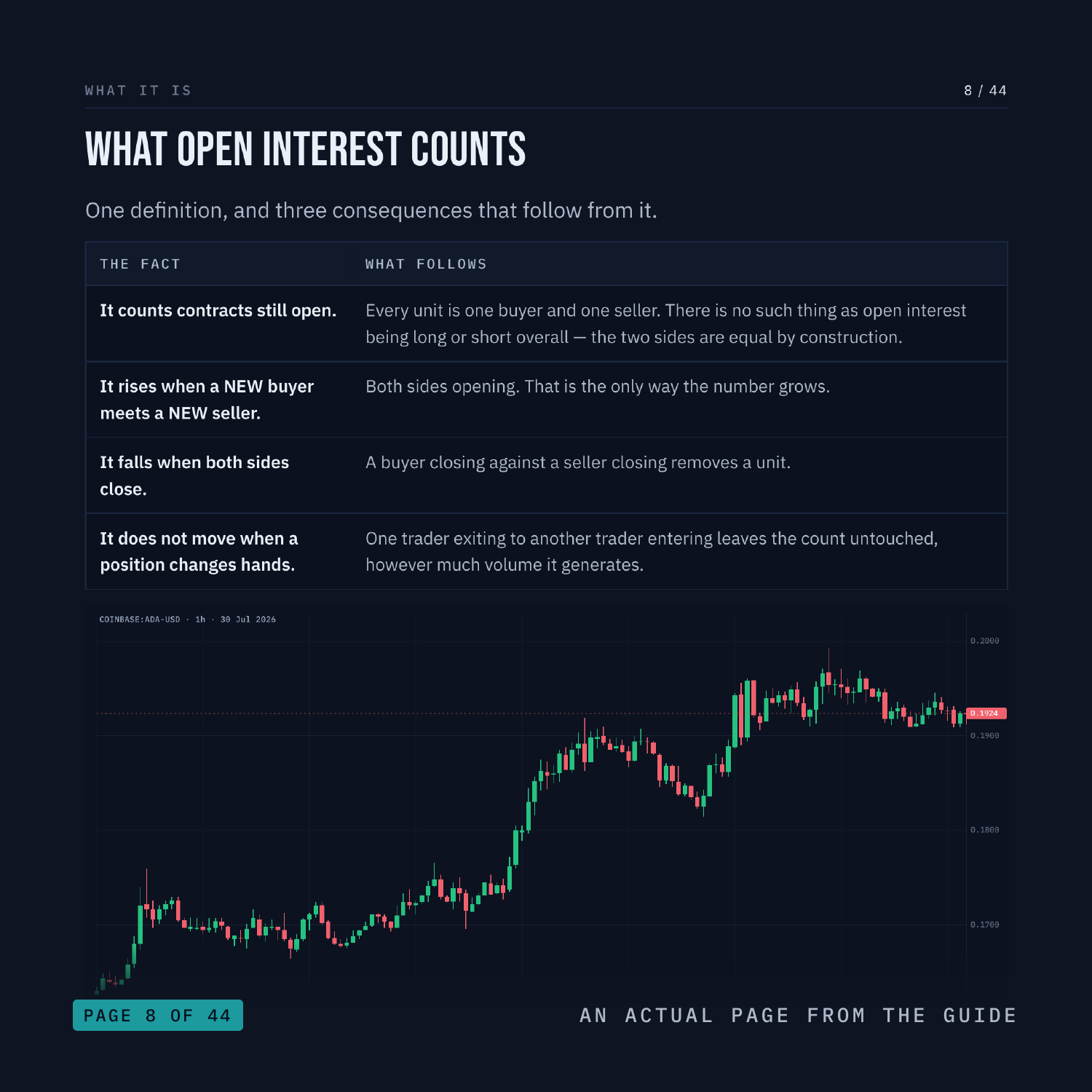
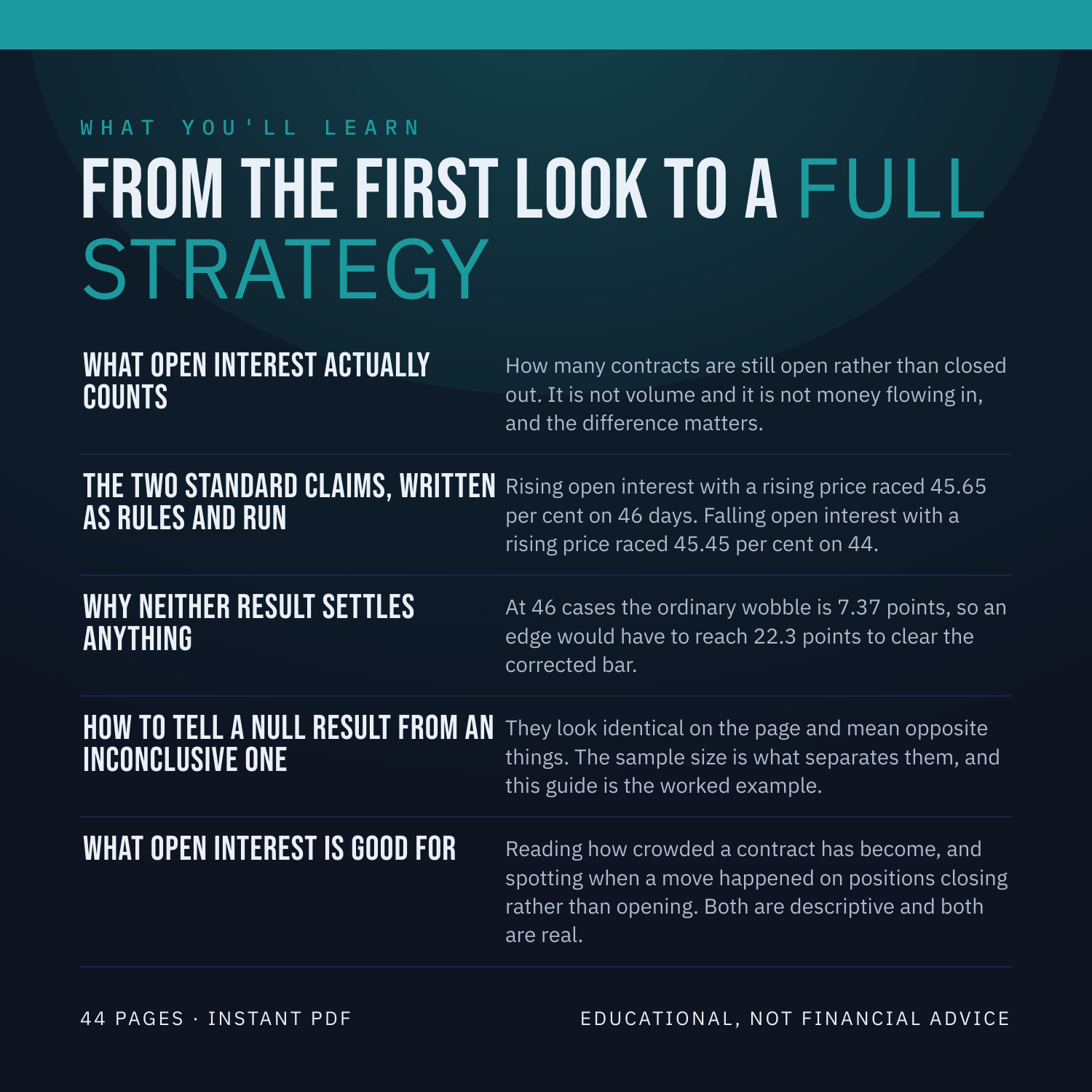
What open interest actually counts -- How many contracts are still open rather than closed out. It is not volume and it is not money flowing in, and the difference matters.
The two standard claims, written as rules and run -- Rising open interest with a rising price raced 45.65 per cent on 46 days. Falling open interest with a rising price raced 45.45 per cent on 44.
Why neither result settles anything -- At 46 cases the ordinary wobble is 7.37 points, so an edge would have to reach 22.3 points to clear the corrected bar.
How to tell a null result from an inconclusive one -- They look identical on the page and mean opposite things. The sample size is what separates them, and this guide is the worked example.
What open interest IS good for -- Reading how crowded a contract has become, and spotting when a move happened on positions closing rather than opening. Both are descriptive and both are real.
WHAT YOU'LL BE ABLE TO DO
Say what open interest counts and what it does not.
Tell open interest from volume without hesitating.
Work out how large an effect a given sample could detect.
Tell an inconclusive result from a genuine null.
Read any dashboard claim by asking how many days it rests on.
AN HONEST NOTE
Open Interest is a clue, not a crystal ball. It describes what price has already done. This guide contains no win-rates, no backtest results and no promises about what you will make, because nobody can verify those and you should not trust anyone who prints them. What it hands you instead is a set of rules you can test yourself on TradingView in an afternoon. Educational, not financial advice.
Instant download. 44 pages, PDF.