
WHAT IS AND WHAT IS NOT CHIROPRACTIC (PCC PRESS JOURNAL)
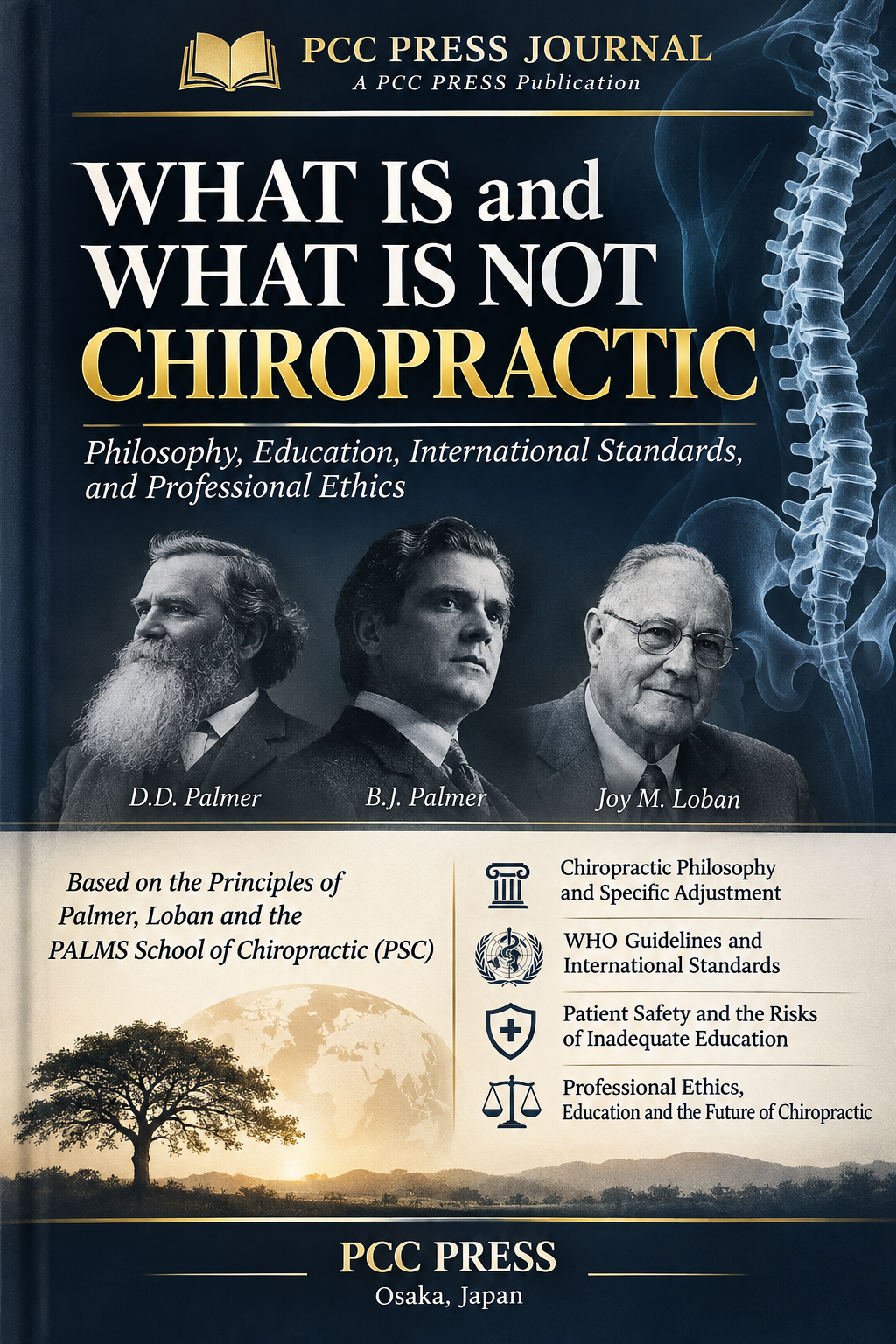
PCC PRESS JOURNAL
WHAT IS AND WHAT IS NOT CHIROPRACTIC
Philosophy, Education, International Standards, and Professional Ethics
Based on the Principles of D.D. Palmer, B.J. Palmer, Joy M. Loban, and PALMS School of Chiropractic (PSC)
What truly defines chiropractic? Is it the technique, the adjustment, the philosophy, or the education and clinical judgment behind it?
Chiropractic is not simply the act of manipulating the spine. A spinal thrust does not automatically become a chiropractic adjustment merely because someone calls it one.
In recent years, spinal manipulation techniques have increasingly been taught through short seminars, unverified institutions, and individuals whose professional qualifications and educational backgrounds may be difficult to establish.
This raises serious questions about patient safety, professional responsibility, and the future of chiropractic education.
A technique can be imitated. Clinical judgment cannot be acquired in a weekend.
In this edition of the PCC PRESS Journal, we examine the historical foundations of chiropractic through Palmer and Loban, the philosophy and ethics of PSC, and the modern educational and safety principles described by the World Health Organization (WHO) and international chiropractic organizations.
We also discuss the potential dangers of spinal manipulation performed without adequate education in anatomy, neurology, pathology, contraindications, differential diagnosis, and patient safety.
Professional recognition should never become a tool for monopoly or institutional ego. At the same time, freedom of education must never become an excuse for inadequate training or misleading qualifications.
We oppose professional monopolization, but we equally oppose the commercialization of unsafe and insufficiently educated spinal manipulation.
At PALMS School of Chiropractic, our philosophy remains:
“Do the least to achieve the most.”
But doing less requires knowing more.
True professional responsibility begins not with knowing how to adjust, but with understanding where, why, when, and whether an adjustment is justified.
PCC PRESS — Osaka, Japan
Education Before Technique.
Clinical Judgment Before Adjustment.
Patient Safety Before Professional Ego.