
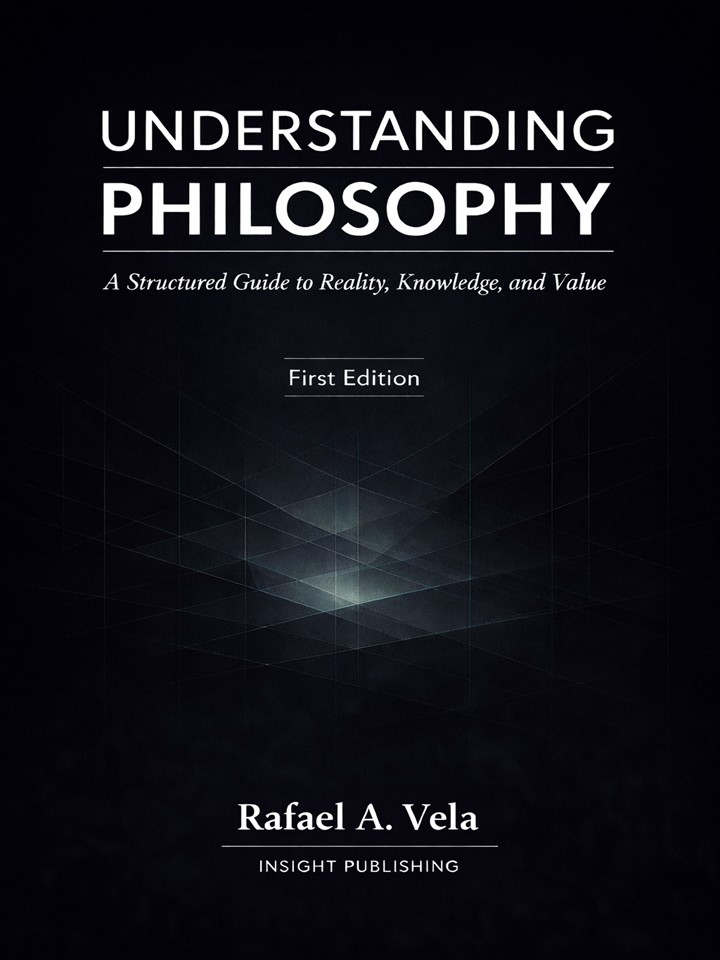
UNDERSTANDING PHILOSOPHY - A Structured Guide to Reality, Knowledge, and Value - First Edition
Philosophy is often presented as abstract, distant, or excessively academic. In reality, philosophy is the disciplined study of the questions that shape human understanding, judgment, meaning, and interpretation.
Understanding Philosophy offers a structured and accessible introduction to the foundations of philosophical thought.
The book explains the major branches of philosophy, the origins of structured inquiry, and the philosophical positions that continue to influence how people think about reality, truth, identity, ethics, and knowledge.
Rather than overwhelming the reader with technical language, the book focuses on clarity, structure, and practical understanding. It connects philosophy to everyday thinking, decision-making, interpretation, and personal reflection, making complex ideas approachable without oversimplifying them.
Inside the book:
- What philosophy is and why it matters
- The origins of philosophical inquiry and structured thought
- Metaphysics, epistemology, axiology, and logic explained clearly
- Existentialism, absurdism, meaning, truth, and identity
- How philosophical thinking shapes interpretation and judgment
- Practical ways to think more philosophically in daily life
- Appendices with key terms, philosophers, logical fallacies, and reflection questions
This book is designed for readers who want a serious yet approachable introduction to philosophy, whether they are completely new to the subject or looking to organize and deepen their understanding of philosophical thought.
Table of contents
PART I — ENTERING PHILOSOPHY
Chapter 1 — What Philosophy Is - 19
Chapter 2 — Why Philosophy Matters - 23
Chapter 3 — The Nature of Philosophical Questions - 27
PART II — THE ORIGINS OF STRUCTURED THOUGHT
Chapter 4 — From Explanation to Inquiry - 35
Chapter 5 — The First Systems of Thought - 43
PART III — THE CORE QUESTIONS OF PHILOSOPHY
Chapter 6 — Metaphysics: What Is Real - 51
Chapter 7 — Epistemology: What Can Be Known - 57
Chapter 8 — Axiology: What Has Value - 63
- Ethics: What Is Right - 65
- Aesthetics: What Is Worth Appreciating - 68
- The Structure of Value - 71
Chapter 9 — Logic: How Thinking Holds Together - 75
PART IV — PHILOSOPHICAL POSITIONS ON REALITY, TRUTH, AND MEANING
Chapter 10 — Meaning and the Human Condition - 83
- The Human Need for Meaning - 85
- Existentialism and the Burden of Freedom - 86
- Absurdism and the Silence of the World – 88
- Expectation and Reality – 90
- Meaning Without Evasion - 91
Chapter 11 — Essence and Identity - 93
Chapter 12 — Truth and Perspective - 99
Chapter 13 — Philosophy as Practice - 105
PART V — THE DISCIPLINE OF THINKING
Chapter 14 — How to Think Philosophically - 113
Chapter 15 — Applying Philosophy - 119
Conclusion — A System, Not a Collection - 125
Appendices
- Appendix A — Key Terms - 131
- Appendix B — Philosophers in Context - 139
- Appendix C — Logical Fallacies - 147
- Appendix D — Questions for Reflection - 153