
Low Energy Worksheets
Low-Energy Days: Teen Worksheets for Overwhelm, Exhaustion & Getting Through Hard Days
Some days, teens simply do not have their usual amount of energy to give. Everything can feel harder, from getting started on schoolwork to answering a text, taking care of themselves, or figuring out what they need.
Low-Energy Days is a practical, teen-friendly worksheet set designed to help students slow things down, understand what kind of “tired” they are experiencing, reduce expectations without giving up completely, and choose realistic ways to care for themselves and get through the day.
Instead of telling teens to “just get motivated” or handing them another list of coping skills, these activities help them answer a much more useful question:
“Given the energy I have today, what would actually help?”
What’s Included
1. What Kind of Tired Is This?
Helps teens look beyond “I’m tired” and identify what may be contributing to their low energy, including mental, emotional, physical, social, and sensory exhaustion.
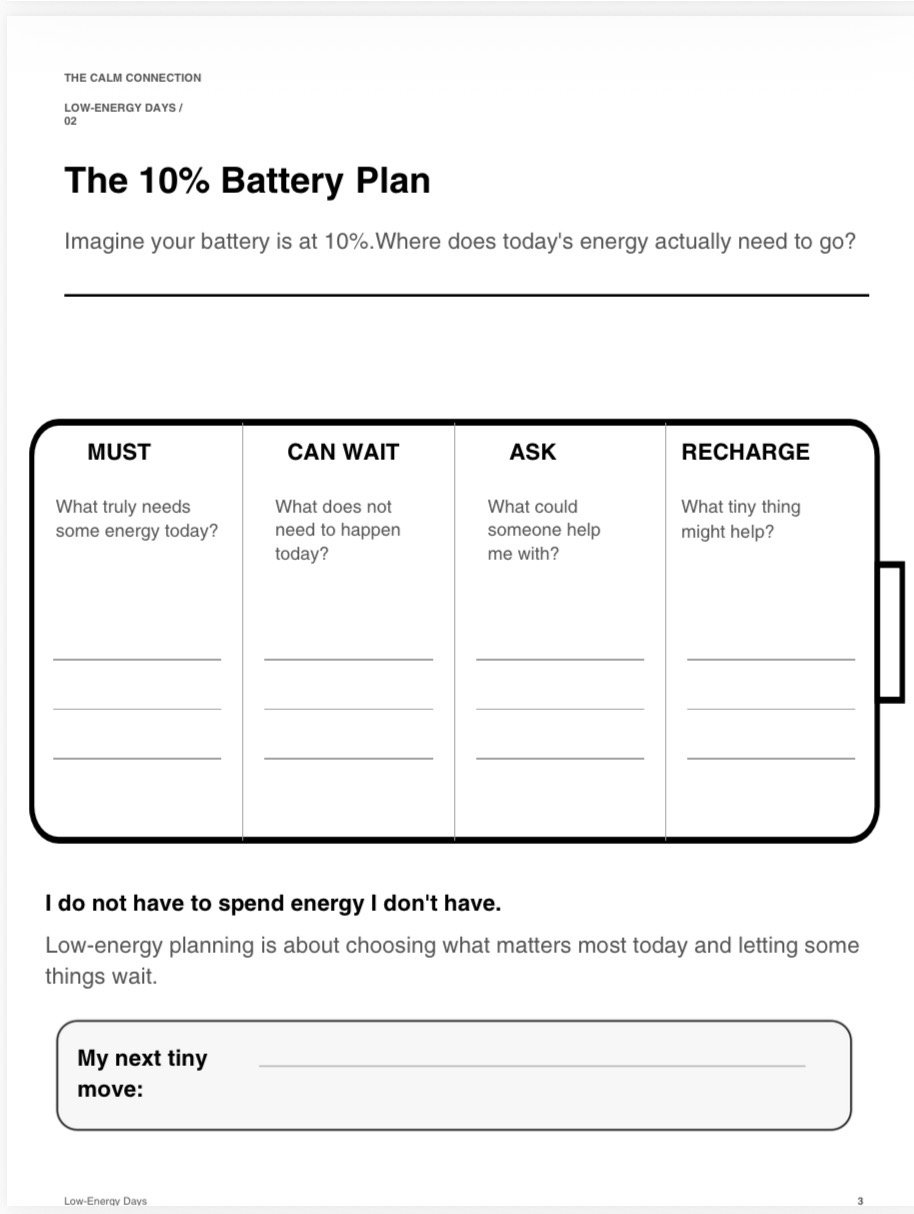
2. The 10% Battery Plan
For the days when students feel like their battery is almost empty. Teens identify what absolutely needs their energy, what can be made easier, what can wait, and what might help them recharge.
3. Make It Smaller
Helps students break overwhelming responsibilities into smaller, more manageable starting points. Great for those moments when a task feels so big that doing nothing starts to feel easier than beginning.
4. My Low-Energy Coping Menu
Students create their own realistic menu of coping options for low-energy days instead of relying on generic strategies that may not fit what they actually need.
5. Rest, Avoidance, or Shutdown?
Helps teens explore what is happening underneath the urge to stop, withdraw, or put something off without shaming them for needing rest. Students can consider whether they genuinely need recovery, something feels hard to face, or they are becoming overwhelmed and shutting down.
6. Just Get Through Today
A simple plan for the especially difficult days. Students identify what matters most right now, what they can let go of temporarily, what their body needs, who they can reach out to, and what “enough” can look like today.
Facilitator Guide Included
Provides guidance for school social workers, counselors, therapists, and other helping professionals on using the activities in a supportive, strengths-based way.
Perfect For
This resource can be used with middle and high school students in individual counseling, school social work, therapy, small groups, SEL support, check-ins, coping-skills work, executive-functioning support, or as part of a student coping toolkit.
The worksheets are especially useful for teens experiencing periods of overwhelm, school stress, emotional exhaustion, difficulty initiating tasks, low motivation, shutdown, or simply those “I have nothing left today” kinds of days.
Why I Created This Resource
Low energy does not always mean a student is lazy, unmotivated, or unwilling.
Sometimes the student sitting in front of us is working with a 10% battery while everyone around them is expecting 100% output.
These worksheets help shift the conversation away from:
“Why aren’t you doing more?”
and toward:
“What is taking your energy, what do you need, and what is one manageable thing you can do from here?”
The goal isn’t to eliminate expectations or teach students to avoid difficult things. It’s to help them develop self-awareness, flexible problem-solving, realistic coping strategies, and a healthier way to respond when their capacity is lower than usual.
Resource Details
Format: Printable PDF
Includes: 6 teen worksheets + facilitator guidance
Style: Clean, black-and-white, printer-friendly design created with teens in mind
Use: Individual sessions, small groups, school counseling/social work, therapy, or student support
Please Note: This is a digital download. No physical product will be shipped. This resource is intended for educational and supportive purposes and is not a substitute for individualized mental health assessment, diagnosis, or treatment. If a young person is experiencing persistent or significant changes in energy, functioning, mood, or safety, additional assessment and support may be appropriate.