
SCIENTIFIC HYPOTHESIS MECHANISM OF BENIGN TUMOR FORMATION THROUGH SELECTIVE CLOSURE OF A DELETED DNA FRAGMENT FOLLOWING RADIATION DAMAGE
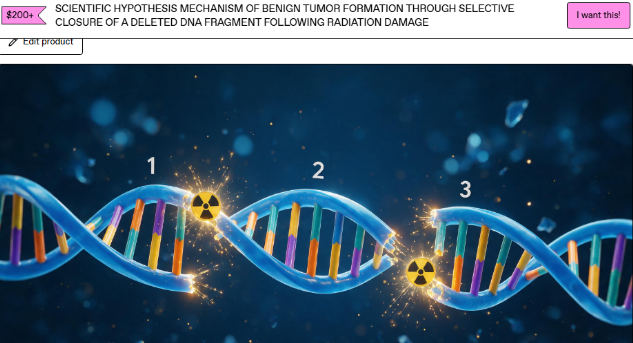
The proposed hypothesis describes a novel mechanism of benign tumor formation based on the action of ionizing radiation on double-stranded DNA [1,2]. According to the hypothesis, radiation induces two breaks in each DNA strand, resulting in the formation of three fragments [3]. The first and third fragments join together, restoring DNA with deletion of the middle segment [4]. The middle (second) fragment, lacking a complementary partner, closes upon itself, forming a separate circular structure [5]. This structure does not integrate into the main DNA, does not receive proliferation signals, and does not exhibit aggressive properties, consistent with the phenotype of a benign tumor [6]. The hypothesis synthesizes the positions of classical theories of carcinogenesis (Pierce, Foulds, Klein, Farber, Nowell) and proposes a new model explaining the origin of benign neoplasms without progression to malignancy [7,8,9,10,11,12].