

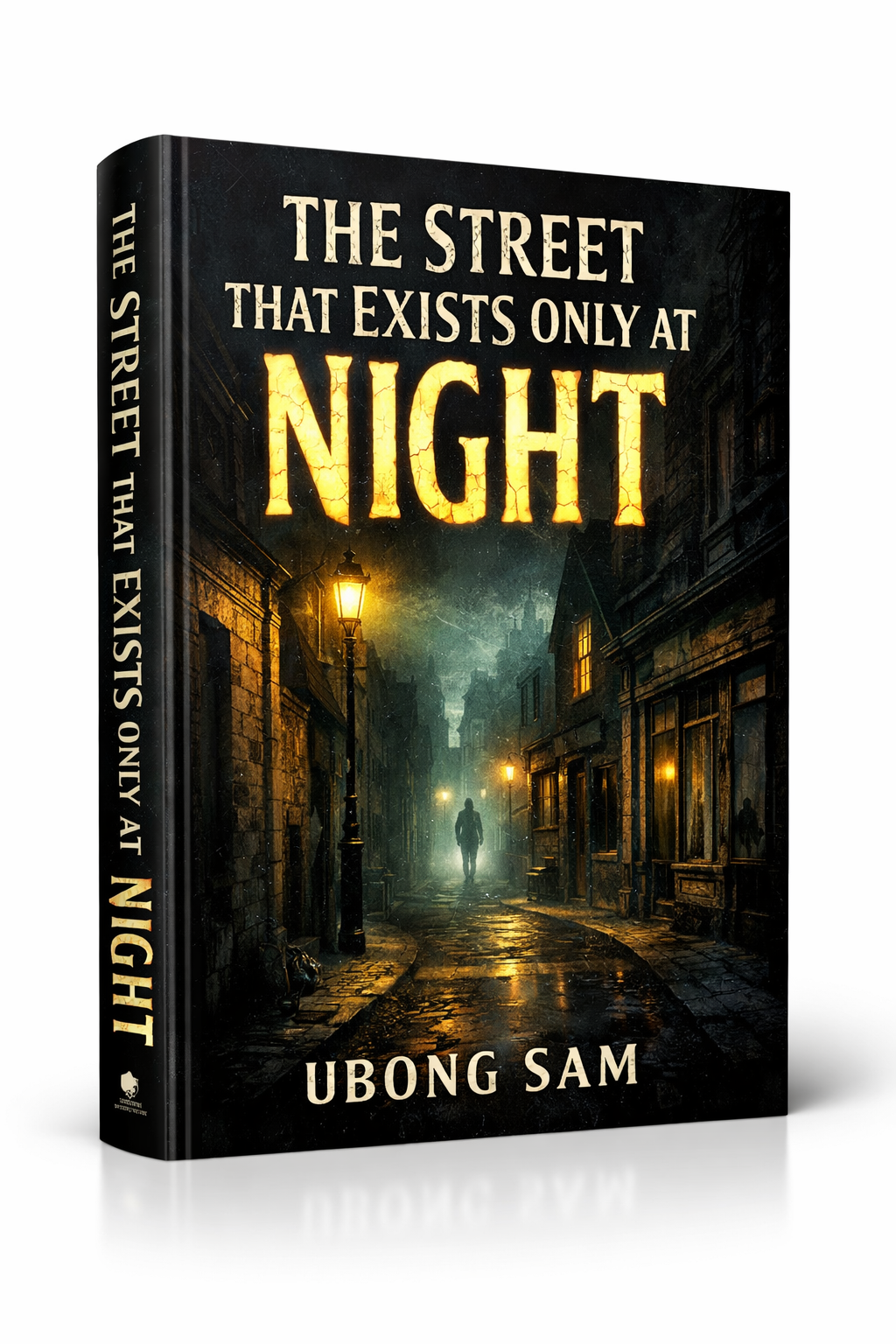
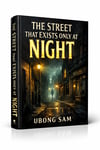

The Street That Exists Only At Night
The Street That Exists Only at Night
Some grief is so heavy it opens doors that shouldn't exist.
Every night, between two ordinary buildings on an ordinary city street, something impossible appears.
A stone road. Seven amber lamps burning without a source. Buildings pulled from times and places that have no business sharing the same geography. And at the far end — warm, specific, unbearably familiar — a light that carries the exact frequency of the person you lost. The person you never finished with. The person whose number you still haven't deleted from your phone.
The street doesn't appear for everyone.
Only for people who are carrying the right kind of wound.
Eliot Voss is a photographer who knows how to look at things. What he hasn't been able to look at, for two years, is the last phone call with his brother — the one that ended badly, the one he ended, the one that was supposed to be followed by another call that never came. When Eliot moves to Aldermast Street and the gap between buildings forty-one and forty-three begins to glow at three in the morning, he tells himself he is imagining it.
He is not imagining it.
And the street has been waiting for him for a very long time.
The Street That Exists Only at Night is a masterfully crafted supernatural horror novel that cuts to the heart of the one fear we rarely name: not death, not darkness, but the things we left unsaid to the people we loved most — and what happens when something ancient and hungry learns to use that silence against us.
As Eliot makes his way deeper into the impossible street — guided by a grief-stricken researcher who has been mapping its appearances for eight months, a haunted former paramedic with a laminated list of survival rules, and a woman who has been watching the gap every night for twenty-two years and has never once crossed — he begins to understand the terrible precision of what he is dealing with.
The street is not a ghost.
It is not a curse.
It is not waiting to destroy him.
It is waiting to complete him.
And completion, here, is the most dangerous thing of all.
Perfect for readers of Mexican Gothic, The Haunting of Hill House, Plain Bad Heroines and The Remains of the Day — a novel that operates at the exact intersection of literary fiction and supernatural horror, where the most frightening thing is not the monster but the mirror.
What would you risk to say the thing you should have said?
What would you give to hear the answer?
What is already waiting, patient and amber-lit, for the night you finally decide to find out?
The street knows your inventory.
It has been building your door for years.
All it needs now is for you to look.