
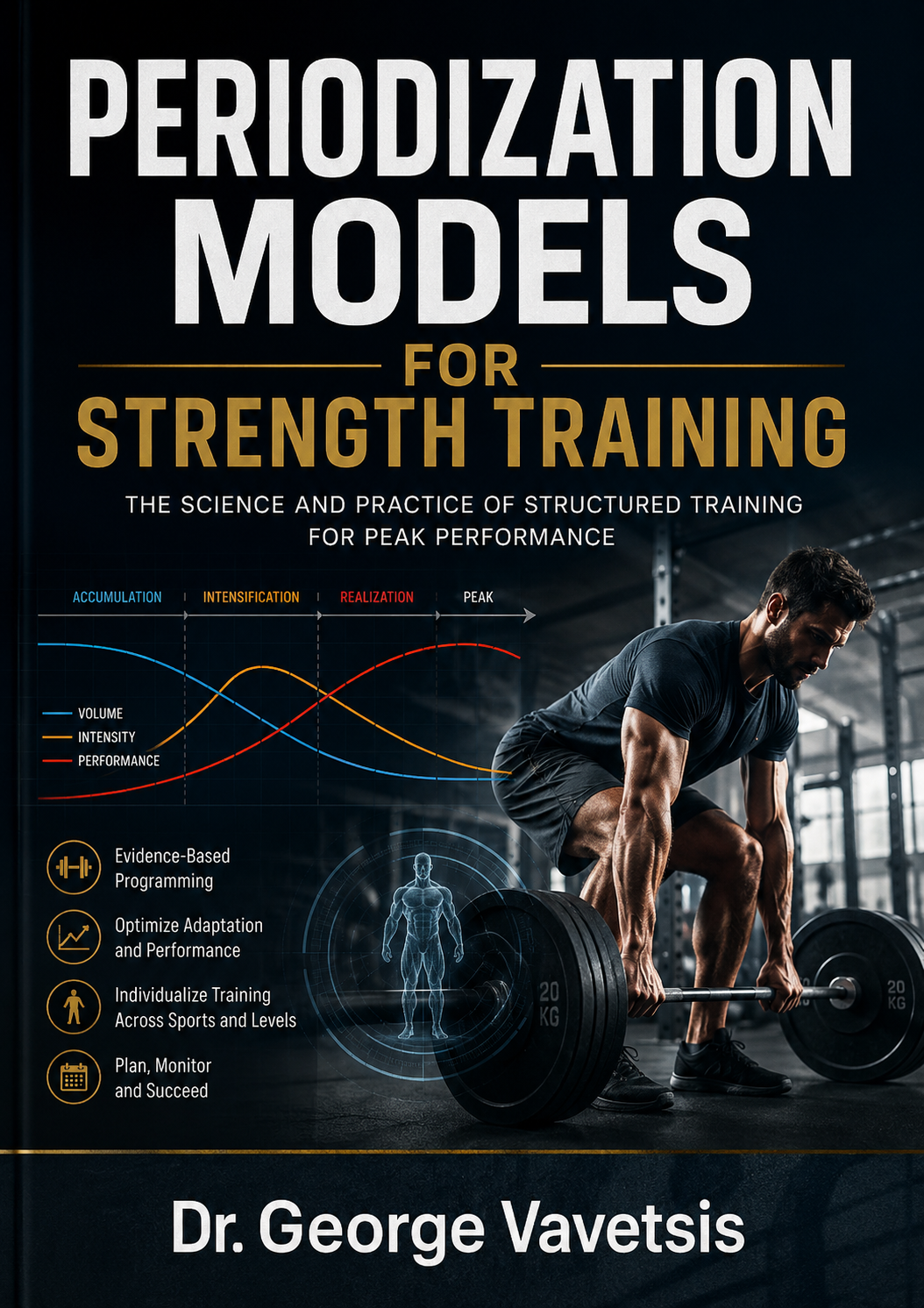
Periodization Models for Strength Training
Pages: 1488
Periodization remains one of the most influential and enduring concepts in the science and practice of strength training. From the earliest attempts to organize training loads across a competitive season to the sophisticated adaptive systems used by contemporary high-performance practitioners, periodization has evolved into a multidisciplinary framework that integrates physiology, biomechanics, motor learning, performance analytics, recovery science, and strategic decision-making. This book was written to provide a comprehensive and systematic examination of the models, principles, and applications that govern periodized strength development across the entire athletic lifespan.
The foundation of this text is built upon the understanding that strength is not merely a physical quality. Strength is a dynamic biological expression influenced by structural, neural, hormonal, metabolic, psychological, and environmental factors. Consequently, the process of developing strength cannot be reduced to the simple manipulation of sets, repetitions, and loading percentages. Effective strength development requires a carefully orchestrated interaction between stress and recovery, adaptation and fatigue, overload and restoration, progression and preservation. The central purpose of periodization is to manage these interactions in a manner that maximizes long-term adaptation while minimizing the risks associated with stagnation, maladaptation, injury, and performance decline.
Historically, traditional linear periodization established the foundation for organized strength planning by gradually shifting training emphasis from high-volume, lower-intensity work toward lower-volume, higher-intensity loading. This model provided coaches with a logical framework for preparing athletes for specific performance peaks and remains highly relevant today. However, modern sport presents challenges that extend beyond the assumptions of traditional planning. Congested competition calendars, multiple peak requirements, frequent travel, increasing athlete workloads, and the integration of advanced monitoring technologies have necessitated the development of more sophisticated periodization strategies. As a result, contemporary strength and conditioning professionals must understand not only linear periodization, but also undulating, block, conjugate, flexible, autoregulatory, velocity-based, and complex adaptive periodization systems.
Throughout this book, periodization is approached not as a rigid template but as a decision-making process. The emphasis is placed on understanding why a specific training intervention should be applied, when it should be implemented, how it should be progressed, and under what circumstances it should be modified. Rather than presenting periodization as a collection of fixed programs, this text seeks to develop the reader’s ability to think critically about training organization. The ultimate objective is to equip coaches, sport scientists, researchers, and performance practitioners with the analytical tools required to design individualized and context-specific training systems.
A defining feature of modern strength training is the increasing availability of monitoring technologies. Force plates, velocity-based training devices, heart rate variability systems, hormonal assessments, workload analytics, neuromuscular profiling, and machine-learning approaches now allow practitioners to observe adaptation with unprecedented precision. These technologies have transformed the role of periodization from a purely predictive model into a responsive management system. Consequently, this book places considerable emphasis on the integration of monitoring data into periodization decisions, enabling practitioners to bridge the gap between theoretical planning and real-world athlete management. The concepts of readiness, fatigue, adaptive reserve, residual training effects, and performance forecasting are explored extensively as mechanisms through which training can be continuously optimized.
Another important theme of this text is the recognition that athletic performance emerges from complex adaptive systems. Human adaptation is rarely linear, predictable, or identical across individuals. Two athletes exposed to the same training stimulus may exhibit substantially different responses due to differences in genetics, training age, recovery capacity, injury history, psychological resilience, and environmental stressors. Therefore, modern periodization must embrace uncertainty and variability rather than attempting to eliminate them. The most effective periodization systems are those that balance long-term structure with short-term flexibility, providing both direction and adaptability within the training process.
This book also acknowledges the evolving role of the strength and conditioning coach. Today’s practitioner is expected to function as a strategist, scientist, educator, communicator, and performance manager. Success is determined not only by technical knowledge but also by the ability to coordinate multiple stakeholders, interpret complex data streams, manage athlete wellness, and make informed decisions under constantly changing conditions. Periodization serves as the operational framework through which these responsibilities are integrated into a coherent performance system.
The material presented throughout this text is intended for a wide audience, including strength and conditioning coaches, sport scientists, performance directors, exercise physiologists, researchers, graduate students, and advanced practitioners working within high-performance environments. While the scientific foundations of periodization are explored in depth, equal emphasis is placed on practical application. The goal is to provide a resource that can be utilized both as an academic reference and as a field-based coaching guide.
Ultimately, periodization is not simply about organizing training. It is about managing human adaptation over time. It is the art and science of guiding athletes through cycles of challenge and recovery in pursuit of their highest potential. Whether working with novice athletes, developing performers, elite professionals, or world-class competitors, the principles contained within this book are intended to support evidence-based decision-making and the pursuit of sustainable excellence.
As the chapters that follow demonstrate, periodization is far more than a collection of programming models. It is a philosophy of long-term athletic development, a framework for performance optimization, and a strategic methodology for transforming training into competitive success.