Fake Debt Collector Scams
A frightening call. An unfamiliar debt. A demand to pay immediately—or face arrest, a lawsuit, wage garnishment, or public embarrassment.
Is the debt legitimate, or is someone trying to scare you into sending money?
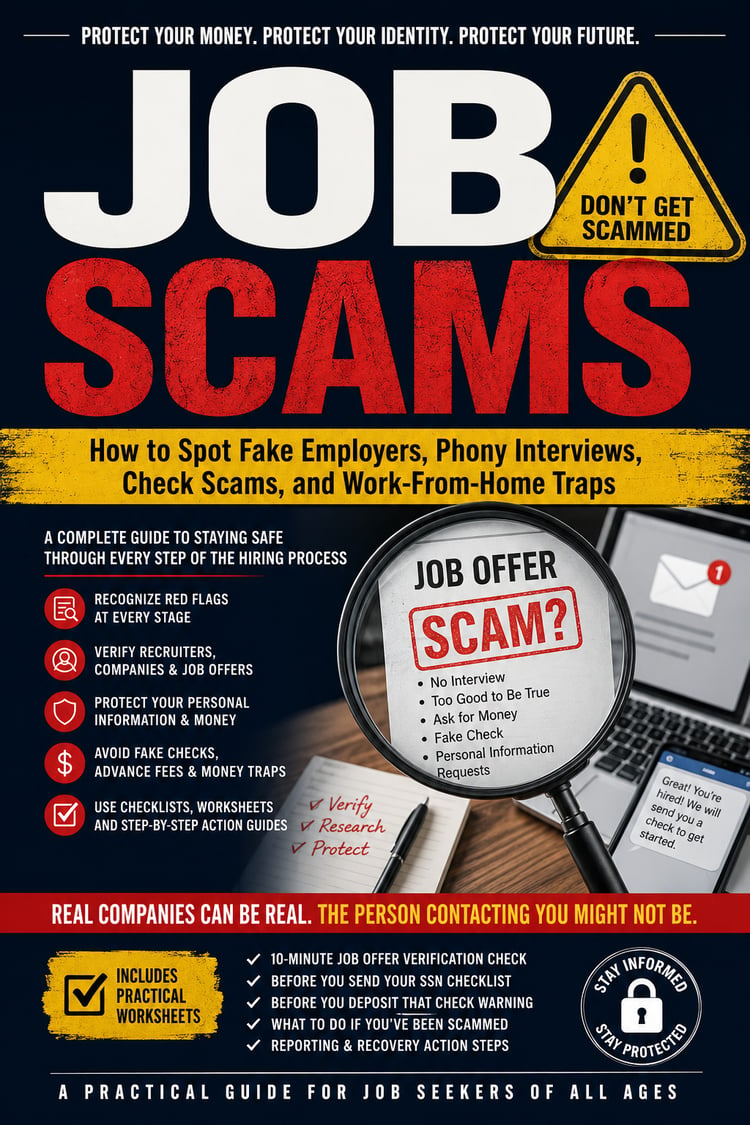
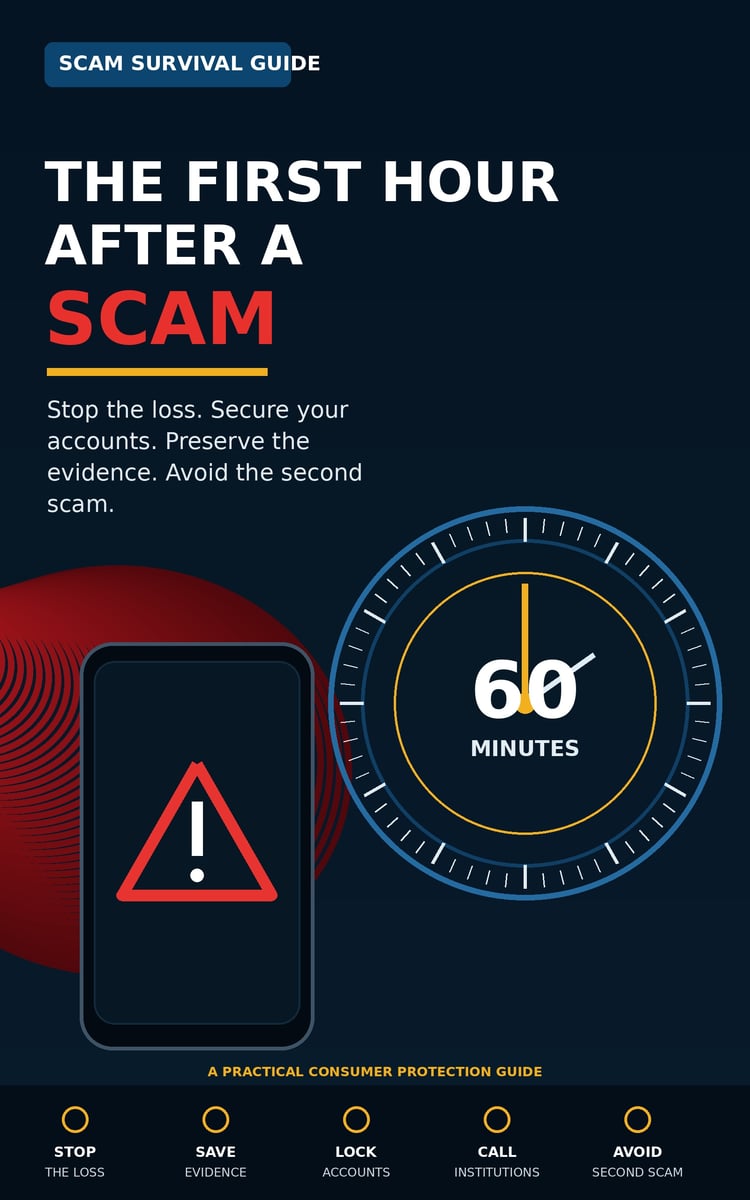
Fake Debt Collector Scams explains how to slow down the pressure, protect your personal information, and verify both the collector and the debt before making a decision.
Inside this practical guide, you’ll learn:
• The warning signs of a fake debt collector
• What legitimate debt-validation information should contain
• How to verify a collection company independently
• How to investigate a debt without admitting that you owe it
• Why paying even a small amount on an old debt can create problems
• How to distinguish a real lawsuit from an empty or fraudulent threat
• What to obtain in writing before making a payment
• How to dispute an inaccurate or unfamiliar debt
• What to do if you already paid a scammer
• How to document harassment, threats, and suspicious collection activity
You’ll also receive ready-to-use telephone scripts, sample dispute letters, verification worksheets, an incoming-contact log, a one-page response plan, and a family protection card.
A real debt does not automatically make every caller legitimate. A professional voice, case number, official-looking notice, or knowledge of your personal information is not proof.
Before you pay, verify.