
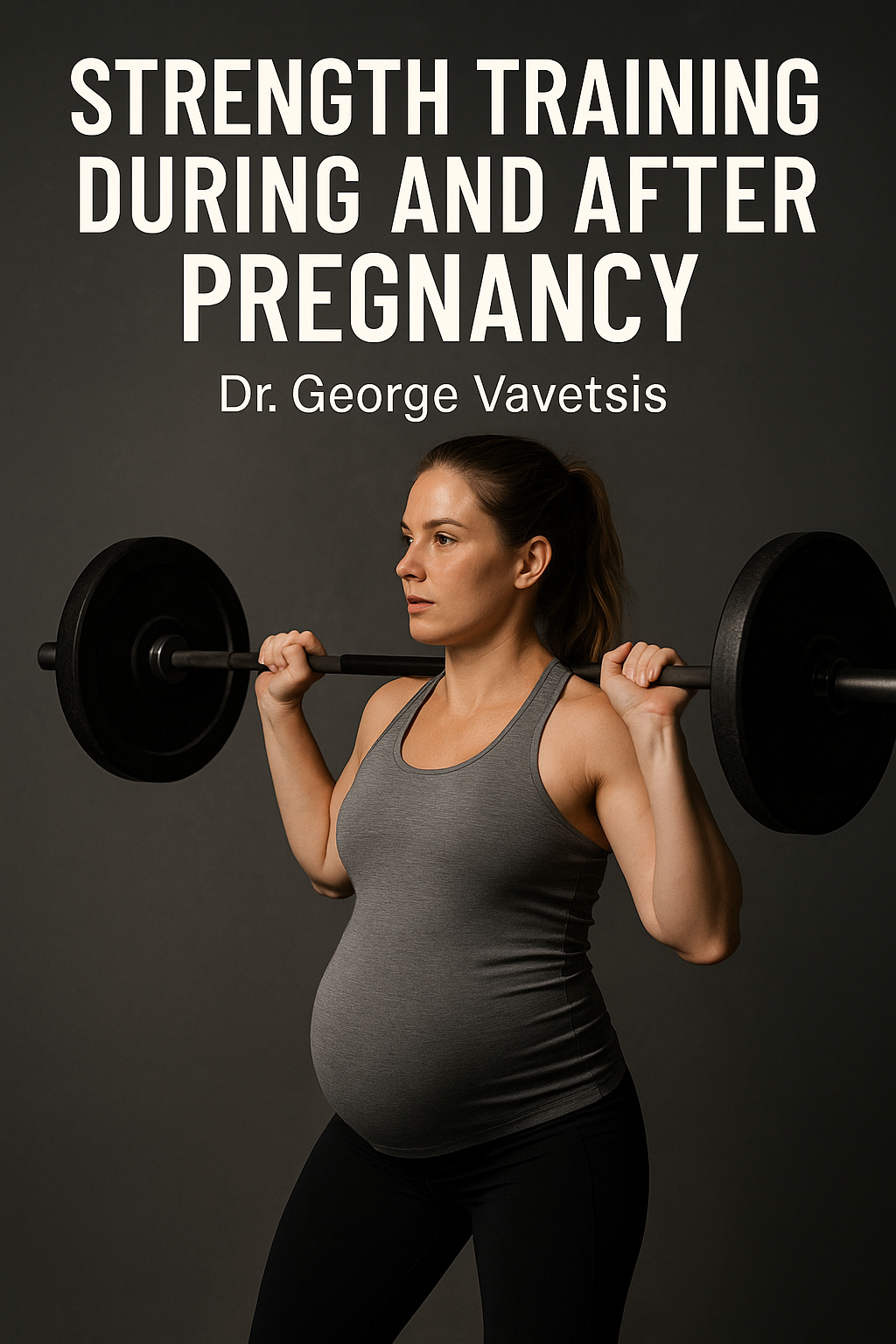
Strength Training During and After Pregnancy
Pages: 395
Pregnancy represents one of the most remarkable periods of human physiology—an era of profound hormonal, biomechanical, metabolic, and neuropsychological transformation. These changes, while essential for fetal development and childbirth, also create shifting demands for the mother’s musculoskeletal structure, respiratory mechanics, performance capacity, and overall health. Despite the long-standing belief that physical training must be minimized or avoided during pregnancy, scientific evidence over the last two decades has reversed this paradigm. Today, prenatal and postpartum athletes are encouraged to remain active, build strength, and prepare their bodies to meet the demands of gestation, delivery, and motherhood. The objective is not simply “safe exercise,” but strategic performance—maximizing health, movement quality, and physical autonomy.
Women today are not passive participants in maternity—they are high-performance humans. They are professional athletes continuing competitive careers, military personnel returning to active duty, first responders, recreational sport enthusiasts, and mothers who want to carry, lift, run, and live powerfully. The notion of “training as tolerated” is replaced by informed, progressive training—anchored in clinical governance, load monitoring, and individualized biomechanics. Pregnancy does not weaken identity; it expands it.
Strength training acts as a cornerstone in this process. From neuromuscular stability of the pelvic girdle to thoracic expansion for optimized breathing, from tendon health under hormonal influence to postpartum load reintegration, resistance exercise is uniquely equipped to preserve capability and reduce risk. The mother’s changing needs across trimesters require flexible strategies to regulate intensity, maintain core synergy, prevent pelvic floor overload, and modulate tendon stress. Meanwhile, after childbirth, strength returns through carefully phased reconditioning—respecting tissue healing timelines, sleep deprivation effects, and shifts in energy availability.
This manual bridges sports science, medical practice, and coaching methodology, offering a structured blueprint that supports elite performance training while simultaneously protecting maternal and fetal wellbeing. Open communication between clinicians, coaches, and the pregnant athlete is emphasized throughout, empowering mothers to understand their body and make informed decisions. In this model, training becomes a collaborative process—not a compromise.
A key theme embedded in each chapter is adaptability. No two pregnancies are biologically identical. Hormone-driven fatigue, hemodynamic load, balance changes, and psychological response vary greatly between women and even between pregnancies of the same woman. Daily readiness screening may supersede rigid planning. Exercise regressions are viewed not as limitations, but as intelligent athletic choices within the current physiological state.
Furthermore, this book highlights performance protection. De-training risks rise rapidly without mechanical stress. The return-to-strength period is not merely recovery—it is the re-establishment of athletic identity. Progression criteria for running, jumping, and return to sport are designed with biomechanical integrity and pelvic floor resilience in mind.
This comprehensive resource includes:
✔ Trimester-specific strength and movement frameworks
✔ Anti-Valsalva breathing strategies and intra-abdominal pressure management
✔ Load monitoring using RPE, HR, and Velocity-Based Training (VBT) principles
✔ Tendon stiffness adaptation and plyometric timing considerations
✔ Postpartum scar care, pelvic floor re-education, and functional progression
✔ Programming templates for elite and recreational athletes
✔ Ethical communication guidance and psychological support strategies
✔ Multidisciplinary integration with obstetric and women’s health professionals
Every recommendation is rooted in current scientific evidence and shaped through applied coaching experience. The goal is to elevate standards—transforming prenatal and postpartum training from a cautious afterthought into a domain of performance excellence.
To the athlete-mother reading this: your strength is not something to be lost and later reclaimed. It is something that evolves. Strength adapts to protect life, to carry increasing load, to survive delivery, and to lift the next generation into the world. The barbell, the kettlebell, the resistance band—these are tools that reinforce the fundamental truth that motherhood itself is an athletic event.
To the strength and conditioning coach: you are part of this transformation. This book equips you with the scientific precision, clinical understanding, and coaching sophistication required to serve this population responsibly. The pregnant athlete is not fragile—only misinformed programming is. Train her with purpose, respect her physiology, and recognize that your role extends beyond physical outcomes.
To the medical professional: your guidance remains the foundation for safety. This manual serves to complement clinical care with practical frameworks for load navigation, neuromuscular readiness, and movement competency. When aligned, the medical and performance environments can create a unified force that empowers mothers rather than restricts them.
We enter a new era—one where pregnancy is not a hiatus from performance, but a different pathway through it. This book stands as a testament to what women are capable of: not just sustaining life, but strengthening through it.