
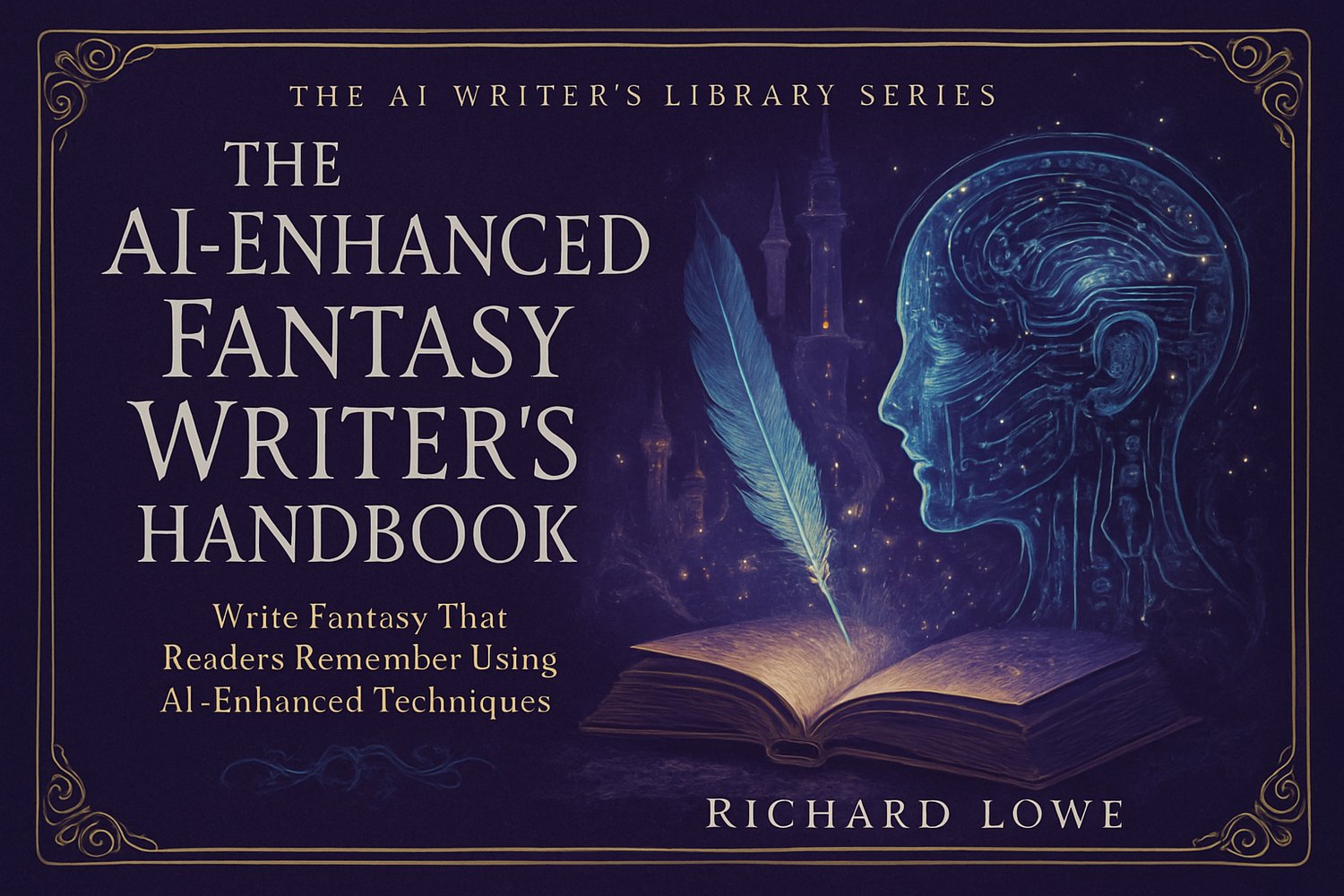
AI-Enhanced Fantasy Writer's Handbook
Write Fantasy That Illuminates Human Psychology
Readers devour fantasy for emotional truth wrapped in impossible circumstances. Tolkien didn't become timeless because of elaborate elvish linguistics. Le Guin didn't resonate across generations because of detailed magic rules. Pratchett didn't build a devoted following through world-building encyclopedias.
They used magical circumstances to illuminate human psychology. Their supernatural elements complicated character problems instead of solving them.
Most fantasy advice teaches the opposite. Build your magic system first. Create your world map. Develop your supernatural rules. Then sketch some characters to walk around in it.
That's backwards. And it's why your fantasy feels hollow despite spectacular magical elements.
Your world-building imagination isn't entertainment machinery for escapism addicts. It's a psychological laboratory for exploring how magical circumstances reveal universal human truths that contemporary fiction can't access.
World-Building First vs. Psychology First
Two approaches. Completely different results.
World-building first creates a magic system, then adds characters to use it. Psychology first establishes character psychology, then designs magic to complicate it. World-building first gives you a dragon that provides transportation or firepower. Psychology first creates a dragon bond that forces your character to confront fear of intimacy or loss. World-building first has a magic school that teaches cool spells. Psychology first uses the magic school to intensify adolescent identity struggles. World-building first lets prophecy drive plot forward. Psychology first makes prophecy a psychological prison the character must escape or accept. World-building first means readers skim to get back to character drama. Psychology first makes magic and character drama inseparable.
Tolkien's ring doesn't solve problems. It creates them. It externalizes the corrupting nature of power in a way that illuminates human psychology. Le Guin's magic in Earthsea has costs that force characters to confront consequences. Pratchett's Discworld uses absurdity to reveal truths about our world.
The handbook teaches you to build magic that works the same way.
33 Complete Prompt Sets
Not one-line starters. Full development frameworks with character psychology, AI collaboration techniques, and guidance for transforming premises into complete narratives.
Creatures and Beings covers dragons, demons, fairies, ghosts, mermaids, mythical creatures, vampires, werewolves, and zombies. Magic and Power covers magic systems, magic schools, magic tokens, illusion, fortune telling, shapeshifting, and immortality. Worlds and Travel covers magical lands, dream worlds, portals, fantasy travel, modern day earth with magic, and ordinary people in fantastic lands. Conflict and Adventure covers wars between species, warriors, pirates, dungeons, rescue, and magical invasions. Genre Blends covers crimes in fantasy worlds, mysteries with magical beings, gods and goddesses, humorous fantasy, and time travel.
Each set includes multiple story starters, character psychology frameworks, AI prompts for development, and guidance on avoiding common pitfalls for that element.
Built for Writers Who Use AI
AI can accelerate fantasy development. It can also generate the same tired chosen ones, convenient prophecies, and magic-as-solution plots that fill the genre.
The problem isn't the AI. It's what you're asking for. "Write me a fantasy story about dragons" produces generic fantasy. AI needs psychological frameworks, character complexity parameters, and instructions about how magic should complicate rather than solve.
The handbook shows you how to prompt AI for fantasy that serves character psychology. Research assistance for mythological authenticity. Consistency checking across complex magical systems. Brainstorming that generates fresh approaches instead of recycled tropes.
AI is your research assistant, not your creative authority.
What's Inside
The handbook covers what makes fantasy work, explaining the psychology-first approach that separates Tolkien and Le Guin from forgettable genre fiction. How to use AI to help write your fantasy book covers prompting techniques that generate psychological depth instead of generic spectacle. A full development walkthrough shows bringing prompts to life from premise to psychologically authentic story.
The 33 complete prompt sets each include multiple story starters, character psychology frameworks, and AI collaboration guidance. Sets cover crimes in fantasy worlds, demons, time travel, dream worlds, dragons, dungeons, fairies, fortune telling, ghosts, gods and goddesses, humorous fantasy, illusion, immortality, magic, magical invasions, magical lands, magic schools, magic tokens, mermaids, modern day earth with magic, mysteries with magical beings, mythical creatures, ordinary people in fantastic lands, pirates, portals, rescue, shapeshifting, fantasy travel, vampires, war between species, warriors, werewolves, and zombies.
From an Author With 113 Published Books
My ghostwriting clients have secured over $30 million in venture capital with books that use story to illuminate character psychology. My brain doesn't accept "just build an interesting world" as methodology. When I realized I'd been reading fantasy for decades without understanding why some magical stories resonated across generations while others felt like D&D campaign notes, I dug until I found the systems underneath.
I grew up on Tolkien, Le Guin, and Pratchett. Authors who understood that the best fantasy uses magical circumstances to illuminate timeless human truths. This handbook teaches you to write that way.
284 pages of psychology-first fantasy craft. 33 complete prompt sets. AI collaboration techniques. Development frameworks for every major fantasy element.
The world doesn't need more generic fantasy. It needs your authentic voice telling stories that use magical elements to explore themes that matter.