

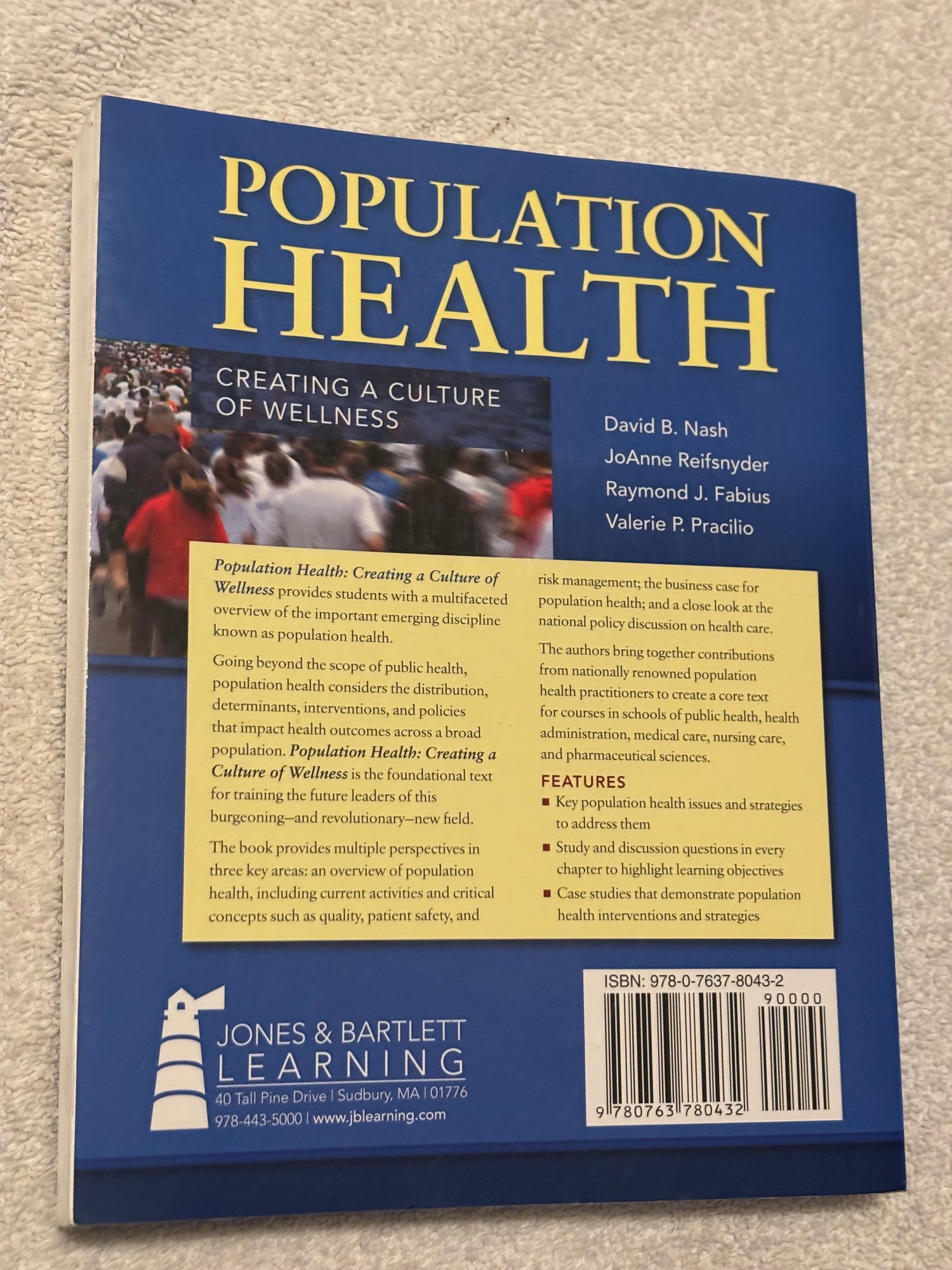

Population Health: Creating A Culture of Wellness
Population Health: Creating a Culture of Wellnessprovides a multifaceted overview of population health as a discipline, focusing on improving health outcomes and reducing costs and disparities through a shift from "sick care" to wellness and prevention. The book emphasizes that a true culture of health requires a comprehensive, forward-looking approach that goes beyond the traditional healthcare system to address the broad determinants of health.
Key Themes and Summary
The book covers several key areas essential for training future leaders in this field:
- Broad Scope of Population Health: It defines population health as the study of the distribution and determinants of health outcomes across a population, including interventions and policies that impact those outcomes.
- Focus on Wellness over Sickness: A central argument is the need to transition the healthcare system's focus from simply treating illness to promoting health and preventing disease.
- Social Determinants of Health: The text highlights the critical impact of non-medical factors like behavioral issues, social circumstances, education, and the physical environment on health outcomes.
- Business Case and Policy: It explores the business advantages for organizations that invest in employee wellness and examines national health policy discussions, including the impact of the Affordable Care Act and value-based payment models.
- Data and Analytics: The book underscores the importance of using data analytics to understand population health patterns, identify at-risk groups, and inform targeted, effective interventions.
- Creating a Culture of Health: It offers actionable strategies for organizations and communities to build environments, policies, and systems that make "the healthy choice the valued and easy choice". This includes a specific seven-step process for implementing organizational culture change.
- Collaboration: Successful population health requires collaboration across different sectors, including public health, local authorities, community groups, and the private sector, not just the clinical healthcare system.
The book serves as a foundational text for professionals and students across various health disciplines, offering both educational resources and practical blueprints for improving the health status of large populations.