
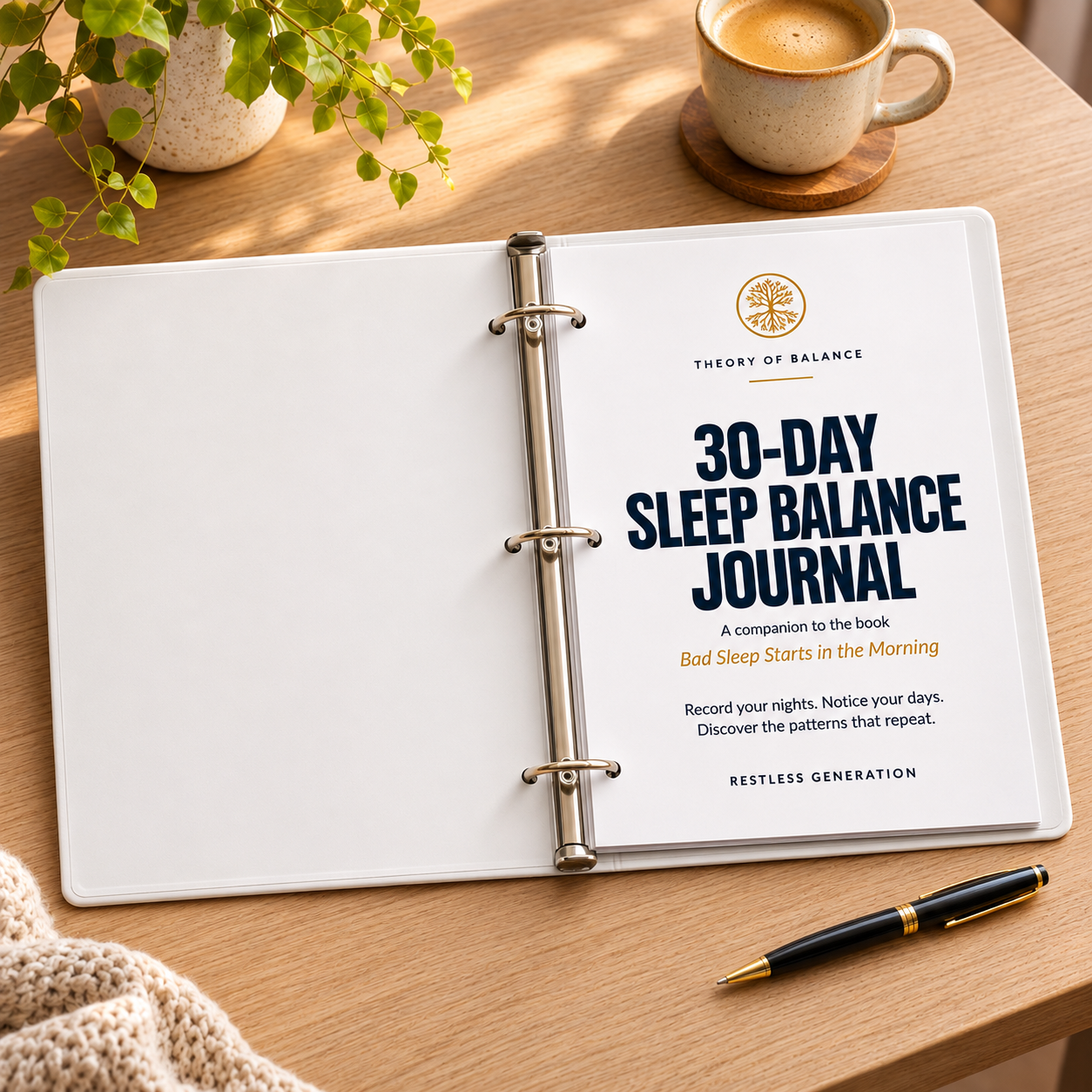
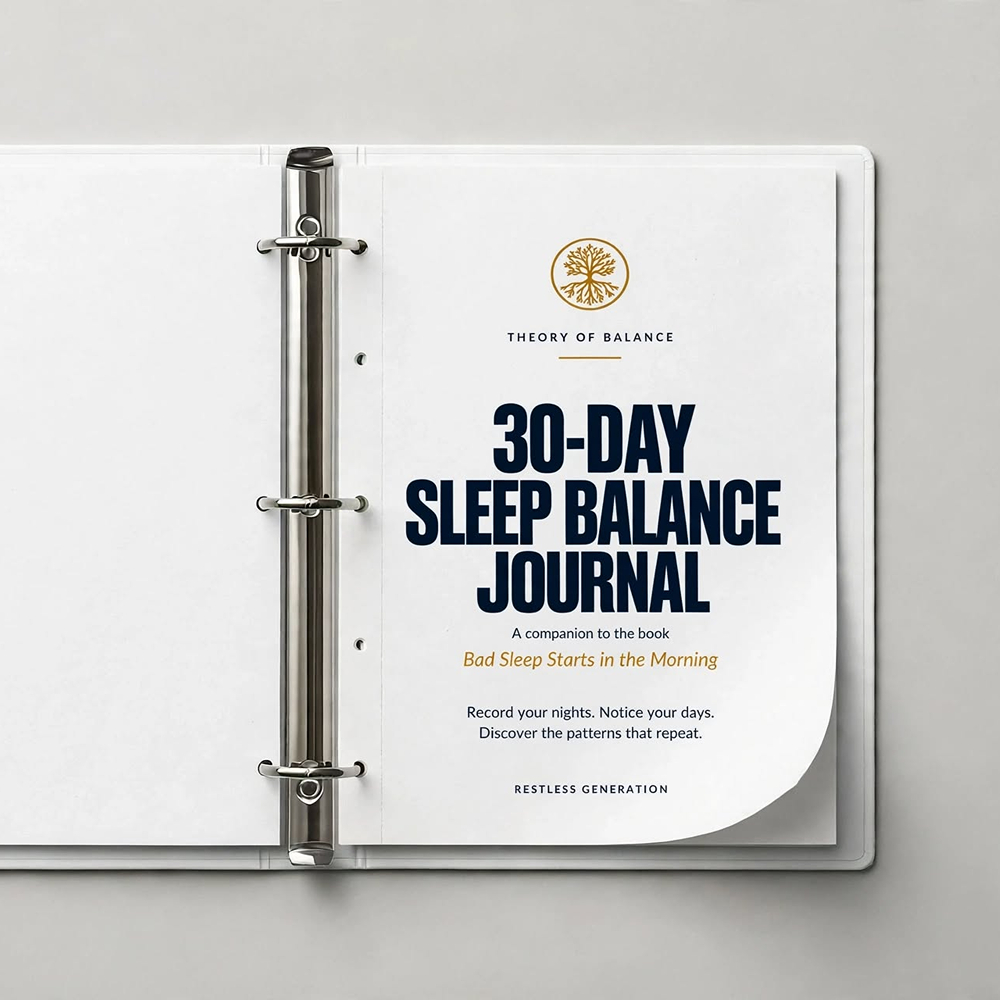
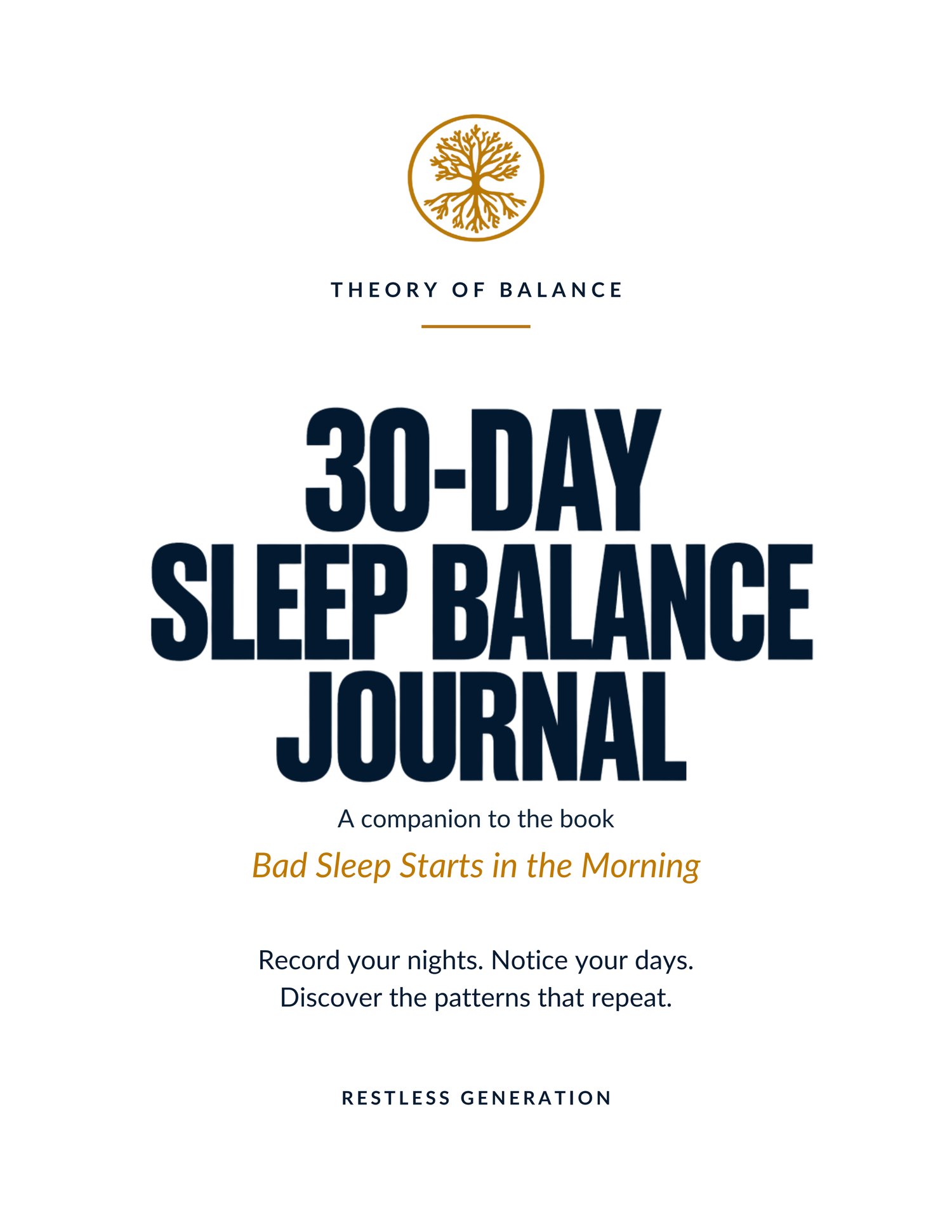

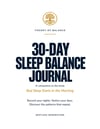

30-Day Sleep Balance Journal
Stop Guessing. Start Seeing Your Patterns.
Bad Sleep Starts in the Morning
Put Theory of Balance Into Practice
How did you sleep last night? And what happened the day before?
What time did you eat? How much did you move? How was your energy? What did your evening look like? Which habits repeat before your better nights—and your worse ones?
It is difficult to see these connections from memory alone.
The 30-Day Sleep Balance Journal helps you record your days and nights in a simple, structured way so you can start recognizing the habits and patterns that may be worth changing or addressing to support better-quality sleep.
For 30 days, you observe what happens, record it, and compare.
Observe → Change One Thing → Observe Again → Compare.
What You’ll Track
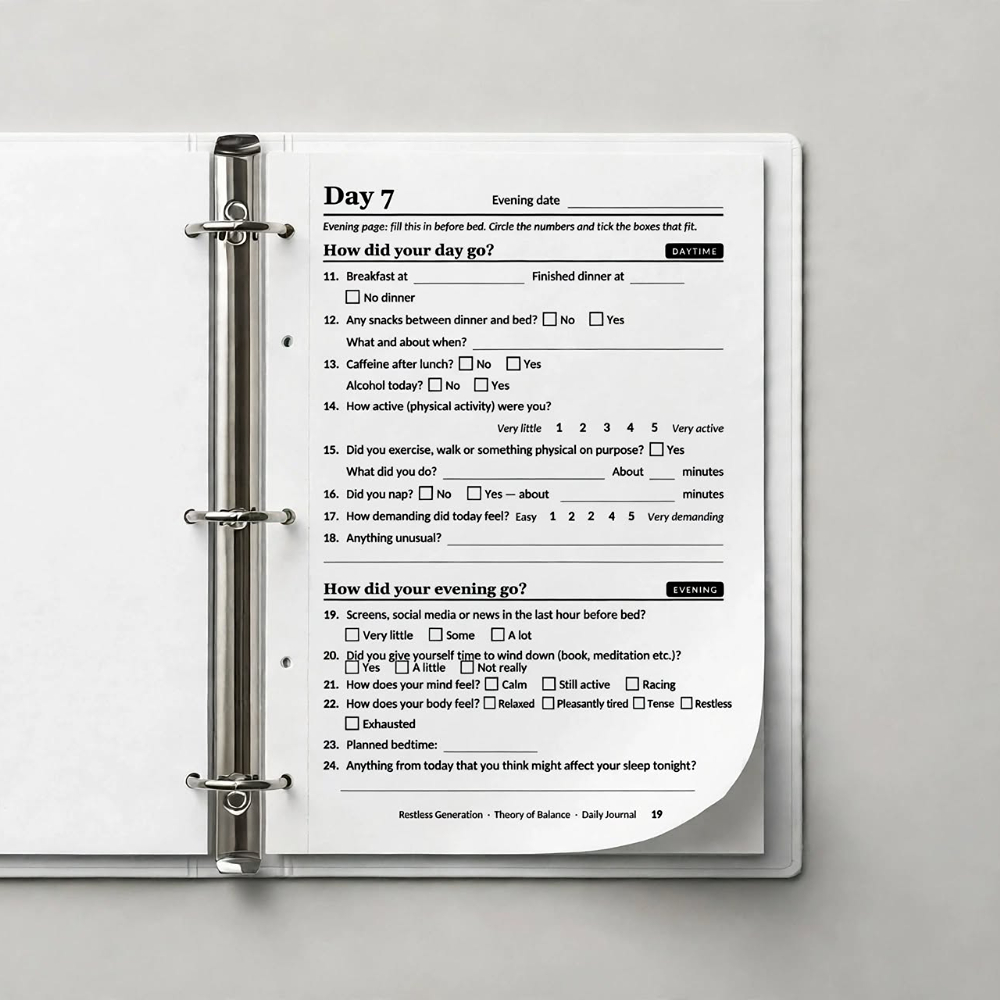
The Journal helps you look at your sleep alongside your daily routines, meals, movement, energy, evening habits, and other patterns that may change from one day to another.
A few minutes each morning and evening build a record that can help you see what repeats — and where you may want to experiment with change.
Two Ways to Use It
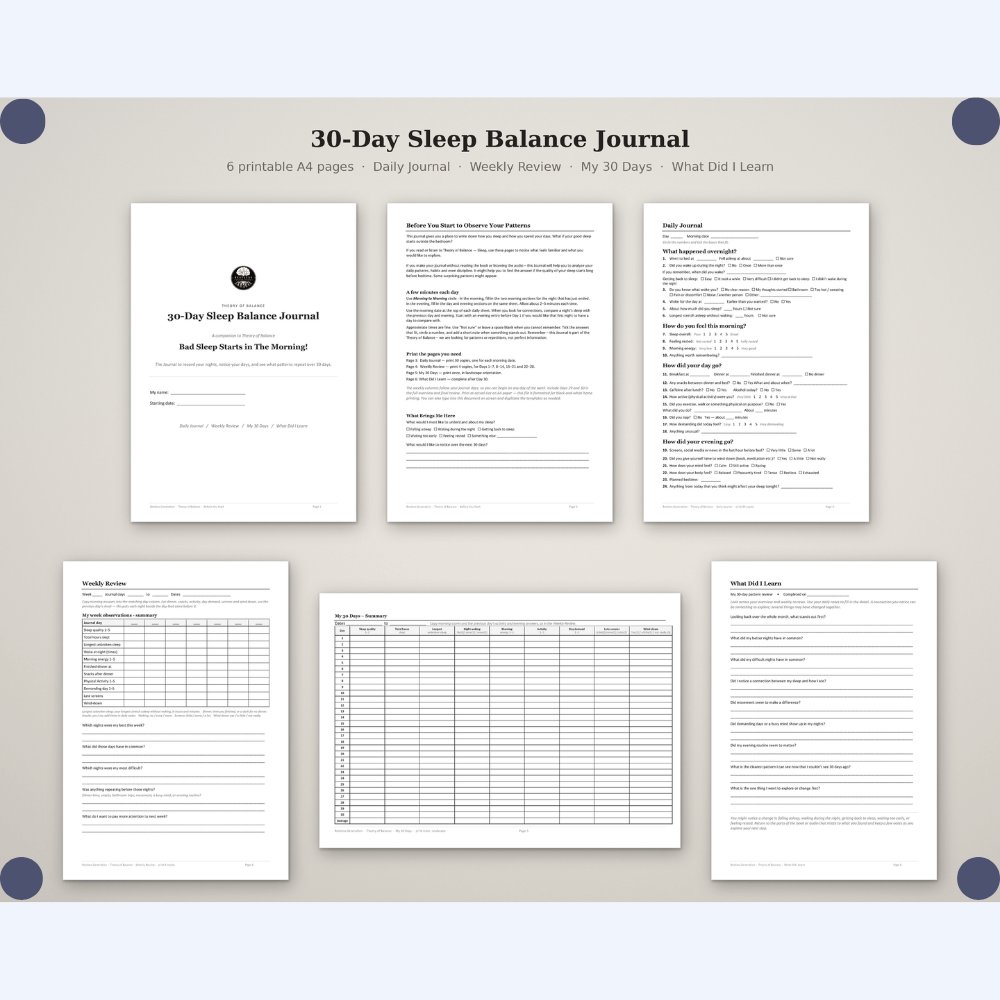
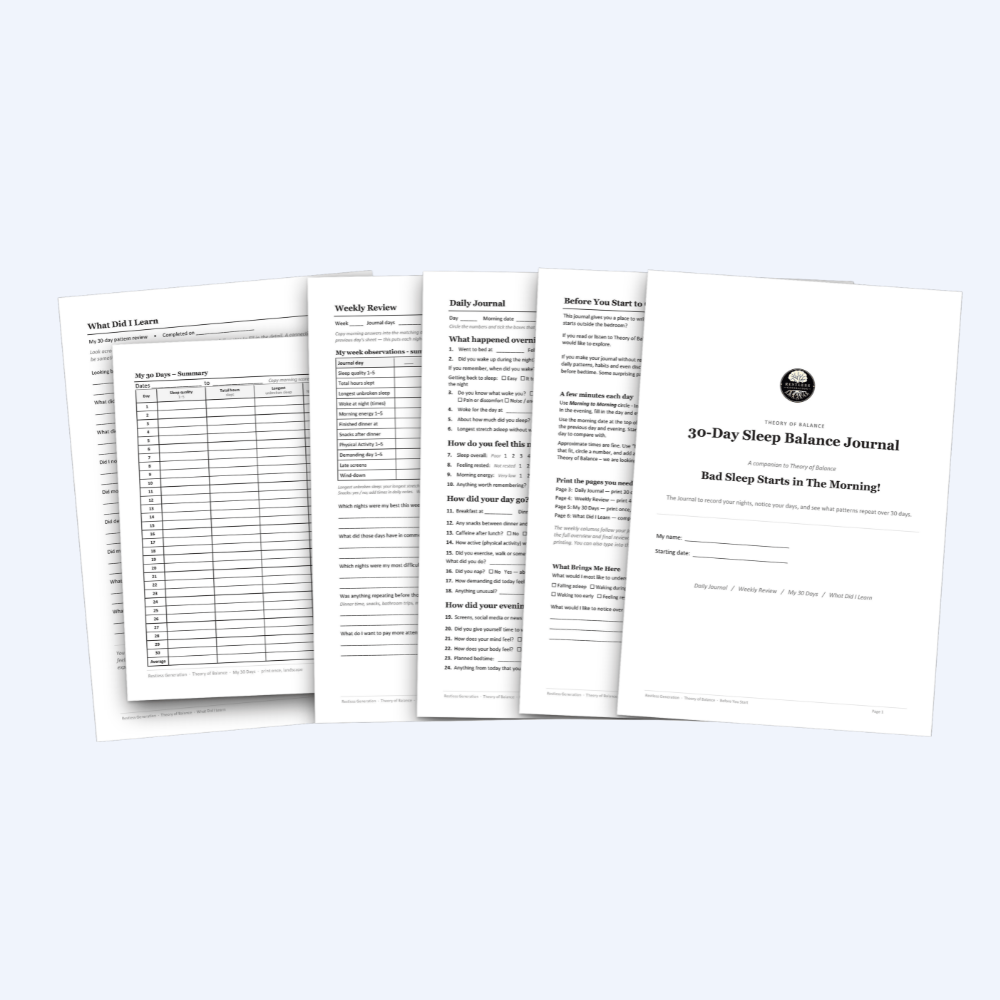
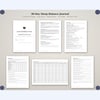
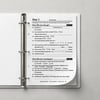
Prefer paper? Use the printable PDF, designed for simple A4 black-and-white home printing. It includes Daily Journal pages, Weekly Reviews, a 30-Day overview, and final reflection.
Prefer working on screen? Use the included advanced XLSX workbook with Read Me, Daily Log, Weekly Summary, Charts, and Reflections sheets. It helps you follow your observations over time and visualize trends in your data.
Your 30 Days Become Useful Information
The goal is not to diagnose why you sleep badly. It is to give you a clearer picture of your own habits, patterns, and changes over time.
That can help you decide what you want to change, what deserves more attention, and what you may want to discuss with a qualified professional.
30 days. Your habits. Your patterns. Your nights.
Become your own scientist.
Digital Journal · Printable PDF + Advanced XLSX Workbook
The Sleep Balance Journal is an educational self-observation tool and is not a substitute for professional medical advice, diagnosis, or treatment.