


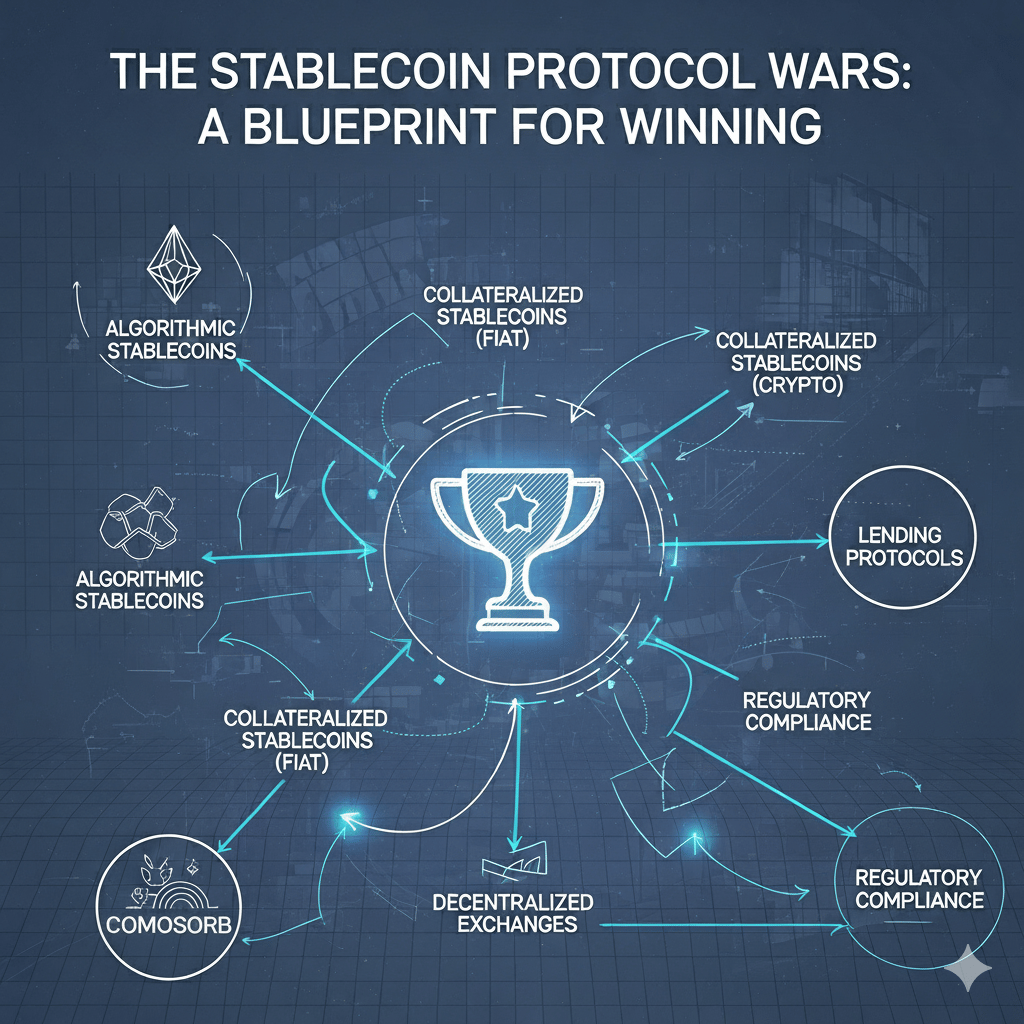


The Stablecoin Protocol Wars: A Blueprint for Winning
Drawing from over two decades of experience as a network architect, I present the argument that the "stablecoin wars" are misunderstood. The market is not in a product competition but a protocol war, mirroring the early days of the internet when proprietary systems like Novell IPX/SPX and AppleTalk fought for dominance before the open, neutral TCP/IP protocol won and unleashed an era of innovation.
The book posits that the current stablecoin ecosystem is a fragile and inefficient collection of "walled gardens" like USDC and USDT. These systems rely on insecure, hack-prone "bridges" for interoperability, which have resulted in over $2.8 billion in losses. Users are forced into a false choice between two flawed models: the centralized "trust the auditor" approach, which carries counterparty risk, and the decentralized "trust the code" approach, which is vulnerable to hacks and volatility.
I present a detailed technical blueprint for winning this war: creating the "TCP/IP of money". This solution is a neutral, open protocol structured as a four-layer architecture:
- Layer 1: The Settlement Layer: A universal routing system that moves value across any blockchain, using existing interoperability protocols like Chainlink CCIP.
- Layer 2: The Asset & Reserve Layer: Guarantees the stablecoin's integrity by programmatically enforcing that reserves consist only of high-quality liquid assets and using real-time, on-chain audits like Chainlink Proof of Reserve.
- Layer 3: The Identity & Compliance Layer: Embeds regulatory compliance directly into the protocol using privacy-preserving technologies like Decentralized Identifiers (DIDs) and zero-knowledge proofs, solving the conflict between regulation and privacy.
- Layer 4: The Open Interface Layer: An API toolkit that allows any developer, bank, or application to easily plug into the network, unleashing innovation and solving the "last-mile" distribution problem.
This protocol would unlock transformative use cases, including near-instant, low-cost cross-border remittances, 24/7 institutional settlement that frees up trillions in idle capital, and a compliant, unified liquidity layer for Decentralized Finance (DeFi). The book concludes with a strategic playbook for builders, investors, and financial institutions, urging them to stop creating isolated products and start building the foundational infrastructure for the next generation of finance.